
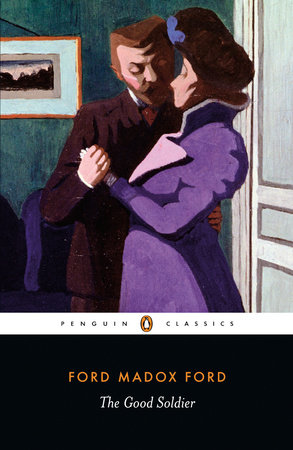
The Good Soldier
John Dowell recalls nine years of apparent friendship between his wife, Florence, and the Ashburnhams, Edward and Leonora.
About
Spoiler notice: Major spoilers, including Maisie Maidan’s death, Florence Dowell’s death, Edward Ashburnham’s suicide, Nancy Rufford’s breakdown, and the later outcomes for Leonora and John Dowell.
John Dowell opens by calling the account the saddest story he has heard, then immediately shows how little that phrase can promise. He and his wife Florence have spent nine seasons in the German spa town of Nauheim alongside Captain Edward Ashburnham and his wife Leonora. The two couples have seemed intimate, but Dowell now says that their acquaintance left him knowing almost nothing. He is speaking from a later moment, after events have altered what he thinks he saw, and he cannot keep the telling in calendar order. He revisits a detail when a later disclosure changes its meaning, offers an explanation, then qualifies it. The reader follows both the story and his uncertain effort to understand it.
Dowell first presents Edward as the model of an English country gentleman: a decorated soldier, careful landlord and generous local figure. His examples include Edward’s defence of a gardener’s daughter accused of killing her baby and his kindness to people around the estate. The picture grows harder to separate from Edward’s private history as the narrative reaches his marriage to Leonora and their years in India. Dowell recounts earlier attachments, among them a relationship with Mrs Basil, while Leonora tries to manage the family’s finances and preserve the household. These details arrive through recollection and later explanation, not as a single uninterrupted biography; even Dowell acknowledges that some accounts came to him from Leonora or Edward after the fact.
Florence’s own past also complicates the couple’s public calm. Dowell recounts meeting her in Stamford and marrying her at Waterbury after she disappears to her uncle’s home. She is determined to live in Europe, and a supposed heart condition subsequently helps keep their marriage free of physical intimacy and their movements under control. Dowell imagines himself a careful attendant, carrying out the precautions he believes protect her. Later disclosures make him reinterpret both her illness and her earlier relationship with Jimmy. Florence also becomes Edward’s lover while, with extraordinary confidence, offering Leonora advice about how to repair her marriage. These revelations expose a household arrangement in which the appearance of considerate friendship depends on information being withheld from one of its participants.
Around the Ashburnhams is Maisie Maidan, a young married woman whom Edward has followed from India to Nauheim. Leonora has helped bring her to Europe, and Dowell first describes the arrangement as a charitable kindness. In the letter Leonora later finds, Maisie says she learned that Leonora paid for her passage and heard Edward and Florence discussing her. She writes that she did not know she was being brought there as an adulteress and that she means to return to her husband. Dowell says Maisie dies while trying to strap up her trunk, after packing to leave; her heart stops. Leonora later calls herself and Florence responsible, but that is her moral judgment on what preceded Maisie’s death, not the physical cause described in the scene.
The major turn in Dowell's understanding comes after Florence's death in 1913. On the day in question, Edward and Nancy go to a concert at the Casino, and Leonora asks Florence to follow them as a chaperone. Dowell later reconstructs that Florence went after them, but he was not with her and admits he does not know exactly what she heard. He initially sees a familiar medicine flask in Florence's hand and believes her heart has failed. Only after Edward's funeral does Leonora tell him that Florence took her own life. Dowell then learns the flask held poison; his theory that Bagshawe's appearance and the risk of exposure about Jimmy determined her act remains his inference.
Edward and Nancy's bond becomes central as the story moves back and forward between Nauheim and Branshaw Teleragh. Nancy has lived with the Ashburnhams since girlhood, and Dowell describes her as affectionate toward Edward and Leonora while carrying painful memories of her parents. The relationships become a struggle over loyalty and possession: Leonora at different points resists Edward’s attachment and urges Nancy toward him, while Edward tries to send the young woman away. Nancy feels pulled between the two adults whose household has shaped her life. Dowell marks the gap between his presence in the house and what he learns afterward, and sometimes supplies imagined details he identifies as reconstruction. His sympathy does not give him direct access to the others' private thoughts.
At Branshaw, the conflict ends in separation rather than the future Dowell thinks Edward hopes for. Nancy is sent to her father in India, and during the voyage she sends Edward a telegram from Brindisi saying she is safe and having a good time. Dowell recounts that Edward then takes his own life with a small penknife. He later learns from Colonel Rufford that Nancy saw news of Edward’s suicide at Aden and became mentally ill during the voyage. Leonora eventually marries Rodney Bayham, while Dowell buys Branshaw and remains Nancy’s attendant. In the final pages Dowell calls this outcome a happy ending only to undercut the phrase with the losses that made it possible. The story closes with his own uncertainty about what any of them wanted, and with no stable verdict on how much of his account can be trusted.
Book details
- Author
- Ford Madox Ford
- First published
- 1915
- Series
- No series listed
- Subgenre
- Modern classics, Experimental fiction, Literary fiction
- Primary genre
- Literary Fiction
- Tags
- No tags for this book.
Review
Editor profile
Baby Bat
Goodreads and social links will be added soon.
- Goodreads — link coming soon
- Social media — link coming soon