
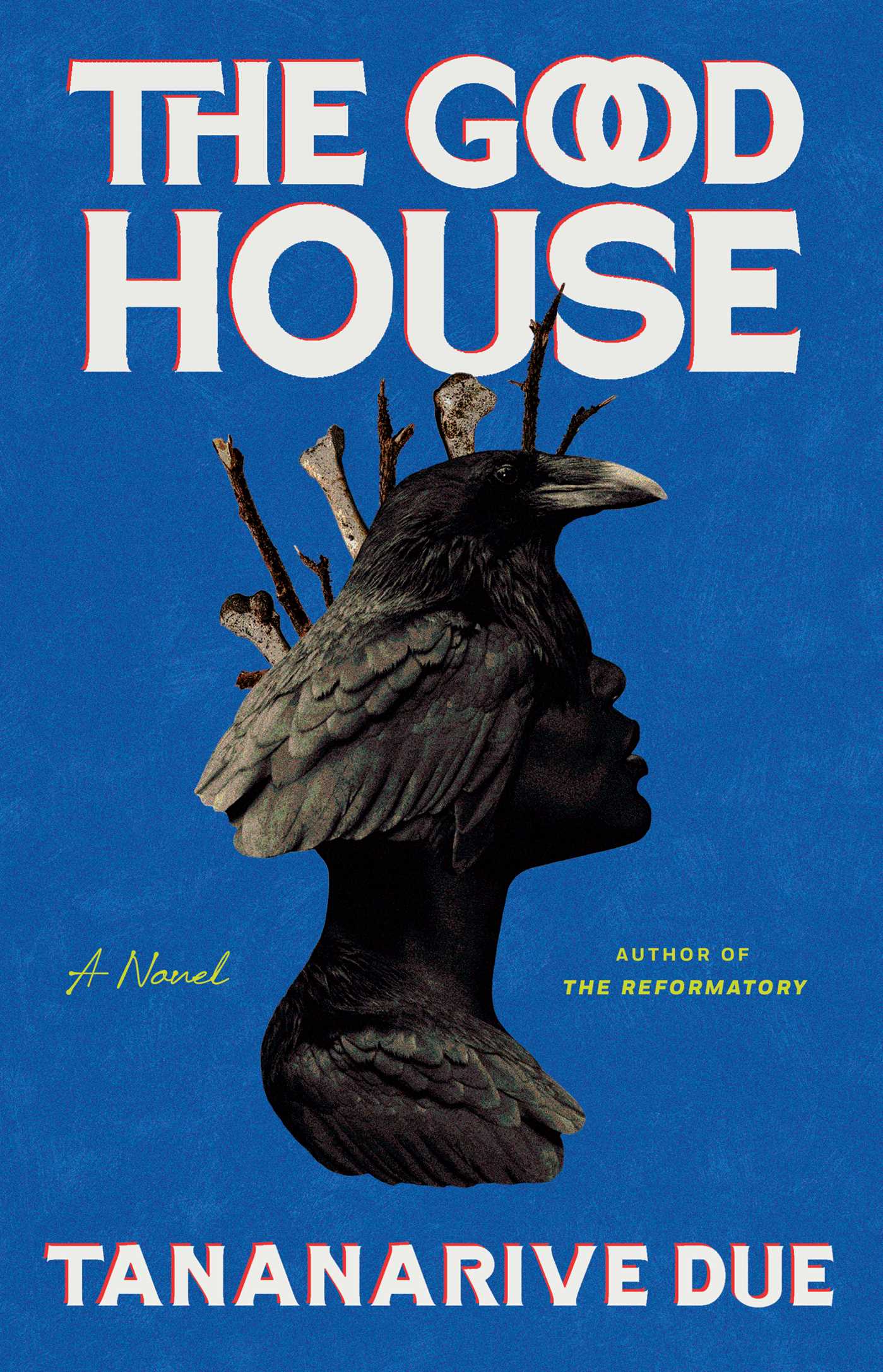
The Good House
After her son Corey dies at her grandmother’s house in Sacajawea, Angela Toussaint stays away for two years.
About
Spoiler notice: Spoilers for the opening tragedy and the central mystery, including Corey's death and Marie's misuse of her healing power. Later confrontations and the ending are not described.
The Good House begins with a home whose reputation is older and kinder than the events that now gather around it. In Sacajawea, Washington, the Toussaint family house is a landmark: its name recalls the pharmacist Elijah Goode, who built it in 1907, and Marie Toussaint, the Black Creole nurse and herbalist who later made it a refuge for neighbors. A 1929 mudslide destroyed nearby homes, and Marie and her husband helped shelter people displaced by it. The surviving house carries both that public memory and a more private inheritance. For Angela Toussaint, Marie’s granddaughter, it is a place of childhood, family stories and familiar objects, but its history is bound to losses she would rather keep at a distance. The contrast between a house celebrated as a source of help and one that becomes the center of repeated harm gives the title its uneasy double meaning.
The novel opens in a past strand around Marie, then follows Angela during a Fourth of July summer at the house with her teenage son Corey and her estranged husband Tariq. Angela has built a professional life away from Sacajawea, and she regards the return as temporary. Her relationship with Tariq is unsettled, while Corey is growing into a life of his own and forming friendships in town. The preview’s early scenes keep ordinary reunion details close to signs of danger: a quiet main street, an old family piano that seems to move by itself, an unexpectedly cold touch, and a house whose neighbors treat it almost like a church. These details do not immediately explain what is wrong. They make Angela’s familiar place feel slightly out of alignment before the story’s tragedy gives that unease a sharper shape.
That tragedy arrives at the family’s holiday gathering. Corey dies in the house, and Angela’s grief fractures the family and her connection to Sacajawea. The novel then moves forward two years. Angela is living in Los Angeles and has not returned to the Good House since her son’s death. When the possibility of selling the property brings her back, she is not simply deciding what to do with a building: she has to face the site of her loss and the unanswered questions around it. The publisher describes her aim as discovering whether Corey’s death connects to an entity Marie confronted decades earlier. The gap between what Angela wants—a practical decision and a truthful account of what happened—and what the town remembers makes her return both an investigation and a difficult approach to family history.
The house’s history reaches beyond Angela’s own memories. Marie’s daughter Dominique died when Angela was young, and Marie raised Angela in the home that Angela later inherited. In the early chapters, Angela remembers her grandmother through the piano, clock, chair, figurines and the routines attached to them. Those objects make memory physical; they also leave open the question of whether the past is preserved by affection, by supernatural force, or by both. The town has its own version of Marie. Neighbors remember her teas and healing, and some describe her through the language of witchcraft, while Angela resists turning her grandmother into a local legend. The book places that disagreement alongside the racial isolation Angela experiences as a Black woman in a small, mostly white town, where familiar affection can coexist with assumptions and slights.
As Angela reconnects with people from Sacajawea, the novel widens from a family haunting into a community story. Myles Fisher, an old friend and former love, is among the people whose history with Angela predates her departure. Meanwhile, disturbing events affect others in town, making it harder to regard the house as a private problem that can be settled by selling it. The first release’s publisher and contemporary reviewers frame the book around family ties, racial identity and moral responsibility as well as supernatural suspense. That combination matters to the plot: Marie’s reputation gives the town a story about what she could do, while the family’s memories preserve the less comfortable question of what she did with that power. Angela has to sort inherited accounts, local rumor and evidence connected to her son without assuming that any single version explains everything.
The past strand gradually gives the house’s protective reputation a more troubling underside. Marie’s healing work and her relationship with the community are not presented as simple proof that she was either saint or menace. The publisher’s synopsis points to a terrifying entity she battled, and Publishers Weekly’s early review reports that Angela discovers Marie once misused her healing powers in response to racism. That history links a supernatural danger to choices made by people, not just to an evil building. The novel’s suspense therefore turns on several related questions: what happened in the house, what Corey found, what Marie’s past has to do with the present violence, and whether Angela can understand the spiritual inheritance she has spent much of her life at a distance from. The details arrive through shifts between generations rather than one continuous explanation.
The Good House is a haunted-house novel built around a family’s return to a place that has meant refuge, inheritance and grief at different times. Its scale is larger than the house itself: Sacajawea’s civic memory, the Toussaint family’s losses, Angela’s complicated relationship with Marie’s legacy, and Corey’s death all meet there. Due keeps the supernatural conflict connected to community and personal responsibility, while the setting’s everyday details give the eerie events a domestic frame. This account covers the opening tragedy and the novel’s central questions about Marie’s power and the house; it does not summarize the later confrontation or ending.
Book details
- Author
- Tananarive Due
- First published
- 2003
- Series
- No series listed
- Subgenre
- Haunted house, Occult and possession, Family saga
- Primary genre
- Horror, Mystery & Thriller
- Tags
- No tags for this book.
Review
Editor profile
Baby Bat
Goodreads and social links will be added soon.
- Goodreads — link coming soon
- Social media — link coming soon