
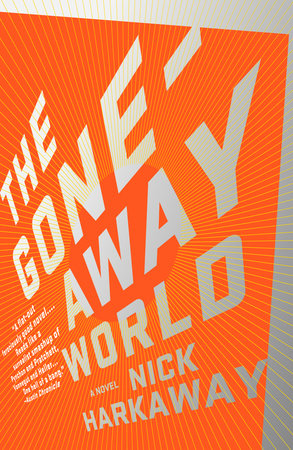
The Gone-Away World
After the Go-Away War leaves the world in ruins, professional hero and troubleshooter Gonzo Lubitsch is hired to put out a fire on the Jorgmund Pipe, a structure described as the backbone of the world.
About
Spoiler notice: Spoilers cover the postwar premise, the Jorgmund Pipe mission, central characters and elements of the world; later developments and the ending are withheld.
The Gone-Away World begins with a practical emergency in a world that has already been remade by war. A fire burns on the Jorgmund Pipe, the structure described as the backbone of the world, and professional hero and troubleshooter Gonzo Lubitsch is hired to put it out. His closest friend goes with him: the unnamed first-person narrator, who has shared Gonzo’s life since childhood. The assignment carries them back toward their beginnings and into the Jorgmund Company, where the fire proves more complicated than a simple repair job. This setup gives the novel a strong physical centre. A dangerous route and a failing piece of infrastructure organise the action, while the friends’ shared past gives the mission its personal stakes.
The Pipe is both an object in danger and an image of how this society holds together. Calling it the world’s backbone makes the threat legible before the book’s larger explanations arrive: a break in a central system can become a crisis for everyone who depends on it. The landscape around it is scarred by the Go-Away War, with wastelands and dark clouds setting a battered scale for the journey. The Jorgmund Company draws the friends toward the institutions behind that infrastructure. Harkaway’s premise therefore links the intimate and the systemic: Gonzo and his friend must deal with a visible emergency, but its reach leads into the structures that organize their postwar world. The Pipe gives the adventure a concrete problem while leaving room for political questions about dependence, power and repair.
The narration complicates the sense of a straightforward mission report. The story is told in the first person, yet it includes events the narrator does not experience directly. That gap between witness and storyteller gives the account an interesting tension: the narrator is close to Gonzo and to the history they share, but his voice also has to carry parts of a world beyond his immediate view. The form makes storytelling itself part of the journey. What a character remembers, learns later or pieces together is not identical to what he sees at the time. This matters in a book that moves from present danger back toward the friends’ earlier lives; information arrives through a voice with limits, loyalties and a long personal history.
Gonzo and the narrator have grown up together, studied martial arts, rebelled in college and fought in the same war. Their closeness gives the story an anchor amid its changing scale, but a lifetime of common experience does not make the two men interchangeable. One is named as the professional hero; the other tells the story and mediates what can be known. The novel’s look backward turns friendship into more than a promise of loyalty. It is also a record of how two people are shaped by the same events and still develop different positions within them. That distinction helps keep the relationship from functioning as a simple sidekick arrangement. The bond matters because it has endured, and because endurance does not prevent loss, disagreement or change.
The novel’s strangest encounters include mimes, ninjas and pirates. That collection gives the wasteland a different texture from a bleak survival landscape: the danger remains real, but the world’s people and institutions are also capable of oddness. The Matahuxee Mime Combine sits at this intersection. Its name and form are comic, while the book introduces it in the same environment shaped by war and a world-saving assignment. Such contrasts make the setting feel unstable in more than a physical sense. Familiar categories of everyday life have fallen away, leaving room for unlikely groups and encounters to share space with corporate structures, martial arts and political conflict. The humour springs from the collision, while the stakes keep it attached to the world’s damaged condition.
The novel’s comedy remains close to the consequences of the Go-Away War. Gonzo and his friend have fought in it; their old bond is now being tested as they take on a mission in its wreckage. The shifts between danger, absurdity and sorrow give the relationship a broader setting, where survival and companionship are entangled. A joke can puncture a heroic pose without making the damage comic, and a strange encounter does not release the characters from the costs of loss and separation. The story lets its scale move from worldwide ruin to the smaller question of how two people stay connected after shared upheaval. Its unusual cast and comic turns matter because they coexist with those human stakes.
The result crosses post-apocalyptic science fiction, adventure and comic odyssey without needing to settle into just one shelf. Its premise supplies a clear task, its ruined setting opens a speculative world, and its cast allows politics and slapstick to share the road. Underneath the spectacle, the book remains interested in an old and difficult question: what does a person owe to the people and places that made him? The Pipe needs saving, but the narrative’s return to the friends’ beginnings suggests that repair is also a matter of understanding what has been broken between past and present. Gonzo and his narrator are unlikely heroes in a strange landscape, bound together by history but not protected from it. The novel’s mixture of danger and absurdity keeps that human question in view without disclosing how their journey ends.
Book details
- Author
- Nick Harkaway
- First published
- 2008
- Series
- No series listed
- Subgenre
- Post-apocalyptic, Adventure fiction
- Primary genre
- Sci-Fi, Literary Fiction
- Tags
- No tags for this book.
Review
Editor profile
Baby Bat
Goodreads and social links will be added soon.
- Goodreads — link coming soon
- Social media — link coming soon