
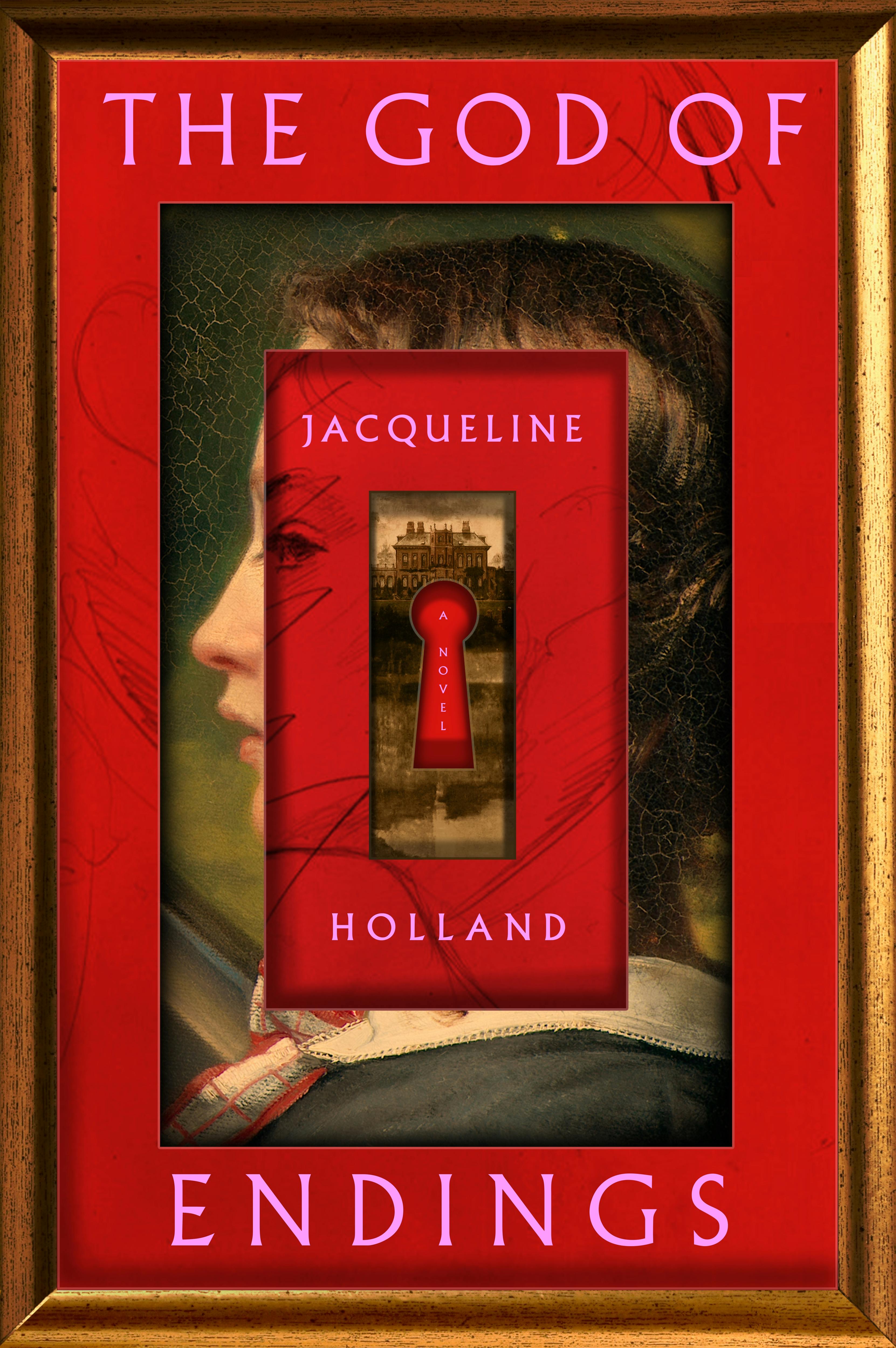
The God of Endings
An immortal artist, once Anna and Anya and now Collette LeSange, runs an art school in 1984 upstate New York.
About
Spoiler notice: Spoilers for Anna’s childhood, several episodes from her life in Europe and wartime France, and the central 1984 conflict involving Leo. The final outcome is not described.
In the 1830s, Anna grows up in a New York village where her father carves gravestones and death is part of the family’s daily work. When tuberculosis takes her father and brother and leaves Anna close to dying, her grandfather arrives and gives her a life without an ordinary end. She survives by drinking blood, eventually reaching adulthood without continuing to age. The gift comes with a question that follows her across the centuries: what does it mean to keep living when everyone and everything around you can be lost? The book opens with Anna’s childhood rather than with the polished artist she will later become, so the reader sees the beginning of her long relationship with grief before meeting the woman who has learned to hide it.
The story alternates between Anna’s early years and 1984, when she is known as Collette LeSange. In the present, Collette owns a selective preschool and fine-art school in Millstream Hollow, upstate New York. Painting and teaching let her build a sheltered routine among children whose families move through her school and then move on. She has made a life that looks settled from the outside, but her immortality makes ordinary closeness difficult: the children grow up, adults notice that she does not, and attachments bring the prospect of another loss. The school’s brief cycles of arrival and departure suit her guarded habits, until a student’s needs begin to draw her into a family’s life beyond the classroom.
Anna’s past chapters follow the names and places she takes on as she travels. Her grandfather sends her across the Atlantic with Agoston, his imposing butler, and she reaches a remote European household where she encounters other beings like herself. There, the vampire life is not governed by familiar stage rules about garlic or sunlight. It is a physical condition with extraordinary strength and an appetite for blood, and Anna must learn how to inhabit a body that has changed without choosing to change. The Slavic figure Czernobog, associated with endings, becomes part of the landscape of this life. His presence gives a name to the destruction that seems to recur whenever Anna has begun to treat a place as home.
Across the historical sections, Anna tries different ways of living among people. She spends long stretches alone, learns to paint, and forms attachments with mortals whose lives remain brief beside hers. Paul, an Austrian artist with epilepsy, becomes one of those companions; another is Halla, an orphaned Egyptian girl. These relationships give the historical strand different kinds of intimacy, from sharing the work of an artist to caring for a child. Each also exposes her to a separation that her own long life cannot prevent. She repeatedly withdraws from human company, then returns to it. By the time she opens the school, contact with other people has become something she tries to ration, choosing relationships whose limits she thinks she can control.
During the Second World War, Anna lives in a small French town, where she protects Jewish children and kills German soldiers. Her strength gives her a capacity to intervene that she does not always use elsewhere in her life. The episode also makes her protection of children inseparable from violence: she can defend vulnerable people while remaining a creature that needs blood. Years later, the well-fed children in her school bring back memories of other children she has known, including those who were sick, injured or orphaned. The comfortable classroom cannot shut those memories out. Its safety is provisional, measured against what she has already witnessed and what she fears might happen again.
In 1984, the child who presses against Collette’s carefully maintained boundaries is Leo, a gifted boy whose difficult home life worries her. He is drawn to art, and Collette recognises both his ability and his vulnerability. A museum visit gives them room to talk about pictures, light and darkness, while their connection continues to pull her beyond the role she has chosen as a teacher. Collette has tried to avoid children who may suffer because she knows how strongly she wants to protect them. Leo makes that rule hard to keep. Her concern reaches into his family relationships, where the adults around him do not provide the security she believes a child needs.
At the same time, Collette’s hunger is becoming harder to manage. Blood cravings bring blackouts; she wakes muddy and injured, unsure of what has happened while she was unconscious. A presence linked to Czernobog seems to return as her orderly life begins to fracture. The danger is not only that she might hurt someone. It is also that she cannot be certain how much control she has already lost, or what her long effort to suppress her nature has done to her. The school, the routines and the careful limits she places on attachment have kept the world at a distance, but they cannot answer what she should do when a child’s safety and her own worsening condition occupy the same small circle.
Book details
- Author
- Jacqueline Holland
- First published
- 2023
- Series
- No series listed
- Subgenre
- Gothic horror, Historical fantasy, Vampire horror
- Primary genre
- Fantasy, Horror, Historical Fiction
- Tags
- No tags for this book.
Review
Editor profile
Baby Bat
Goodreads and social links will be added soon.
- Goodreads — link coming soon
- Social media — link coming soon