
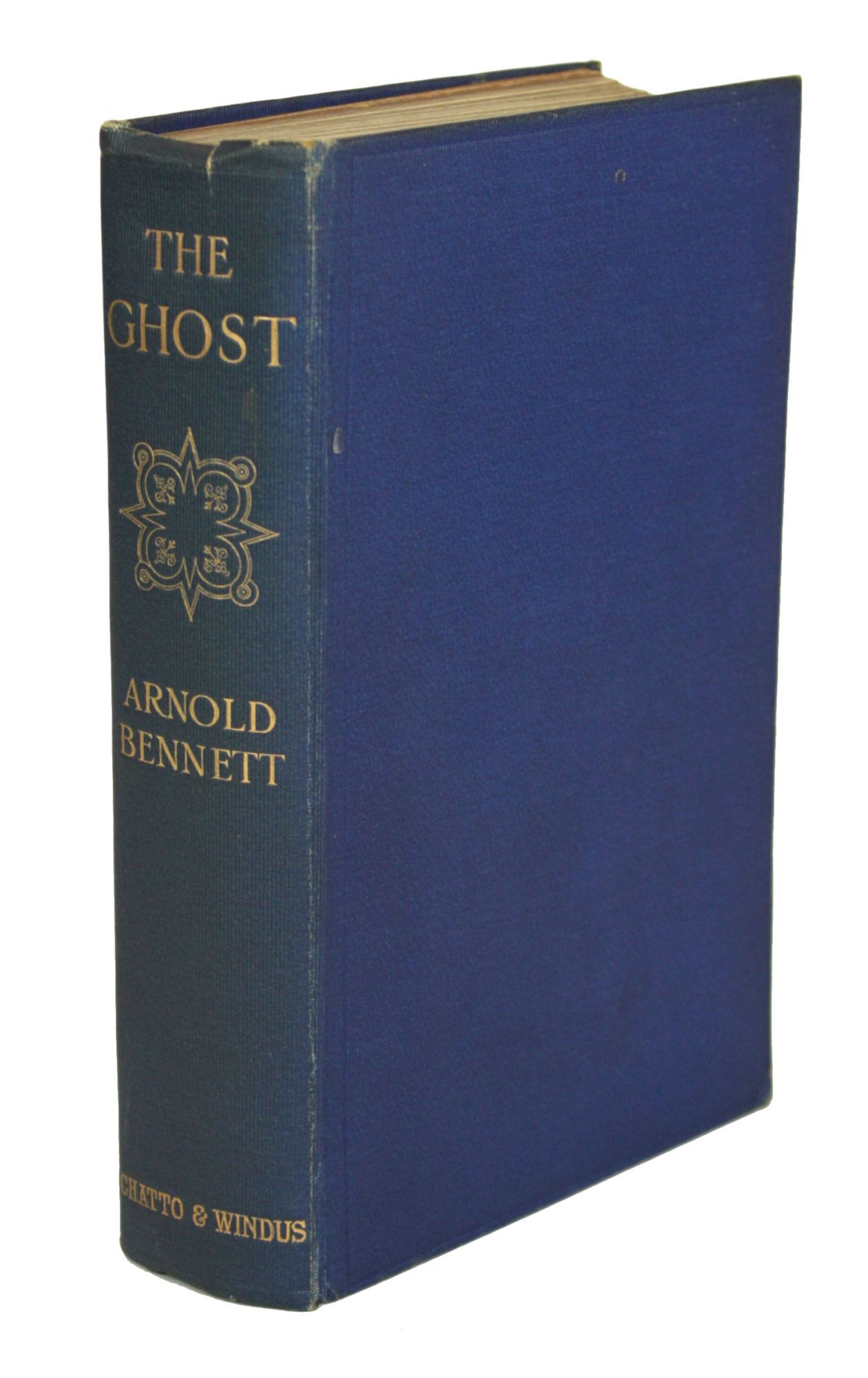
The Ghost
Newly qualified doctor Carl Foster enters London’s opera world through his successful cousin and becomes close to the celebrated singer Rosetta Rosa.
About
Spoiler notice: This overview reveals Rosa’s family history, the identity of the apparition and the final intercession.
The Ghost begins with a newly qualified young doctor failing to buy a ticket for the opera. Carl Foster has come from Edinburgh to London with confidence that does not yet extend to understanding its fashionable world. A chance meeting with his cousin Sullivan Smith, a successful composer of musical comedies, opens a door that the box-office clerk has closed. Arnold Bennett tells the story through Carl’s recollection, allowing him to look back with amusement at his younger self’s admiration of expensive clothes, polished manners and theatrical influence. The early comedy makes the later danger a change within an established life. Carl first enters this company as an eager outsider, unaware that professional opportunity and romantic fascination will lead him towards something he cannot treat or explain.
The celebrated singer Rosetta Rosa draws him into the world behind the performance. When the tenor Alresca suffers a serious injury, Carl’s medical training suddenly becomes useful amid the confusion of the stage. The encounter places him close to people he has previously regarded from a distance, including the impresario Sir Cyril Smart. But Alresca’s distress seems to exceed the physical injury. His alarm at Rosa’s presence hints at a connection Carl cannot account for, and her own reaction makes the situation harder to dismiss. Bennett builds the mystery through that gap between what the doctor can observe and what he knows of the relationships around him. Competence in one kind of emergency does not make him an authority on everything the patient fears.
Carl’s continuing association with Alresca takes the story beyond London. The singer’s decline and death leave questions that the official explanation does not answer for his companion. Carl signs a certificate attributing the death to heart failure while privately remaining troubled, and then has to manage the attention generated by a famous man’s passing. Alresca has unexpectedly left him his property, tying affection, professional responsibility and an unfamiliar financial position together. A vigil by the body in Bruges adds a more disturbing encounter to an occasion already charged with ceremony and grief. The narrative does not begin by handing Carl a clear supernatural theory. It lets alarming appearances accumulate while ordinary practical duties keep demanding his attention.
Rosa’s own account of celebrity complicates the romantic image that first attracted him. She describes admirers who want to own her, remove her from the stage or benefit from the money her voice earns. Carl’s relative distance from that society helps make him welcome, although his feelings will soon cease to be merely friendly. Her dead fiancé, Lord Clarenceux, belongs to the history she gradually discloses: she remembers both his formidable generosity and his jealousy. Bennett places those memories beside her wish to sing without being permanently surrounded by claims upon her. The romance therefore develops within a story about possession as well as admiration. A performance can belong to an audience without giving that audience a right to determine the performer’s private life.
Another strand of the mystery lies in the little dagger associated with Rosa’s mother. Its recognition helps expose Sir Cyril as the father who left her and her mother years earlier. Rosa’s account includes childhood in Bruges, the move to Italy and her decision to make a career under another name after her mother’s death. What looked like an unexplained connection to a theatrical authority becomes a history of abandonment and anger. Her discovery does not produce an easy recovery of family happiness. Sir Cyril’s death brings remorse and a limited reconciliation, while Rosa begins to see the losses around her as evidence of a curse. Carl has to listen to that fear in somebody whose courage and professional success have not protected her from private suffering.
The portrait of Lord Clarenceux finally gives the recurring figure an identity. Carl recognizes the man he has seen in different places as the dead fiancé, and understands the appearances as threats against anybody who loves Rosa. This is the explanation his first-person narrative embraces, connecting Alresca’s death and the dangers of his own journeys to a possessiveness that has outlasted its owner. His medical confidence supplies no reliable defence against the fear now mastering him. Even when he reasons that a ghost has no ordinary bodily means of attacking him, its pressure feels capable of destroying him. Bennett makes the struggle depend on apprehension and will, while Carl’s retrospective voice insists on the reality of what he believes he has endured.
In the final chapter Rosa first tries to save Carl by telling him she cannot love him, but he recognizes the intended sacrifice and refuses to accept it. Her later intervention takes another form: she comes to his room and appeals directly to the apparition, calling on the generosity she remembers rather than answering its hatred with resistance. Carl watches the spectre relent and disappear. Their relief leads into a night drive through Paris, declarations of love and plans to return to England and marry. Rosa also acknowledges that she will want to sing again, preserving a place for her vocation within the promised future. These are plans rather than a narrated wedding. The story closes with Carl’s release from terror and their shared confidence that ordinary life can begin again.
Book details
- Author
- Arnold Bennett
- First published
- 1907
- Series
- No series listed
- Subgenre
- Literary fiction, Modern classics
- Primary genre
- Literary Fiction
- Tags
- No tags for this book.
Review
Editor profile
Baby Bat
Goodreads and social links will be added soon.
- Goodreads — link coming soon
- Social media — link coming soon