
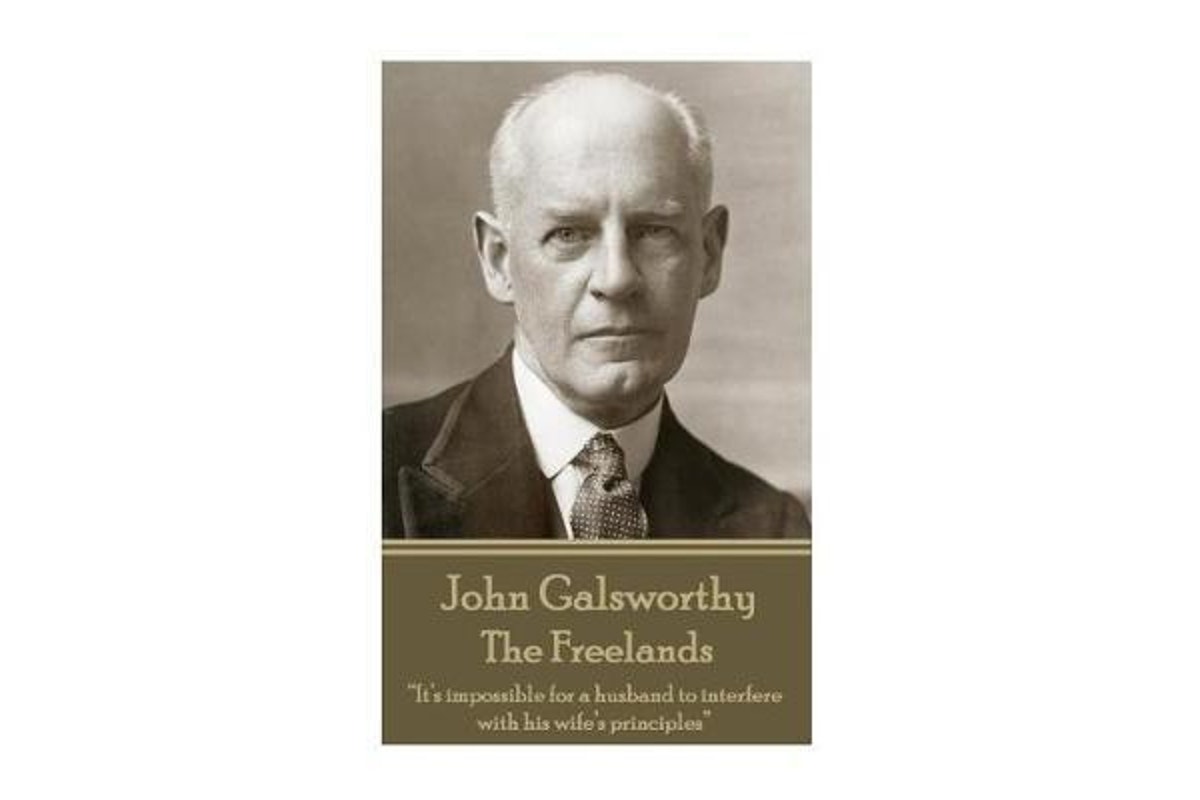
The Freelands
The Freeland brothers differ over the condition of the English countryside, from official, industrial and literary perspectives to the practical life of Tod and Kirsteen at Joyfields.
About
Spoiler notice: This overview discusses the evictions, the strike and arrests, Tryst's conviction and death, and Derek and Nedda's decision at the ending.
The Freelands opens with a labourer sowing a Worcestershire field, a small moving figure within a landscape that seems almost indifferent to human divisions. Bob Tryst's work connects him to the land, but does not give him security upon it. A notice threatens his home, and young Derek Freeland promises that something will be done. John Galsworthy places that encounter before the comfortable family discussions through which the land question will subsequently be considered. The difference matters throughout the novel. For some characters, rural society is a subject on which to form an intelligent opinion; for others, a landlord's decision determines where their children will sleep. The Freeland family's disagreements join these worlds without making the distance between them easy to overcome.
The four brothers occupy different positions within that social arrangement. John belongs to official life, Stanley's wealth comes from the Morton Plough Works, Felix is an author, and Morton, usually called Tod, farms at Joyfields. Felix's cultivated awareness allows him to criticize industrialism and official interference while taking pleasure in distinctions of taste and reputation. His compromises are visible even in the clothes he chooses. Stanley's Becket offers another vantage point, where possession and comfort shape discussion of agricultural conditions. Tod and his wife Kirsteen live more directly beside the disputes affecting local labourers. Their children Derek and Sheila inherit an atmosphere in which sympathy is expected to lead towards action. Family affection persists across these differences, making political disagreement both intimate and difficult to dismiss.
The Mallorings' control over cottages allows their moral judgments to acquire material force. Tryst wants his deceased wife's sister to help care for his children, but Lady Malloring will not permit the arrangement under her rules. The dispute is separate from the pressure placed upon Wilmet Gaunt, whose conduct also attracts her disapproval. Derek and Sheila challenge the authority being exercised over both households. The eventual clearance of Tryst's cottage makes the consequences concrete: the estate representative carries out orders he finds uncomfortable, the children face displacement and the Freelands take them in at Joyfields. Galsworthy gives the intermediary his own misgivings without letting those misgivings prevent the eviction. A system can continue to operate through people who would prefer not to perform its most painful tasks.
Nedda, Felix's daughter, encounters these conflicts while falling in love with Derek, her first cousin. Their relationship gives the family's arguments another source of urgency. Felix cannot consider Derek's course simply as a spectator when his own daughter's happiness becomes involved. Nedda also refuses to remain only the object of paternal concern. Her attachment leads her towards questions about poverty, work and what she is prepared to do with her life. Galsworthy allows that education to be emotional without making it merely passive. She listens, asks questions and faces decisions in which loyalty cannot supply an automatic answer. Derek's intensity attracts her, but also exposes her to the consequences of actions and declarations he may not fully understand himself.
The wider struggle brings agricultural workers, strike-breakers and police into direct confrontation. At Marrow Farm, Sheila is arrested, Derek is injured while trying to reach her and Tod is subsequently taken into custody. Political commitment becomes bodily vulnerability, followed by the practical demands of watching beside an unconscious patient. Meanwhile, the burning of ricks and an empty cowshed leads to Tryst's prosecution for arson. His conviction and sentence of three years' penal servitude turn Derek's earlier encouragement into a consuming source of guilt. He decides to give himself up, believing that his own words helped bring the disaster about. Nedda knows that Tryst has admitted setting the fire, and must consider whether protecting Derek requires challenging the sacrifice he now regards as honourable.
Tryst's death interrupts that proposed sacrifice without ending its emotional consequences. A newspaper account describes his escape from warders and death beneath a motor-car; Felix experiences relief before recognizing the compassion that first moves Nedda. Derek remains haunted by the dead man. In the final chapter, his attempt to return to the labourers meets a rejection that his privileged family cannot simply explain away. Tom Gaunt tells him that they will not risk further deaths on his behalf. The young activist who hoped to fight for them must confront the possibility that they understand his intervention differently. His anguish does not prove that his methods were useful, and his relatives' satisfaction that the trouble may be over does not prove that the underlying injustice has disappeared.
Derek and Nedda ultimately ask to leave England together, and the family agrees that they may marry and go to New Zealand. The novel closes before showing either the marriage or their life abroad. Felix's final journey holds their possible escape beside the countryside they are leaving: evening lights, silent fields, Tryst's memory and Kirsteen's insistence that change is taking place. Her conviction offers something to set against his bleakness, but does not provide a completed reform or a public victory. The ending preserves the disparity between a family able to arrange departure and labourers who remain within the structures that injured them. Affection gives Derek a reason to continue living; it cannot retrospectively turn the conflict into the successful rebellion he intended.
Book details
- Author
- John Galsworthy
- First published
- 1915
- Series
- No series listed
- Subgenre
- Literary fiction, Modern classics
- Primary genre
- Literary Fiction
- Tags
- No tags for this book.
Review
Editor profile
Baby Bat
Goodreads and social links will be added soon.
- Goodreads — link coming soon
- Social media — link coming soon