
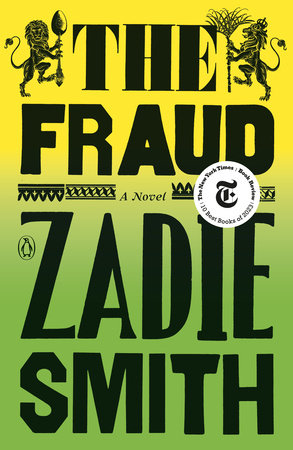
The Fraud
In Victorian England, Eliza Touchet follows the Tichborne Claimant trial, where a man returned from Australia says he is the missing heir to a baronetcy.
About
Spoiler notice: This About reveals Eliza Touchet’s early family history, her relationship with the Ainsworth household, and Andrew Bogle’s role in the Tichborne case. Later developments and the novel’s ending are withheld.
The Fraud follows Eliza Touchet through the Ainsworth household and into the crowded courtrooms of the Tichborne case. Eliza is cousin by marriage and housekeeper to novelist William Harrison Ainsworth, whose writing career has faded while his appetite for literary life remains. Their long, complicated connection puts her close to his work, his family and his friends, including Charles Dickens. In 1873, London is absorbed by a man claiming to be Roger Tichborne, the heir presumed lost at sea. Eliza goes to watch the proceedings, where the Claimant’s identity is debated alongside questions of class, land and who deserves to be believed. The story shifts between Britain and Jamaica, joining the polished interiors of English life to the plantation history that lies behind its wealth.
Eliza first enters the Ainsworth family story in 1830, when William’s wife Anne Frances asks her to help with the children. Eliza expects to stay only a short time, but she proves useful and becomes attached to Frances. Household work draws the women into daily closeness: they share rooms, tend to the children, and walk together at Kilburn Wells. Eliza’s sharp remarks meet Frances’s openness, and the affection between them grows beneath the language of practical help.
Before she joins the Ainsworth household, Eliza has married James Touchet and become a mother. Her husband leaves with their young son Toby, and the child dies of scarlet fever far from her. The legal arrangements of marriage give Eliza little power to recover Toby, and James’s will leaves her without provision. William helps her obtain an annuity and a place within his family’s circle. That history matters to the older Eliza at the trial: money and property are never abstract topics for someone whose marriage determined what she could claim and whose security depended on a male relative’s intervention.
William’s persistence as a novelist becomes both comic and painful as his reputation declines. He has produced dozens of books, yet readers and later generations have largely forgotten him; Dickens, once his contemporary and rival, has become the name that endures. Eliza sees the gap between William’s belief in his own work and the family responsibilities he leaves to others. She knows his habits intimately and still cannot reduce him to an easy verdict. His talent, vanity, warmth and selfishness coexist, as do Eliza’s own convictions and compromises. The literary circle around them prizes public feeling and grand stories, but the household shows the less celebrated labour that makes a writer’s life possible. The trial later gives Eliza a new spectacle of storytelling, with lives and reputations put on display before an audience.
At the centre of that spectacle is the Claimant, a London butcher who has returned from Australia and says he is Roger Tichborne, heir to a wealthy family. Roger disappeared at sea; the Claimant asks the court to accept his identity and give him the title and fortune. The case unfolds first as a civil suit and then as a criminal prosecution. In the second trial, working men such as plumbers and cab drivers sit on the jury, unlike the upper-middle-class men usually trusted to judge such cases. The Claimant’s supporters treat his challenge to aristocratic authority as their own, even as evidence is presented against him. London follows the proceedings in newspapers and public gatherings. For Eliza, the court is part legal argument, part theatre: each witness is asked to make a life legible to people who already have reasons to believe or disbelieve.
Andrew Bogle is the witness Eliza cannot dismiss. He is a formerly enslaved Jamaican who worked for the Tichborne family and gives testimony in support of the Claimant. His account carries the courtroom beyond the question of one man’s name: Bogle speaks of his life in Jamaica and England, and his presence makes the plantation world part of London’s daily news. The public turns him into a celebrity, buying newspapers to read his evidence and even putting his image on plates and mugs. Bogle’s testimony gives the proceedings another centre of gravity. The Claimant may command crowds, but Bogle draws attention through the force and detail of his own story. His son Henry, a young radical, also enters Eliza’s path. Through them, her abolitionist beliefs meet people whose experience and politics exceed the boundaries she has set for herself.
Eliza wants a closeness with Bogle that he does not necessarily want in return. Listening to his testimony does not give her a right to his trust, and her curiosity can place another demand on a man who has spent years answering other people's questions. His outward composure also conceals anger. In one scene, people discuss matters around him with a patronising confidence that leaves little room for his own voice; only afterwards does it become clear that he has crushed the glass in his hand. Away from the courtroom's admiring audience, the person celebrated for his dignity is still expected to endure being spoken over.
Book details
- Author
- Zadie Smith
- First published
- 2023
- Series
- No series listed
- Subgenre
- Literary historical fiction, Victorian fiction, Colonial fiction
- Primary genre
- Historical Fiction, Literary Fiction
- Tags
- No tags for this book.
Review
Editor profile
Baby Bat
Goodreads and social links will be added soon.
- Goodreads — link coming soon
- Social media — link coming soon