
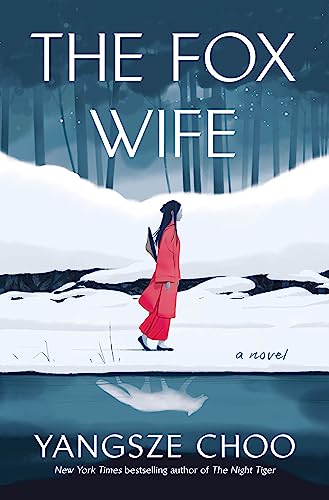
The Fox Wife
Manchuria, 1908: after a courtesan is found frozen in a doorway, detective Bao is hired to identify her amid rumors of fox spirits.
About
Spoiler notice: Spoiler-light account: this About describes the premise, character relationships, and narrative approach, but does not disclose the novel’s final resolution.
Yangsze Choo places The Fox Wife in Manchuria in 1908, during the final years of the Qing Empire. The story opens with a courtesan found frozen in a doorway, a death entangled with local stories about fox spirits who take human form. Bao, a detective with an uncanny ability to detect lies, is asked to identify the dead woman. Elsewhere, Snow arrives as a servant in the household of a family known for its Chinese medicine shop and a long-running curse against its eldest sons. Her presence seems to alter the family’s fortunes, but she is pursuing a private purpose of her own. These two strands gradually draw together: Bao follows the case, while Snow follows the trail of the person responsible for the loss that has set her journey in motion.
Bao’s work gives the mystery a human point of entry into a world where the supernatural may be more than rumor. His ability to recognize falsehood is not presented as an uncomplicated advantage. The publisher’s reading guide describes the truth as a burden that leaves him isolated, especially when he hears lies that other people cannot detect. His childhood interest in fox gods makes the case personally charged, but his investigation still depends on ordinary acts of listening, questioning, and deciding what evidence means. That tension keeps the book’s folklore connected to practical questions of trust. Bao may be able to sense that someone is concealing something, yet that does not automatically explain the motive, identify the speaker’s true nature, or tell him what justice should look like.
Snow’s chapters shift the perspective from investigation to pursuit. She is a mother grieving a lost child and seeking vengeance, and the trail carries her from northern China toward Japan. Choo draws on stories in which foxes cross the boundary between animal and human, while allowing Snow to look back at those traditions from the position of a fox herself. In an interview, Choo described her interest in the question of why foxes would seek contact with people; that curiosity shapes the novel’s attention to what each side wants from the other. Snow’s encounters with people from her past complicate a simple hunter-and-prey pattern. She can be dangerous, but the story also treats cunning as a response to limited power, leaving room for grief, memory, and affection beside the pursuit of a killer.
The medicine-shop household gives the book another scale of mystery. Its members possess knowledge that can relieve illness, yet they cannot escape a curse said to take the eldest sons before their twenty-fourth birthdays. Snow’s arrival appears to bring a change, but the novel keeps uncertainty around whether that change is good fortune, coincidence, or part of a larger design. This domestic thread places inherited belief beside medicine, family duty, and fear of repetition. The shop is both a place of care and a setting shaped by expectations handed from one generation to the next. The plot’s supernatural question is therefore never separate from ordinary dependence: who is protected, who is blamed, and how a family makes sense of misfortune when its explanations cannot prevent it.
The historical setting adds pressure to these private lives. Choo locates the novel in a period of social and political change, when old institutions are weakening and new ideas and technologies are entering people’s worlds. Manchuria’s position between China and Japan also lets the story travel across borders; the folktales and beliefs surrounding fox spirits move with its characters rather than staying fixed in one place. The author has spoken about the early twentieth century as a time when anxieties about strangers and supernatural encounters could intensify. In the novel, questions of identity become practical: people assess whether an unfamiliar person is trustworthy, while stories offer competing ways to explain what they see. Movement across borders makes those judgments harder because a person may carry customs and beliefs that are unfamiliar to the people they meet. The result links folklore to the historical experience of living amid change, instead of treating it as decorative background.
The book’s form reinforces that interest in who gets to tell a story. Bao’s case-oriented perspective and Snow’s more intimate account create different kinds of knowledge, and Snow’s direct address to the reader makes her narration feel deliberately close. Choo has said that fox legends contain recurring patterns, including stories of scholars and beautiful women, and she reworks that familiar material from the fox’s side of the encounter. The publisher’s reading guide also notes that Choo visited historic garden villas in China that informed the novel’s imagery. Those spaces and inherited tales help connect individual memory to a wider cultural past. Across its linked narratives, The Fox Wife asks how much a person can know about another being, and how grief, power, and old stories shape the answer.
Book details
- Author
- Yangsze Choo
- First published
- 2024
- Series
- No series listed
- Subgenre
- Historical fantasy, Historical mystery, Family saga
- Primary genre
- Fantasy, Mystery & Thriller, Historical Fiction, Literary Fiction
- Tags
- No tags for this book.
Review
Editor profile
Baby Bat
Goodreads and social links will be added soon.
- Goodreads — link coming soon
- Social media — link coming soon