
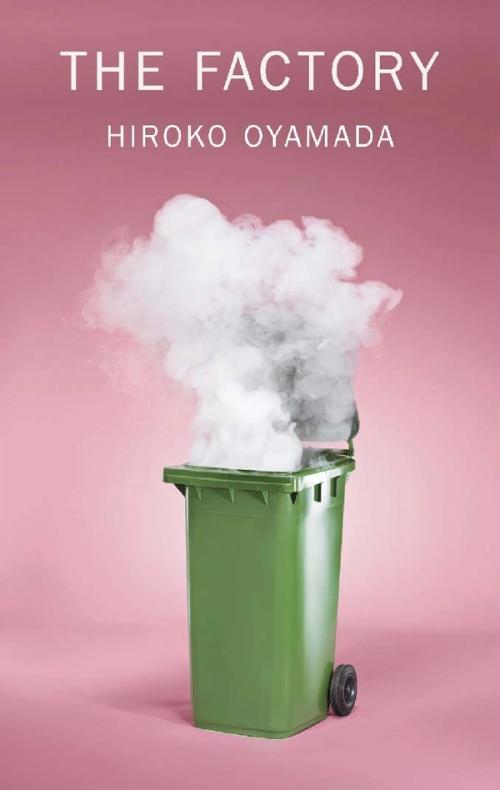
The Factory
Three workers join an immense factory in an unnamed Japanese city.
About
Spoiler notice: Spoilers for the premise and early setup: Yoshiko shreds documents, her brother proofreads, and Furufue studies moss at a sprawling factory. The notice describes their assigned roles and the increasingly unclear boundary between work and ordinary life; it does not reveal later developments or the ending.
Hiroko Oyamada’s The Factory begins with three people taking jobs inside an industrial complex so large that it seems to contain its own geography and ecology. Yoshiko Ushiyama is assigned to destroy documents, her brother edits written material, and Furufue, a researcher, looks for moss suitable for a proposed green roof. Their tasks are specific, but their larger purposes remain difficult to grasp. The novel’s setting is recognisably a workplace, with departments, instructions and routines, yet its scale unsettles that familiarity. A factory is not merely where the characters report for work; it becomes the landscape through which they understand time, movement and the limits of their own attention.
The three strands give the book a shifting view of labour. Yoshiko’s work involves making paper disappear, while her brother is asked to correct documents whose meaning and destination are uncertain. Furufue’s assignment sounds more ecological: he is to study the moss spreading across the grounds in connection with a green roof. None of the roles provides a clear account of what the factory produces or why these particular activities matter to it. That gap changes how ordinary work details read. A task can be performed carefully and still seem detached from any visible result. The characters are not presented as leading a campaign against the company; instead, the unease accumulates through the mismatch between focused effort and the absence of a comprehensible purpose.
Oyamada builds the workplace as a world with edges that are hard to locate. Its grounds are expansive, its departments specialised, and its routines appear to extend beyond the shift itself. The workers move through a place where human organisation and the surrounding nonhuman life are difficult to separate. Moss is not simply decorative greenery, and the animals associated with the site do not sit comfortably in the category of background detail. As Furufue attends to the grounds, an apparently practical environmental project opens onto stranger questions about what lives there and how the factory has shaped its surroundings. The scale makes the facility feel less like a single building than a system with its own weather, habits and forms of life.
The novel’s oddities arrive beside the mundane procedures rather than replacing them. Instructions, paperwork and assigned duties remain part of the characters’ days even as their perceptions of the place grow less stable. This balance gives the surreal elements their force: they are encountered within a recognisable administrative setting, where people still have jobs to do and are expected to continue doing them. The gap between normal procedure and inexplicable detail is not neatly resolved into a puzzle with one answer. Instead, the characters keep working while the categories that might explain their surroundings become less dependable. The result is a comic unease that comes from treating bizarre conditions with the same matter-of-fact attention as a routine task.
The Factory also makes perspective part of its subject. Yoshiko, her brother and Furufue occupy different roles in the same organisation, so no single account supplies a complete map of the institution. Their work connects them to the factory in distinct ways, but those connections do not add up to a transparent picture of its intentions. This divided view echoes the experience of organisations where each employee can understand a local responsibility without seeing the whole process. The novel’s workplace thus works at two scales at once: it is a concrete setting crossed by individual workers, and a system whose full shape remains out of reach. Readers encounter that limit through the characters’ partial knowledge rather than through an explanatory overview.
The factory’s geography helps explain why each worker encounters a different version of the same place. A river divides its vast grounds, and the complex is described as nearly the size of a city. Yoshiko meets it through the steady removal of paper; her brother sees it in the documents he must mark up; Furufue looks across the grounds for moss that could suit rooftop planting. These duties direct attention to separate layers of the institution: its records, its language and its managed landscape. The scale also allows local routines to coexist with unfamiliar animals and other oddities on the site. No one perspective settles what the factory is or how all its parts fit together, so the setting remains both a workplace and an incomplete map.
The book’s central tension is between meaningful attention to a task and the larger system that assigns it. Its workers look closely at papers, words and moss, while the purpose of their combined effort remains obscure. That structure leaves room for readers to consider modern employment, bureaucracy and environmental change without reducing the novel to a single allegory. The factory can be read as an exaggerated workplace, but it is also a place inhabited by people who have to make choices with incomplete information. Oyamada keeps those two dimensions in contact: the strangeness does not erase the everyday work, and the ordinary details do not explain away the strangeness. The novel’s questions about purpose and belonging emerge from this unsettled combination.
Book details
- Author
- Hiroko Oyamada
- First published
- 2013
- Series
- No series listed
- Subgenre
- Translated literary fiction, Weird fiction
- Primary genre
- Literary Fiction
- Tags
- No tags for this book.
Review
Editor profile
Baby Bat
Goodreads and social links will be added soon.
- Goodreads — link coming soon
- Social media — link coming soon