
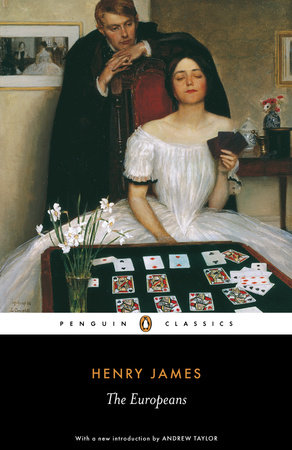
The Europeans
Eugenia Münster and her brother Felix arrive from Europe to visit their reserved New England relations.
About
Spoiler notice: Full-plot spoilers, including Eugenia’s departure and the family’s eventual marriages.
Eugenia Münster looks out from a Boston hotel at sleet, gravestones and people scrambling into passing transport, and wonders why she has come. Her brother Felix finds the same spectacle worth drawing. Their responses establish the difference between two visitors whose arrival is about to disturb a quiet American family. In Henry James’s The Europeans, published in 1878, the siblings have crossed the Atlantic to meet relations they scarcely know. Eugenia wants an improvement in her circumstances; Felix can take pleasure in almost any change of scene. Neither arrives with the resources or established position their sophisticated manners might suggest. Their acquaintance with the Wentworths will therefore involve practical hopes as well as the curiosity of people discovering a different way of life.
Felix goes ahead to the country house and meets Gertrude Wentworth while the rest of her family is away at church. She has stayed at home in a restless mood, with her sister Charlotte worrying about what their father will think. The visitor’s easy conversation gives Gertrude something unexpected to attend to. He is a painter and traveller, pleased by the landscape and willing to treat her seriously without prescribing how she ought to behave. Their uncle Mr Wentworth offers the newcomers hospitality, but his manner is more cautious. The family has habits of duty, reserve and moral discussion that Felix approaches with cheerful flexibility. The result is an awkward encounter between people who are related without sharing much experience of one another.
Eugenia has a complicated position in Europe. Felix explains that she married a younger brother of a German ruling prince in a morganatic marriage, receiving the title of baroness without becoming a princess. There are now efforts to dissolve that union, and she has resisted. This history makes her arrival more than an excursion: what happens in America may affect where and how she can live afterwards. The Wentworths place a small neighbouring house at her disposal, and she makes it her own with curtains, fabrics and decorative possessions. Gertrude finds the transformation fascinating. Objects and manners suggest a life beyond the family’s familiar arrangements, while Eugenia discovers how difficult it can be to translate admiration into a secure new position.
Felix’s attachment to Gertrude develops through painting, conversation and the pleasure they take in each other’s company. Mr Brand, the minister who has hoped to marry her, regards the visitor rather differently. Gertrude becomes increasingly willing to resist advice that presents her tastes as a problem requiring correction. Charlotte, who takes obligations seriously, tries to keep peace without being free of feelings of her own. Felix eventually asks her to help persuade their father to consent to his marriage. When he makes his case, he admits that he has no fortune or impressive position to offer. He can earn a living painting portraits, and Gertrude is willing to share the travelling that work may require rather than remain within the future others have imagined for her.
Other attachments complicate the visit. Mr Wentworth is worried about his son Clifford’s drinking, and Felix suggests that time with an accomplished woman such as Eugenia might have an improving effect. Eugenia’s attention also interests Robert Acton, whose attraction is accompanied by questions about her intentions and her position abroad. The document that might alter her marriage becomes a recurring subject between them. Their exchanges leave room for uncertainty about what each is prepared to promise and what each believes. Meanwhile, Clifford and Acton’s sister Lizzie reach an understanding of their own. The visitors have changed the household’s possibilities without controlling the directions in which every younger member will choose to move.
Gertrude finally speaks directly to her father. She considers her character formed enough to choose, and is determined to marry Felix. Mr Wentworth’s objections involve more than money: he doubts whether this is the right development for a daughter he has always found difficult. Mr Brand unexpectedly supports the match and offers to perform the ceremony himself. Charlotte adds her plea, and her father consents. The decision makes Felix’s future in the family clear, while Eugenia prepares to leave it. She tells her brother that she has refused Acton and will sail for Germany. When Felix assumes that her position there has changed, she explicitly says that she has not signed the document. Her account supplies no completed dissolution on which to build a different ending.
Eugenia’s farewells retain the charm that has impressed her relations throughout the visit. She gives Lizzie a ring, leaves Gertrude grateful for her generosity, and parts from Acton with their difference in understanding still apparent. Felix sees her off aboard the ship. His own story then takes a happier course: he and Gertrude marry, leave together and continue their shared life with the gaiety that worried her father. Clifford and Lizzie make a more settled life within their narrower circle. Charlotte eventually marries Mr Brand, bringing Gertrude home for the wedding, while Acton later marries another young woman after his mother’s death. Eugenia’s future remains outside that domestic account. The visit has created several lasting relationships without providing the same American homecoming for both siblings.
Book details
- Author
- Henry James
- First published
- 1878
- Series
- No series listed
- Subgenre
- Literary fiction, Modern classics
- Primary genre
- Literary Fiction
- Tags
- No tags for this book.
Review
Editor profile
Baby Bat
Goodreads and social links will be added soon.
- Goodreads — link coming soon
- Social media — link coming soon