
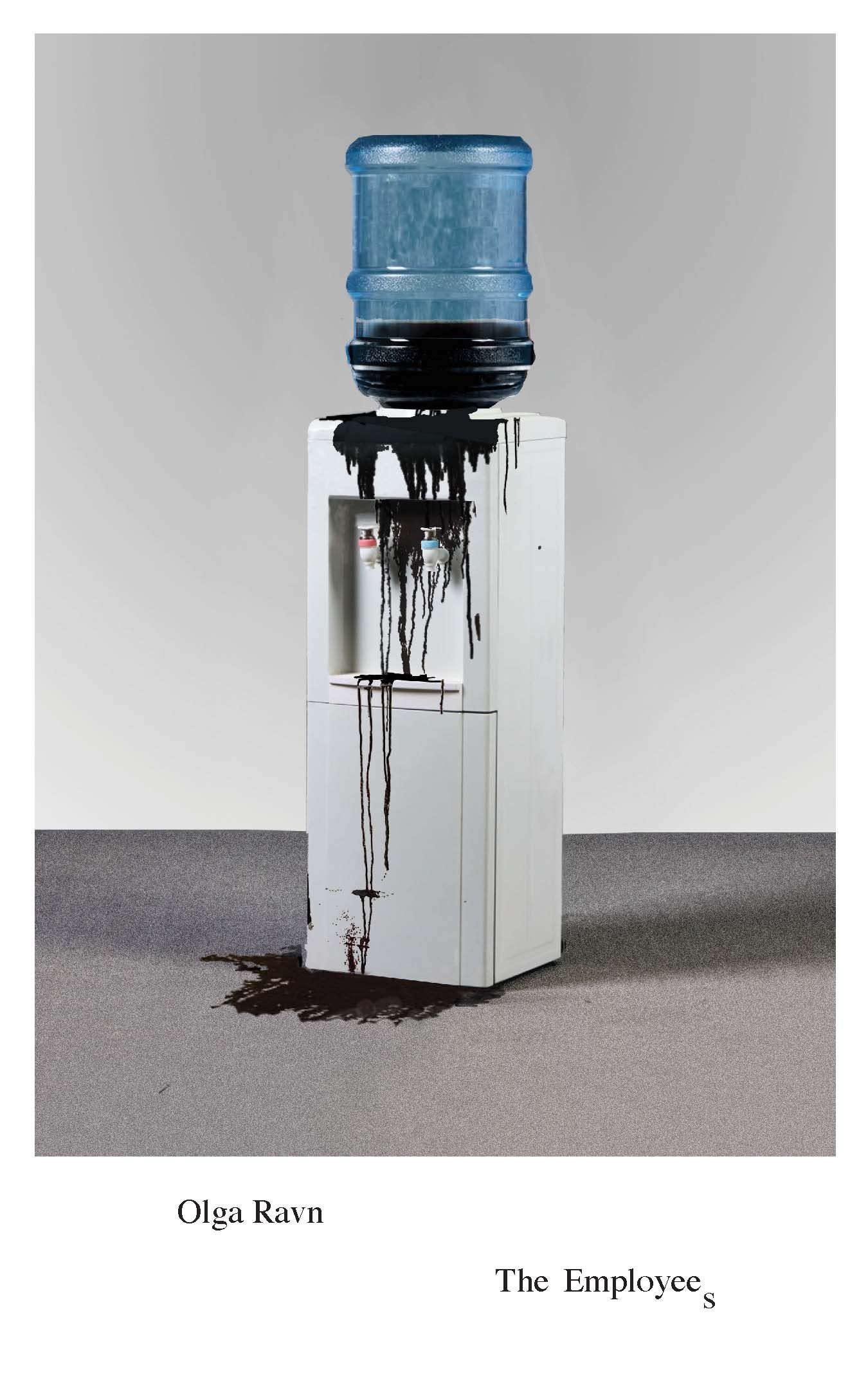
The Employees
On the Six-Thousand Ship, human workers and manufactured humanoids give statements to a committee about their duties and a set of strange objects brought aboard from the planet New Discovery.
About
Spoiler notice: Discusses the premise and early encounters with the objects; no ending spoilers.
The Employees presents a space voyage through workplace testimony rather than a continuous adventure narrative. A committee interviews crew members on the Six-Thousand Ship and collects their statements about work and a group of objects brought aboard from New Discovery. The opening frames these accounts as an investigation into workflow, performance and the changes the objects might cause. That bureaucratic purpose gives the book its first tension: the committee wants usable information, while the people speaking keep describing experiences that do not fit neatly into a report. The ship is both a science-fiction setting and a workplace with procedures, rooms, tasks and an authority that expects the crew to remain productive.
The speakers are human employees and humanoids made to perform shipboard duties. The distinction matters to the institution, but it does not always help the reader identify who is talking. Ravn withholds names and often withholds the category of the speaker, so that a voice can initially sound like a person before its relation to human life becomes clearer—or remain uncertain. The uncertainty prevents an easy division between voices whose feelings count as human and voices whose responses can be dismissed as programming. The form therefore makes classification part of the reading experience. The crew are individually audible, but the committee’s files and the ship’s job categories try to make them legible as units of labour.
The objects are not explained as conventional discoveries that the crew can catalogue and move past. They prompt close, bodily descriptions and attachments that seem disproportionate to their apparent function. In an early statement, one employee cleans an object suspended by cords, wonders whether it is female, and describes an egg that drops from it and breaks. The speaker returns to the room, talks to the object, and notices a hum that later stops. Another statement describes three forms whose coldness and warmth shift, whose relations suggest they might be one entity or several, and whose presence compels touch. These scenes bring the objects close to the body while leaving their identity unsettled. Their effect comes from the mismatch between an administrative interview and a response that sounds intimate, fearful or grieving.
That sensory intensity changes what counts as knowledge aboard the ship. The reports dwell on texture, temperature, smell, sound and the urge to touch, as if ordinary visual or technical description cannot contain what the crew encounters. This emphasis is connected to the novel’s origin: Ravn began writing for an exhibition by artist Lea Guldditte Hestelund, first producing testimony-like texts about sculptures and then building the ship and its employees around them. The two exchanged writing and artworks, and Ravn has said that they were interested in senses beyond sight, including scent. Knowing this background does not decode the objects into symbols with fixed meanings. It does make their material presence and the friction between attraction and repulsion central to how the book works.
The human employees carry memories of Earth, while the humanoids have been made for the ship and its work. Their differences appear in the kinds of past and future each can imagine, but the reports unsettle the boundary. Humans remember a world they are physically distant from; humanoids begin to express attachments and needs that exceed the narrow purpose assigned to them. Both groups develop longings for intimacy and earthly pleasures, although their relationships to those desires differ. The book does not turn this contrast into a simple contest between authentic people and unfeeling machines. It instead asks what bodies, memories and desires have to do with personhood when some crew members were born and others manufactured, and when the corporation’s records may be the only recognized account of what they are.
Work is the ship’s dominant language. In Ravn’s account of the novel, the employees have been taught to understand their lives as work and sleep, with little room for dreaming, art, falling in love or touch. The objects introduce experiences that cannot be justified by a task assignment, and the committee tries to assess whether these experiences affect performance. That framing turns emotional change into a management question. As the statements accumulate, the crew’s attachment to the objects and increasing unrest make it harder to believe that the ship’s existing routines can continue untouched.
The numbered statements create a story by accretion. They move among short and longer testimonies, repeating images and concerns while leaving gaps in chronology and identity. Some speakers describe a specific task; others speak in compressed, almost poetic reflections on bodies, work, Earth or the objects. The committee’s presence suggests an orderly record, but the testimony keeps exceeding that order. The reader has to notice shifts in tone and recurring details rather than wait for a narrator to explain the ship’s history. This is also why the book’s science-fiction world remains spare: it supplies the conditions needed for the employees’ statements, then allows those voices to carry much of the setting and conflict.
The novel’s central question is not solved by deciding which crew members are really human. The objects expose how much life depends on contact—with other bodies, with land, with remembered places, and with things that cannot be reduced to their use. Ravn has described the book as an attempt to imagine people removed from Earth and to examine their relationships with soil, weather, atmosphere and resources, including both land and bodies. The Employees keeps its conclusions open, using the crew’s intimate, incomplete accounts to make the workplace’s categories feel fragile. Its short form rewards attention to each voice and image more than a search for a single explanatory key.
Book details
- Author
- Olga Ravn
- First published
- 2018
- Series
- No series listed
- Subgenre
- Robot and AI, Dystopian, Translated literary fiction
- Primary genre
- Sci-Fi
- Tags
- No tags for this book.
Review
Editor profile
Baby Bat
Goodreads and social links will be added soon.
- Goodreads — link coming soon
- Social media — link coming soon