
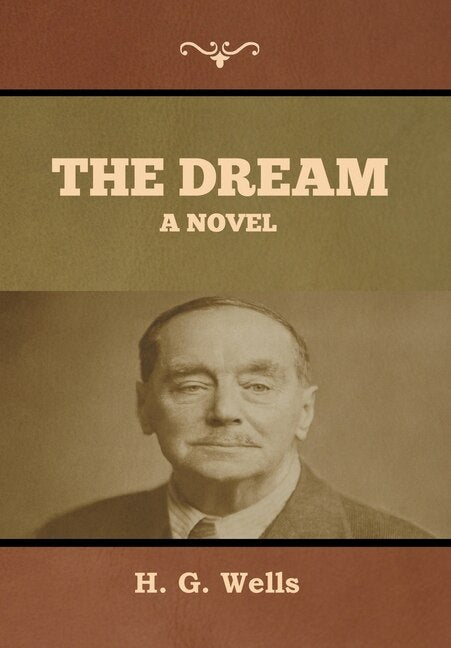
The Dream
On holiday in a distant future, Sarnac dreams an entire life in early twentieth-century England.
About
Spoiler notice: This overview discusses Harry’s marriages, the shooting, his death and the final discussion of the dream.
The Dream begins far beyond the world in which most of its story takes place. Sarnac, a biologist worn down by sustained work, goes on holiday with Sunray among lakes and mountains. Their companions share the freedom, health and ease of a society which regards the early twentieth century as a remote and troubled age. An excavation brings that distance into painful focus: a town destroyed by poison gas and trains full of people trapped in a tunnel have been recovered from the ground. After this encounter with the dead, Sarnac falls asleep and experiences what seems to him an entire lifetime. The man whose life he recounts is Harry Mortimer Smith, and the past becomes something more intimate than an archaeological display.
Harry's childhood returns through partial memories, household scenes and the strong impressions left by adults whose circumstances he only gradually understands. His father keeps a greengrocer's shop at Cherry Gardens, and the family's prospects depend upon work, money and arrangements too unstable to offer much security. His sister Fanny's resistance to the life expected of her supplies one of the story's continuing challenges to respectability. The family world can be familiar, affectionate and oppressive at once. Wells gives Sarnac's companions reasons to interrupt and ask questions, so that customs Harry took for granted become difficult to explain to people raised under different conditions. The framing conversation repeatedly turns a commonplace detail into evidence of assumptions which the future has ceased to accept.
His father's death in a motor-car collision breaks the household's existing pattern and helps bring the family to London. The transition places private grief within a larger account of dependence: a person's death changes income, housing and the opportunities available to everyone left behind. Fanny's path opens possibilities Harry might not otherwise encounter, including connections which help him enter publishing. Thunderstone House becomes a major part of his working life, producing reading matter for a public whose appetite for stories has expanded faster than its opportunities for sustained education. Sarnac understands this industry through the social arguments of his own time. The novel therefore combines Harry's experience of finding a livelihood with a critical account of the institutions shaping what people are encouraged to imagine.
War brings Harry into the events which the future speakers know as part of humanity's age of confusion. His attachment to Hetty Marcus and their marriage establish a hope of private happiness within the disruption of military service. Separation leaves that hope vulnerable. When Harry comes home, the timing of her child's birth convinces him that he cannot be its father. His response is governed by jealousy, wounded pride and the ideas of sexual purity he has absorbed. The older consciousness telling the story can recognize cruelty in reactions which once seemed justified to the younger man. Wells keeps the difference visible, allowing the account to expose a failure of understanding without making Harry's later remorse capable of undoing the damage already inflicted.
After divorce, Harry marries Milly and continues his publishing career. This second life provides obligations which are real even though his feelings for Hetty have not disappeared. Meeting Hetty again reveals her unhappiness with Sumner and brings Harry to a decision more complicated than either recovering his former marriage or leaving her to suffer. He helps arrange an escape to Canada through Fanny, while refusing his sister's suggestion that he go with Hetty himself. His wife trusts him, his son depends upon him, and his work also claims his attention. The discussion makes divided loyalty concrete. Harry cannot find a course which restores everything that has been lost, but he can attempt to make another person's future less constrained than her present.
That assistance draws Sumner to Harry, demanding to know where his wife has gone. The first confrontation includes a threat, followed later by an encounter near Thunderstone House in which Sumner produces a pistol. Harry describes its discharge as a failure of coordination rather than a deliberate, accurately directed act of killing. Mortally wounded, he tells those who find him that the weapon went off in his own hand. His invented account is intended to protect Sumner and keep Hetty's story from causing further pain to Milly. At the close of his life, the wish to leave others with some comfort exists beside the muddle and concealment that have shaped his relationships. Death brings the dream back into the mountain sunlight, where Sunray is waking Sarnac.
The epilogue returns the experience to discussion rather than supplying a final explanation. Some companions accept Harry's life as a recovered memory; others question the resemblance between Hetty and Sunray or suggest that a vivid dream could create the same conviction. Sarnac is certain of his identification, but the conversation leaves open what memory and personality might mean. The future's apparent happiness also raises a moral difficulty: later progress cannot simply repay people whose lives were narrowed by suffering. Their debate asks whether those lost lives can be understood, remembered or in some sense lived again. The last movement is towards sunrise over the mountains, with birds audible far below. Harry's story has ended, while the relation between his life and Sarnac's remains a possibility the novel invites its listeners to consider.
Book details
- Author
- H. G. Wells
- First published
- 1924
- Series
- No series listed
- Subgenre
- Classic science fiction
- Primary genre
- Sci-Fi
- Tags
- No tags for this book.
Review
Editor profile
Baby Bat
Goodreads and social links will be added soon.
- Goodreads — link coming soon
- Social media — link coming soon