
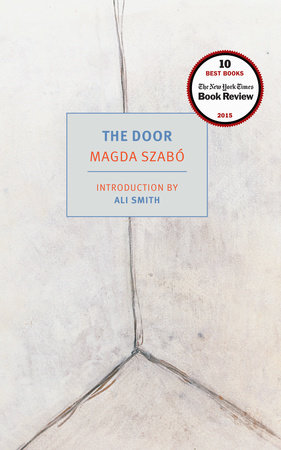
The Door
Magda is a writer in Communist Hungary when Emerence, the abrupt and fiercely independent housekeeper she hires, takes control of her household.
About
Spoiler notice: Full-novel spoilers below, including Emerence’s concealed history, the crisis that exposes her home, her death, and Magda’s final remorse.
The Door is told by Magda, a writer looking back on her relationship with Emerence, the housekeeper who comes to run her home and, increasingly, to shape her life. The story begins with knowledge of a catastrophe and then moves back through the years that led to it. That backward movement makes the narrator’s account feel like both a confession and an attempt to understand what she did. Magda knows the outcome, but she cannot make the earlier scenes simple evidence for a verdict. Her affection for Emerence is real; so are the vanity, fear and practical self-interest that complicate it. The first-person voice holds those truths together while repeatedly questioning the story it is telling. The result is a domestic relationship presented under the pressure of hindsight, where ordinary acts of care acquire the weight of decisions that cannot be undone.
Magda and Emerence begin from strikingly unequal positions. Magda is educated, married to an academic and pursuing a writing life amid the political restrictions of Communist Hungary. Emerence is an illiterate peasant, abrupt in manner and difficult to read. She is hired to help in Magda’s household, yet the arrangement quickly resists the expected division between employer and servant. Emerence sets her own terms, takes command of domestic routines and becomes indispensable. Magda depends on her competence even as she remains unsettled by her authority. Emerence’s care is not meek service offered for approval. She has a strong sense of how things should be done and expects others to accept her standards. The household becomes a place where class and education confer less control than Magda assumes they should, and where dependence runs in both directions.
The locked door of Emerence’s home gives that tension a physical boundary. She lives alone and permits no one inside, including people close to her. Magda can see the door, but not the private life and painful history it guards. The barrier becomes more than a mystery to be solved: it marks Emerence’s right to decide what she reveals and when. The novel’s movement through anecdotes and changing periods keeps the reader near Magda’s uncertainty rather than supplying a single explanatory key. Details surface gradually through arguments, visits and memories. Emerence’s reserve is not simply an eccentric pose; her way of protecting herself has been built through experiences Magda cannot fully possess. When she does disclose parts of her past, the disclosures revise what Magda thought she understood without turning Emerence into a transparent case study.
Their differences also appear in what they consider sacred, loyal or worth preserving. One of the reading guide’s examples is a soup Emerence brings for Magda’s ill husband in a christening bowl left behind by the murdered Grossman family. Magda is horrified by the apparent disregard for the bowl’s association with the Holocaust; Emerence’s treatment of the object does not fit Magda’s moral expectations. The episode makes the women’s conflict about more than manners. They share a world marked by historical trauma, but they do not assign the same meaning to its objects or rituals. Elsewhere, Emerence treats a visitor’s departure from lunch for business as a profound betrayal. To Magda, the response can seem disproportionate; to Emerence, loyalty is measured by presence and attention. The novel lets those incompatible standards remain visible instead of smoothing them into easy agreement.
Magda’s writing career sharpens the personal stakes. Emerence can support the work and still distrust the distance between art and life. A visit to Magda’s film set disappoints her: the movement she sees is manufactured, with a wind machine standing in for wind. Her response presses on a question the novel asks about representation. Magda makes a living by turning experience into words, while Emerence judges that work against the concrete realities of care, loyalty and what people actually do. Magda’s eventual literary success coincides with a devastating turn in their relationship. The full story makes the conflict especially painful because recognition and betrayal are not separate events. The narrator’s ambition does not erase her attachment to Emerence, but neither does love guarantee that Magda will act with the courage or judgment Emerence needs.
The crisis around Emerence’s home brings those limits into the open. When she is gravely ill, Magda decides that others must enter the house to save her, despite Emerence’s absolute refusal to admit anyone. Magda later calls this choice unforgivable. The decision is made in the name of preserving life, and the novel asks what that protection costs when it overrides the very boundary that gave Emerence control. The reading guide connects this moment to Emerence’s earlier advice about not stopping someone when their life is ending, but it does not make the present choice simple. Magda has to judge an emergency without access to a clean answer, then live with the fact that her action has violated a rule she knew mattered. Rescue, betrayal and care occupy the same act.
After Emerence’s death, Magda receives disintegrated furniture as an inheritance, an ending that refuses the comfort of a reconciliatory keepsake. The object cannot restore the relationship or resolve the narrator’s guilt. The novel closes around the difference between loving someone and being able to meet that person on their own terms. Magda’s account is therefore not a claim that she has finally understood Emerence completely. It records how the gaps remain: the locked rooms, the histories disclosed late, the judgments each woman makes about the other, and the irreversible choice made during the illness. By returning to the catastrophe from multiple points in their shared life, Szabó makes hindsight a form of responsibility. Magda can tell the story, but telling it cannot reopen the door or turn remorse into repair.
Book details
- Author
- Magda Szabó
- First published
- 1987
- Series
- No series listed
- Subgenre
- Literary fiction, Historical fiction
- Primary genre
- Literary Fiction
- Tags
- No tags for this book.
Review
Editor profile
Baby Bat
Goodreads and social links will be added soon.
- Goodreads — link coming soon
- Social media — link coming soon