
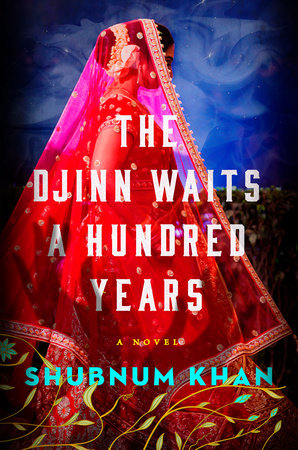
The Djinn Waits a Hundred Years
At the coastal Akbar Manzil, now a boardinghouse, fifteen-year-old Sana grows curious about the mansion and its residents.
About
Spoiler notice: Discusses the house, the investigation by Sana, the family history of Meena, and the attachment of the djinn; the ending is not disclosed.
Akbar Manzil is a once-grand estate on South Africa’s coast near Durban, now a boardinghouse for people who would rather keep to themselves. Sana arrives with her father, but she does not share the other residents’ wish to disappear into the building. At fifteen, she is curious about the house and the lives people carry into it. Her questions about love are practical: she asks residents what it means to them, collects their answers, and tries to understand how affection can be recognized. The contrast between her attention and the tenants’ reserve gives the mansion its unusual social shape. People live close together yet remain private, while a teenager with little authority becomes the person most willing to ask how they came to be there. Khan has said that she wanted to write about Durban, forgotten people, heartache, djinns, and love.
Sana’s interest turns into investigation when she finds traces of a past the house has kept out of sight. The East Wing is neglected, filled with abandoned objects, and ends at a door locked for decades. Beyond it is a bedroom seemingly preserved in time and a diary connected with Meena, a young woman who died there a hundred years earlier. These objects make the past something Sana can enter and compare with what people tell her. Khan explains that a photograph of a loving couple helps prompt Sana’s exploration. The house becomes a store of stories its current residents cannot simply talk away. Sana’s curiosity is therefore both an emotional habit and the means by which the novel moves between lives. Its questions arise from specific rooms, keepsakes, and memories rather than from a mystery detached from daily life.
Meena’s history opens a second strand set in the world that produced Akbar Manzil. Khan describes Akbar as an adventurer who settled in South Africa and entered an arranged marriage that proved unhappy. His mother’s control of domestic life adds pressure inside the household. Meena enters the family as a woman others consider unsuitable, yet Akbar falls in love with her and takes her as a second wife. The affection Sana senses in the photograph sits against a social order that makes the relationship difficult. Khan’s interview discusses divisions of class, complexion, region, money, and land, as well as admiration for British culture among Indian communities in the period. These tensions shape the family story. They are not presented here as a description of every South African Indian household, but as the pressures Khan says she explored through relationships and marriage.
The supernatural presence gives the histories a point of contact. The djinn is an invisible spirit that remains in Akbar Manzil and is bound to Meena by an attachment that was never returned. Khan describes it as a bridge between past and present, giving Sana and the reader clues about what happened. Its presence also makes the house feel alive: the spirit stayed there after the building was abandoned. This is more than a threat that appears and disappears. The djinn’s grief belongs to the history Sana is trying to recover, while its continued presence makes that history active in the boardinghouse. Mystery and romance meet through the same figure, whose knowledge cannot undo the loss it witnessed. The arrangement lets the haunting carry memory as well as suspense, and makes an unseen resident part of the household’s long history.
The two time periods illuminate one another without becoming interchangeable. Sana is a teenager trying to imagine a future, while Meena’s story shows an earlier generation making choices within its own restrictions. The house holds both stories, but its rooms and objects do not explain themselves; Sana must listen, observe, and assemble what people remember or avoid. Her collection of residents’ ideas about love gives the search a human scale. She is not only solving a historical puzzle. She is testing the stories available to her against uncertainty about belonging and the relationships around her. Khan has described the novel as bringing together interests that had gathered over time, including Durban, forgotten people, love, and the supernatural. Its gothic form gives those interests a shared place: a mansion whose architecture keeps the past physically close to the present.
The setting also gives the book its changing view of Akbar Manzil. It is an estate in its past, a family home, an abandoned building, and finally a shelter for tenants seeking obscurity. The neglected East Wing condenses this history into a part of the house left behind, while the residents bring new lives into its corridors. The point is not merely that an old room hides a secret. The building offers a way to see how private histories persist after the people who shaped them are gone. Khan has said that the djinn was the only living presence in the house for years after it was abandoned; this makes persistence literal within the novel’s magic. A dwelling can outlast its original family and still contain traces that alter how later occupants understand it.
Sana’s investigation connects questions about love with questions about memory. Her interviews collect definitions from people whose histories differ, while the diary makes one absent woman newly present. Meena is not a neat answer to Sana’s search; she is another person shaped by social expectations, desire, and loss. The djinn’s unreturned attachment adds a perspective on loving someone without being known by them. Around these connections, Khan places a young protagonist anxious about what lies ahead but still hopeful and drawn to adventure, as the author has described her. Akbar Manzil gives that curiosity somewhere to go. The result is a gothic family mystery in which a house’s past presses on its current residents, and understanding it becomes one way for Sana to think about the future.
Book details
- Author
- Shubnum Khan
- First published
- 2024
- Series
- No series listed
- Subgenre
- Gothic horror, Historical fiction
- Primary genre
- Horror, Historical Fiction
- Tags
- No tags for this book.
Review
Editor profile
Baby Bat
Goodreads and social links will be added soon.
- Goodreads — link coming soon
- Social media — link coming soon