
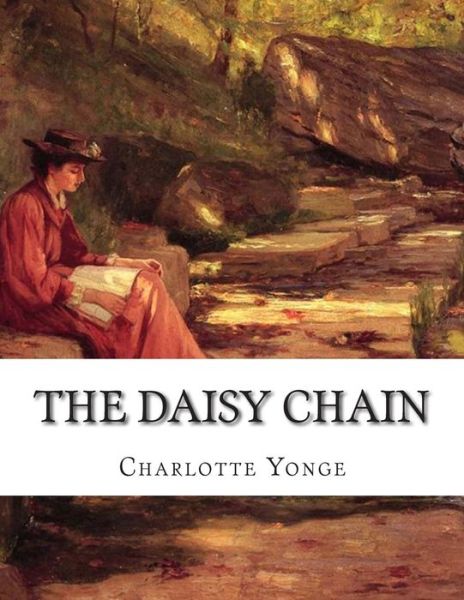
The Daisy Chain
Ethel May grows up in a busy household where learning, affection and ambition compete for everyone’s attention.
About
Spoiler notice: This overview discusses the fatal carriage accident, Tom’s mistreatment at school, Norman and Meta’s marriage and Ethel’s concluding place in family and parish life.
The May household in The Daisy Chain is noisy, affectionate and full of people who have plans for themselves and one another. Dr. May brings the energy of his working life into family meals, his wife can quiet the children with a glance, and the brothers and sisters argue, study and compete for attention. Etheldred, usually called Ethel, is an awkward, intelligent fifteen-year-old whose impatience can outrun her ability to explain herself. Charlotte M. Yonge’s 1856 novel follows this family across two parts, allowing its children to grow into responsibilities that look different from their youthful ambitions. The alternative title, Aspirations, belongs to a story concerned with what people hope to accomplish, how much they want to be admired and what happens when the needs of others interrupt their imagined future.
Ethel’s first visit to Cocksmoor gives one of those ambitions a definite place and a set of practical problems. A quarry worker has been injured, and the sisters take clothes and food to his family. What they find extends beyond a temporary shortage: the settlement is distant from school and church, and its poverty makes improvement difficult to organize. Ethel begins imagining what could be built there. Her brother Richard helps turn enthusiasm into a proposal, asking who will supervise it, how regularly they can travel, what it will cost and whether their father approves. His caution frustrates her, but he insists that starting something also means accepting responsibility for continuing it. The projected school and church develop through conversations, resources and repeated work, rather than appearing as the automatic reward for a generous intention.
The security of home is broken when the family carriage overturns. Mrs. May dies, Dr. May is badly injured, and Margaret is carried home unconscious. Yonge approaches the disaster through the children’s incomplete knowledge: sounds downstairs, frightened servants and the struggle to say aloud what has happened. Norman has witnessed part of it and can barely communicate with Ethel. Afterwards, ordinary household tasks acquire a different weight because the person who once held the family together is missing. Dr. May must recover from his own injuries while facing his children’s grief. Norman’s later illness brings him an unexpected closeness to his father, whose patient attention reveals a tenderness the boy had not previously known so directly. Their relationship changes through small acts of care as well as through the shared loss.
Norman’s school life gives the family another arena in which ability and duty can pull against one another. He cares intensely about achievement and distinguishes genuine excellence from empty pretension, yet the desire to stand first makes failure particularly painful. At one point he is demoted after being blamed for a disturbance he tried to prevent. His eventual success in the Oxford examination is followed by the discovery that Tom has been bullied and coerced while his older brother was away. Dr. May refuses to keep the matter private when other boys might suffer the same treatment. Reporting it brings serious consequences for the offenders and distress to their families, so even an apparently necessary intervention carries a cost. The episode tests what protecting a school should mean and whose comfort might otherwise be preserved by silence.
As the second part moves forward in time, Ethel has become more capable without losing her capacity for indignation. Margaret’s continuing ill health gives their conversations a particular intimacy, and Cocksmoor remains a source of both hope and argument. Ethel is offended when local interest turns the project into a fashionable cause. A proposed fundraising fair seems to her an invitation to display accomplishments and enjoy attention under the cover of helping children. Margaret is less ready to condemn it, while Flora’s social skill makes her useful in ways Ethel does not easily appreciate. The disagreement complicates the undertaking: money and support are needed, but people bring vanity, pleasure and mixed motives with them. Ethel must learn to work among those differences without treating every imperfect contribution as a betrayal.
The later family conversations also expose how difficult it can be to withdraw from commitments once they have become burdensome. Flora, exhausted by the life surrounding her husband’s political position, wants the peace of a different existence. Ethel sympathizes but questions whether escaping an unwelcome role is necessarily the right decision. Richard’s counsel asks Flora to bear the circumstances she helped create unless a proper opportunity for change comes. These exchanges sit beside marriage plans, mourning, nursing and the practical arrangements of daily life. Margaret’s wishes support Norman and Meta’s future together even as her own strength declines. The different siblings therefore cannot be measured against one simple pattern of success. Their choices depend on promises already made, the people relying on them and the limits of what they can repair.
Norman and Meta marry quietly near the end, with the family’s mourning still visible around the ceremony, and prepare to leave with Mrs. Arnott. Meta’s full name, Margaret Agatha Rivers, becomes Margaret Agatha May after the wedding. Ethel’s conclusion takes another form. Standing at the completed church on Cocksmoor, where Richard now ministers, she recognizes that the building’s existence does not finish the work among its people. She also faces the possibility that the younger children will grow beyond their present dependence on her. Home and parish remain her chosen work, but she cannot make lasting possession of anyone’s affection the condition of that choice. The final encounter with her father brings those thoughts back to an ordinary shared pleasure: hearing Richard preach. Achievement has become something sustained within changing relationships, with further labour still ahead.
Book details
- Author
- Charlotte M. Yonge
- First published
- 1856
- Series
- No series listed
- Subgenre
- Victorian fiction, Family novel
- Primary genre
- Literary Fiction
- Tags
- No tags for this book.
Review
Editor profile
Baby Bat
Goodreads and social links will be added soon.
- Goodreads — link coming soon
- Social media — link coming soon