
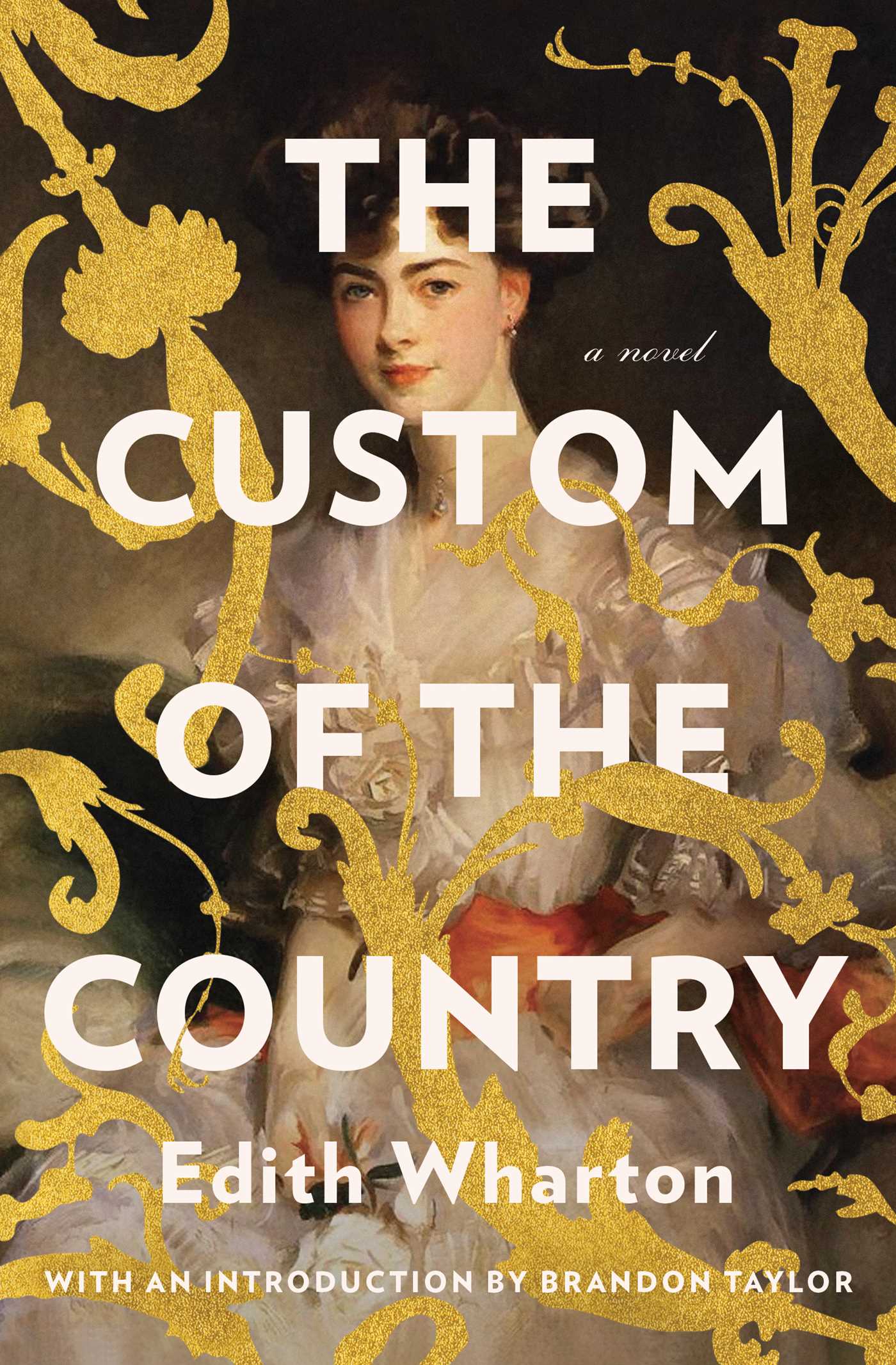
The Custom of the Country
Undine Spragg arrives in New York with money, beauty and ambitions that keep growing beyond her circumstances.
About
Spoiler notice: This overview discusses Undine’s marriages, Ralph’s death and the final scenes with Paul and Elmer Moffatt.
The Custom of the Country follows Undine Spragg through a world in which the right house, invitation or marriage can seem to promise a different life. She and her parents have come from Apex City to New York, bringing money and ambition without the social knowledge that would tell them exactly how to use either. Edith Wharton introduces them in the Hotel Stentorian, surrounded by elaborate decoration that looks impressive but scarcely lived in. Their acquaintance Mrs. Heeny, a society masseuse and manicurist, supplies glimpses of fashionable people through conversation and newspaper clippings. Undine studies those signs eagerly. She knows she wants to rise, but what counts as success keeps changing as soon as she can see beyond her present surroundings.
Her marriage to Ralph Marvell gives her access to an established New York circle whose values are not simply the extravagant spending she expected. His family’s position rests on inherited connections and habits, while the available money has limits. Ralph’s imagination and attachment to that world make him a poor guide to Undine’s impatience with it. She wants the things that appear to accompany social standing, not the obligations or restraints that others think should follow from it. Their incompatibility develops through expenses, pleasures and the different lives each expects marriage to provide. The birth of their son Paul adds a responsibility that cannot be managed like a new wardrobe or abandoned itinerary, yet it does not fundamentally change the direction of her desires.
Wharton follows Undine between American society and Europe, where the distance between wealth and recognized position takes another form. Raymond de Chelles offers the attraction of French aristocratic life, but that attraction comes with family expectations, inherited property and restrictions she finds increasingly oppressive. The setting may be grand, yet it does not automatically provide ready money or freedom to spend. Undine reads a situation through what it might give her next; the people around her often understand it through what must be preserved. Their marriages expose more than the incompatibility of particular temperaments. They reveal different systems for assigning value to family, ownership and the future, all operating through relationships whose emotional claims remain real even when one participant treats them as negotiable.
The struggle over Paul gives the novel’s financial transactions an especially painful form. After the divorce, Ralph discovers that the arrangements he allowed to pass without contest have left him vulnerable to losing his son. Clare Van Degen helps him recognize that Undine’s renewed claim can be connected to the money she needs for an annulment, and the lawyers’ inquiries support that interpretation. Keeping the boy becomes a matter of raising a substantial sum. Ralph turns to Elmer Moffatt, whose commercial confidence seems to offer the quick return ordinary family resources cannot supply. People close to Ralph contribute, and the speculative venture briefly makes a rescue appear possible. His feeling for Paul is genuine, but the means of protecting their life together now depends on a financial timetable he cannot control.
When the scheme fails to deliver the money in time, Moffatt also reveals that he and Undine were married before Ralph met her. What Ralph understood as a shared beginning becomes another episode in a history concealed from him. Wharton stays close to his disordered thoughts as money, shame, love and inherited expectations cease to form a world he can manage. He returns to the family house and dies by suicide. The novel does not make this an inevitable response or give his suffering a triumphant meaning. It leaves Paul to grow up amid further changes of household and parentage, while Undine continues towards the greater wealth Moffatt can now offer. Private devastation does not interrupt the larger social machinery for very long.
The final chapter changes the view by following Paul through the magnificent Paris house acquired after Undine and Moffatt remarry. He has come home from school, but his mother is away and his room contains none of the familiar objects that could make it his own. Even the library disappoints him: its valuable books are locked up, unavailable to a lonely child who wants something to read. Mrs. Heeny’s clippings return, now offering him a dazzling public account of family events he barely understands. When the tapestries from the de Chelles home appear in the ballroom, the possession Undine and Moffatt regard as a victory reminds Paul of the French father he misses. The same objects carry commercial satisfaction for the adults and a record of displacement for the boy.
Moffatt can be warm towards Paul, and even rebukes Undine for failing to give him time, but his assurances cannot erase what their success has cost the child. Undine, meanwhile, prepares to receive the company she most wants in a house that finally displays the wealth she sought. Her satisfaction lasts only until news of an ambassadorial appointment reveals another possible distinction. Moffatt explains that her divorces would prevent her from occupying the corresponding position as an ambassador’s wife. This is his account of a barrier within the novel’s social world, not an invitation to treat every character’s rule as timeless fact. Undine’s immediate conviction that this unavailable role is precisely the one she should have had closes the book on desire still reaching beyond acquisition.
Book details
- Author
- Edith Wharton
- First published
- 1913
- Series
- No series listed
- Subgenre
- Literary fiction, Modern classics
- Primary genre
- Literary Fiction
- Tags
- No tags for this book.
Review
Editor profile
Baby Bat
Goodreads and social links will be added soon.
- Goodreads — link coming soon
- Social media — link coming soon