
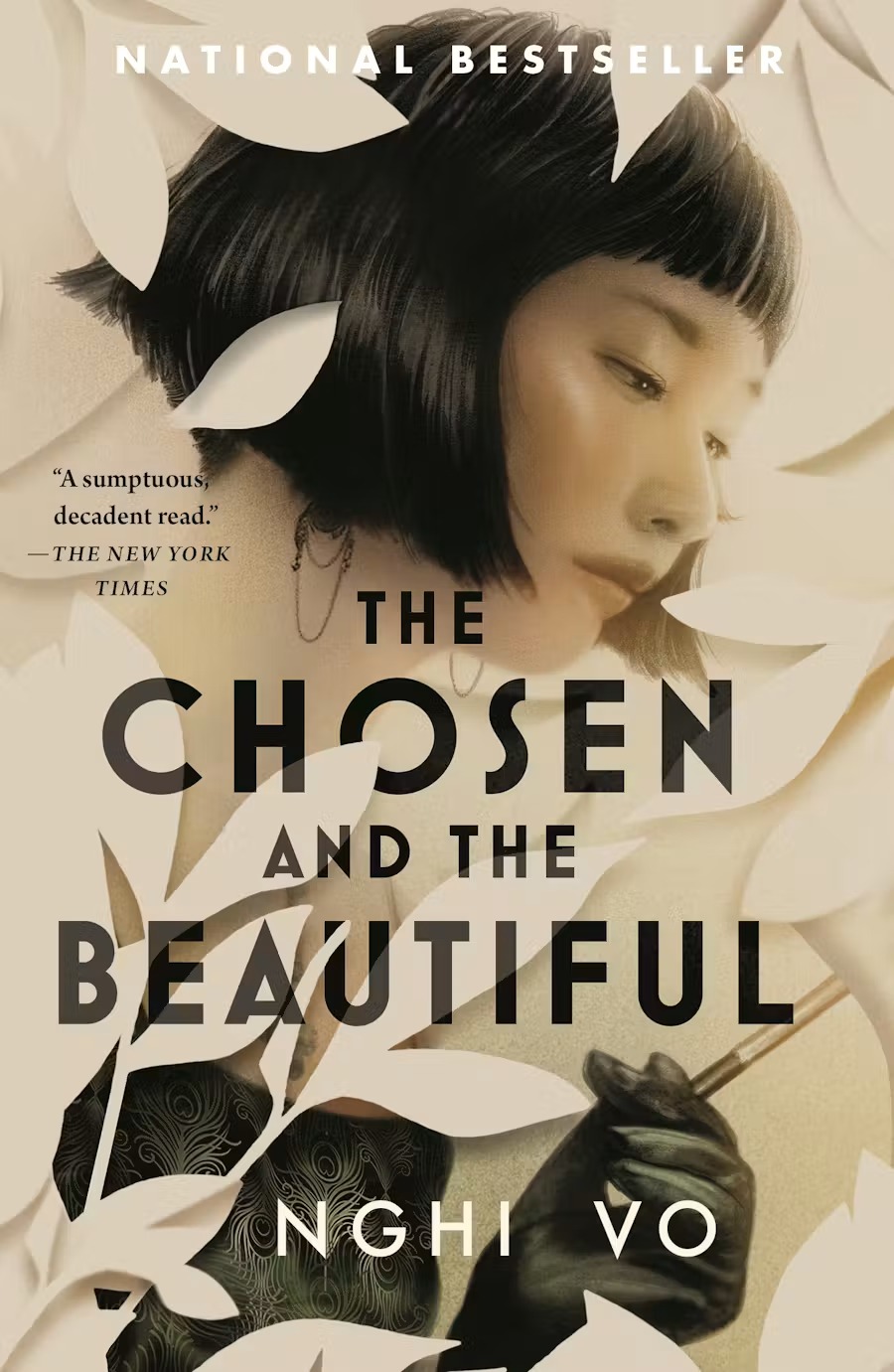
The Chosen and the Beautiful
In Nghi Vo’s reimagining of The Great Gatsby, Jordan Baker narrates a Jazz Age summer from inside the wealthy circles she knows and the social boundaries that still exclude her.
About
Spoiler notice: Spoilers cover Jordan’s background, her place in the Buchanans’ circle and the novel’s opening magical circumstances; later plot turns and the ending are withheld.
Nghi Vo retells The Great Gatsby through Jordan Baker, the golfer who in Fitzgerald’s novel is often seen from the edge of Nick Carraway’s attention. Here Jordan narrates, and the shift makes a familiar Jazz Age summer feel newly angled. She is not simply an observer at Daisy and Tom Buchanan’s house or Jay Gatsby’s parties; she has her own history, appetites and uncertainties. The novel preserves recognisable relationships and social settings while making Jordan’s position inside them its central question. Its glamour is real, but so are the limits on who can feel at home in the rooms where wealth gathers.
Jordan has money, education, an excellent golf game and access to exclusive company. She is also queer and a Vietnamese adoptee, born in Tonkin, whose peers can treat her as an exotic attraction even while keeping the most important doors closed. Her privileged life does not erase that distance. The contradiction shapes what she notices: the rules that appear effortless to people like the Buchanans can be barriers to someone whose acceptance remains conditional. By giving Jordan the first-person voice, Vo lets that tension sit beside her wit and social poise rather than reducing her to a symbol. She is capable of reading a room, but that skill does not make its welcome unconditional.
The book’s point of view also changes the familiar cast. Daisy is Jordan’s longtime friend, and their shared past reaches back to Louisville; Nick arrives as Daisy’s cousin and Gatsby’s neighbour, while Tom’s power and carelessness set a harsher tone beneath the polished manners. Vo does not need to discard Fitzgerald’s social map to revise its emphasis. A new narrator can bring neglected relationships forward and make the old story’s gaps visible. Jordan’s account is still partial: she sees from her own place in the circle, and her observations do not claim to settle every other character’s motives. That bounded perspective suits a story concerned with appearances, rumor and the distance between being invited and belonging.
Magic is part of daily life here, not an interruption from a separate fantasy realm. Early in the book, Daisy uses a small clay charm to send herself and Jordan drifting around her mansion, an image that makes leisure feel almost weightless. The property’s ghosts are treated as part of what the Buchanans own. At dinner, demoniac—demon’s blood—appears alongside the era’s drinks, connecting supernatural bargains to a culture already shaped by appetite and prohibition. The details have rules and textures: objects are handled, substances tasted, and the uncanny folded into the privileges of a well-appointed house. Wonder and danger share the same polished rooms.
Jordan’s own paper-cutting magic gives that atmosphere a more personal edge. In this world, paper is fire, and Jordan can burn the cut-paper heart out of a man, though she still has to learn how. The art connects her to a homeland she has never known, making it both beautiful and frightening. This is not simply a convenient power attached to a capable heroine. It touches questions of inheritance, cultural connection and self-knowledge. Jordan can move confidently through elite parties yet remain a stranger to parts of her own history; the craft offers a difficult link, not an easy resolution. Its promise carries a threat that keeps the magic from becoming decorative.
The novel’s treatment of race gives the Jazz Age setting a sharper contour. Jordan may enter rooms that remain closed to many others, but being wealthy and socially connected does not make her immune to the era’s exclusions. The fictional Manchester Act draws on real anti-Asian legislation, while popular fascination with Asian culture coexists with suspicion of Asian people. That context clarifies the distinction between being displayed as an attraction and being accepted as an equal. The book keeps Jordan’s unusual privilege in view while also locating her among people with different, more precarious experiences. The resulting portrait resists treating representation as a single, uncomplicated position.
As a Gatsby retelling, the novel works through recognition and alteration together. East Egg, West Egg, Nick, Daisy, Tom and Gatsby remain legible, but the narrative belongs to Jordan, and magic changes the terms of the world around them. Her view makes friendship, desire and social performance feel less like scenery for Gatsby’s ambition and more like forces shaping her own choices. The fantastic elements also echo the novel’s concern with constructed images: fortunes can have infernal histories, stories accumulate around Gatsby, and a party’s splendour can conceal unequal power. Familiarity gives the revisions something to press against; the book asks what becomes visible when a character once kept to the margins controls the telling.
The Chosen and the Beautiful is a coming-of-age fantasy in which Jordan’s education involves more than mastering a dangerous art. She has to interpret the attractions and costs of the world she already inhabits, including its loyalties, its racial boundaries and its stories about people who want to remake themselves. Vo’s lush, uncanny 1920s setting lets these concerns meet without making the magic a substitute for history. Readers who know Fitzgerald will recognise the social terrain and encounter it from a different centre; those who do not can follow Jordan through a world of parties, ghosts, pacts and paper craft on its own terms. The result reframes a canonical story by asking whose perspective its brilliance has left out.
Book details
- Author
- Nghi Vo
- First published
- 2021
- Series
- No series listed
- Subgenre
- Historical fantasy, Dark fantasy
- Primary genre
- Fantasy
- Tags
- No tags for this book.
Review
Editor profile
Baby Bat
Goodreads and social links will be added soon.
- Goodreads — link coming soon
- Social media — link coming soon