
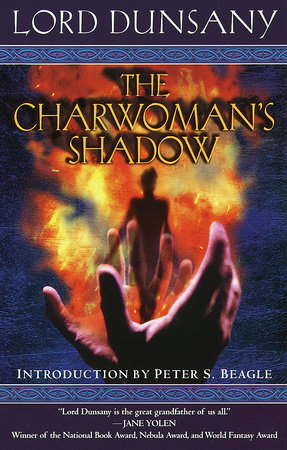
The Charwoman's Shadow
Ramon Alonzo goes to a mountain magician to learn gold-making for his sister's dowry.
About
Spoiler notice: This overview discusses the shadow bargains, Anemone’s restored youth, the marriages and the magician’s departure at the ending.
The Charwoman's Shadow sends Ramon Alonzo towards a mountain magician for a reason that is both practical and faintly ridiculous. His family needs money, particularly for his sister's dowry, but his father regards ordinary trade as beneath them. Gold may be morally suspect, yet the household requires it to pay people whose services sustain their comfortable way of life. Learning alchemy appears to offer a solution that preserves their standing while avoiding an ordinary occupation. Dunsany places this dilemma within a fading Spanish Golden Age, where noble titles, religious scruples and expectations of magic coexist. The young man's departure begins an apprenticeship, but also a test of the assumptions that have made an extraordinary means of earning money seem preferable to a commonplace one.
At the magician's house, Ramon encounters an old charwoman whose missing shadow has made her an object of fear and hostility. The loss separates her from ordinary society as well as from something that should accompany her everywhere. She describes the villagers' rejection and the violence she faces, turning what might seem a minor magical oddity into a condition that governs her life. Ramon responds with sympathy and a determination to recover what the magician has taken. His sword initially appears to him a reassuring instrument for settling trouble, but the house contains powers against which physical courage may be insufficient. Helping her will require knowledge of the magician's methods, not merely the confidence that a young nobleman can force a wrong to be put right.
Ramon then enters the same kind of bargain himself. Instruction in making gold costs his own shadow, though the magician offers a duplicate to conceal the loss. At first, a copy that looks correct seems an adequate replacement. Its difference from a natural shadow gradually becomes significant: it cannot change in the ordinary way, and appearance alone cannot restore the connection that has been severed. The magician also sends the captured shadows on journeys whose distance and cold affect those from whom they were taken. The price of learning is therefore much more than a visible mark of apprenticeship. Ramon's need for gold has brought part of him under another person's control, making the charwoman's predicament newly personal.
The shadow-box offers a possible means of escape from that control, but opening it depends on a spell rather than a key. Ramon must work towards understanding and using something he cannot simply command, with Father Joseph's instruction becoming part of his attempt. The pursuit of learning links the mountain household to the people and obligations he left behind. Mirandola's request for a love-potion adds another strand in which magic might be employed to direct someone else's feelings. Ramon does not initially know why she wants it, and the request should not be mistaken for a clear plan that he fully understands. Family ambition and personal desire continue to draw him towards uses of power whose consequences are less manageable than their promise suggests.
Recovering his own shadow produces a burst of joy, but does not release him from the promise he made to the charwoman. Her history gives that promise another meaning: she was Anemone, a young woman from Aragona, before the magician's household absorbed years that separated her from ordinary life. When Ramon restores her shadow, he expects its youthful shape to surrender to the old body beside him. Instead, her appearance changes, and the woman becomes young again. The restoration turns his pity into a different kind of attachment while allowing her memories of the magical house to recede. Yet returning what was stolen cannot simply return the world to the moment when she first lost it.
Aragona makes that difficulty clear. Anemone comes back towards the village of her childhood, but its people cannot reconcile her appearance with the long absence they remember. Their expectation of witchcraft defeats evidence that Ramon believes should reassure them. Noble society presents another barrier to marriage, since Anemone's birth does not match the standing expected of his wife. The Duke of Shadow Valley finds an extraordinary answer through the King's authority: a pardon for her low birth makes further reference to it treasonous. This is the story's royal decree, with all the absurdity of trying to abolish an inconvenient fact by official command. Father Joseph eventually marries the pair, while Mirandola's wedding to the Duke receives the grander public celebration.
Their happiness is followed by an ending that widens beyond either marriage. Left alone, the magician abandons his household, breaks the vessel holding his elixir and summons the magical creatures with music from a reed pipe. Shadows and the children of Pan follow him out of Spain, across mountains and onwards towards the Country Towards Moon's Rising. His departure gathers the story's scattered wonders into a procession leaving the familiar world behind. Anemone, meanwhile, will age naturally, free from the years imposed upon her by magic. Dunsany closes the personal restoration beside a larger withdrawal of enchantment: the lovers have obtained a mortal future together as the magician passes beyond the earthward gates and the Golden Age ends.
Book details
- Author
- Lord Dunsany
- First published
- 1926
- Series
- No series listed
- Subgenre
- Classic fantasy
- Tags
- No tags for this book.
Review
Editor profile
Baby Bat
Goodreads and social links will be added soon.
- Goodreads — link coming soon
- Social media — link coming soon