
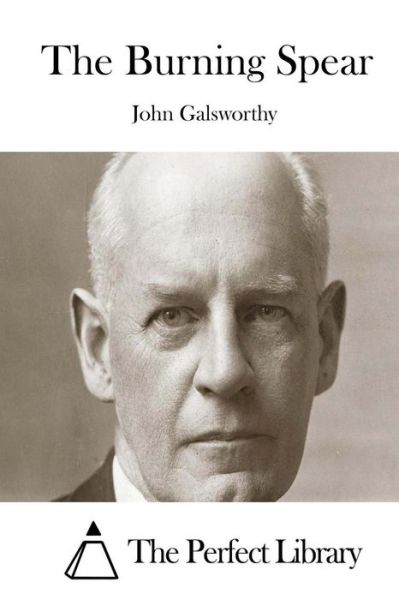
The Burning Spear
During the Great War, John Lavender, a Hampstead gentleman absorbed in newspapers and public speeches, decides to offer his services as a speaker.
About
Spoiler notice: This overview includes Lavender's encounters with the supposed prisoners and the conscientious objector, and Aurora's rescue at the ending.
John Lavender wants to serve his country, and he has surrounded himself with people who can tell him how. Most of those people exist on paper. His Hampstead study contains books, pamphlets, newspapers and the utterances of public figures whose language he absorbs with extraordinary faith. The Burning Spear follows what happens when a gentle, impractical reader tries to turn that language into a life. John Galsworthy gives him an independent income, an ambition to be beyond reproach and a household less impressed by grand declarations than he is. Marian Petty manages his practical needs, her husband Joe supplies transport and commentary, and the dog Blink has claims upon him that patriotic argument cannot easily displace. These attachments keep a human being visible beneath his increasingly elaborate conception of a public role.
The opening conversations establish the novel's method. A call for national economy sends Lavender back to his bank balance, wondering what more he can save. Mrs. Petty proposes dispensing with newspapers, immediately challenging the source of the demand. To him, however, they provide indispensable inspiration and comfort. Another exhortation turns potatoes into an urgent national mission and the garden into a resource waiting to be mobilized. Galsworthy's comedy comes from the journey between an impressive sentence and the situation in which somebody tries to obey it. Joe's irreverent comments expose the convenience of sacrifices announced on behalf of hypothetical sons, daughters or possessions. Lavender hears cynicism where his servants hear a missing connection between what public men say and what they actually give up.
His attempts at public service carry that missing connection into encounters with other people. He approaches situations through language prepared elsewhere, expecting phrases about duty and national purpose to clarify what should be done. Instead, events repeatedly acquire a practical meaning he has not anticipated. The episodic structure lets one adventure follow another without granting him a settled education from the previous mistake. The same wish to contribute can produce another speech, another misunderstanding or another occasion for Joe to intervene. The reader watches a temperament that is generous in private try to become impressive in public. His trouble is partly that the public identity he admires seems to require the suppression of precisely those sympathetic impulses that make him worth caring about.
The encounter with men he takes to be German prisoners makes the contradiction painfully explicit. Seeing them at work, he imagines their hunger, homes and families, then rebukes himself for feeling pity. Newspaper rhetoric has taught him to regard such tenderness as weakness. He attempts to demonstrate a ruthless example by eating before the hungry men, but cannot sustain the performance. His own discomfort overwhelms the argument, and he tells Joe to feed them instead. The supposed prisoners are English workers, adding another layer to the error. More revealing than the mistaken nationality is the effort to make kindness appear a failure. The scene turns the distance between a category and a person into an immediate physical problem that Lavender's borrowed convictions cannot solve for him.
A conscientious objector produces a similar collision without becoming merely a spotless alternative to Lavender. At first the hungry young man attracts his sympathy; once the nature of his objection is revealed, their discussion hardens into mutual condemnation. The objector's declarations about peace and brotherhood acquire a threatening edge of their own. When drunken men begin tormenting him, however, Lavender cannot comfortably leave the victim to suffer just because their principles disagree. Galsworthy allows an ordinary protective response to interrupt the positions both speakers have adopted. The satire thus reaches beyond a single political slogan. A claim to love humanity can coexist with contempt for inconvenient human beings, while someone repeating intolerant language may still find himself compelled to act more generously than that language permits.
Joe's advice near the end offers a different measure of character. He describes a gentleman through the ability to possess power without becoming unscrupulous or swollen-headed, and to act rightly without submitting to clamour. Lavender has assumed that public men naturally meet such a standard. Discovering the distance between that assumption and Joe's view does not simply cure him. Even his decision to retire becomes a project requiring public significance. In a last declaration, he intends his fate to teach people how to remain themselves rather than being governed by other people's words, yet cannot stop writing in the style that has governed his own. The contradiction survives the very act through which he hopes to escape it, making self-knowledge another occasion for theatrical language.
The final scene brings the theatre dangerously close to reality. Lavender prepares a conspicuous, self-destructive departure while imagining the impression it will make upon Aurora, the young woman next door. Her response supplies the practical attention absent from his grand conception. Seeing what he is doing, she comes out, stays near enough to help and catches him when he falls away from the flames. He understands the rescue through yet another magnificent mistake, believing he has reached paradise in her arms. The narrative ends with that perception rather than confirming a death or a supernatural passage. His survival depends upon someone noticing the vulnerable person inside the performance and responding to the danger in front of her, without waiting for his explanation of what it ought to mean.
Book details
- Author
- John Galsworthy
- First published
- 1919
- Series
- No series listed
- Subgenre
- Literary fiction, Modern classics
- Primary genre
- Literary Fiction
- Tags
- No tags for this book.
Review
Editor profile
Baby Bat
Goodreads and social links will be added soon.
- Goodreads — link coming soon
- Social media — link coming soon