
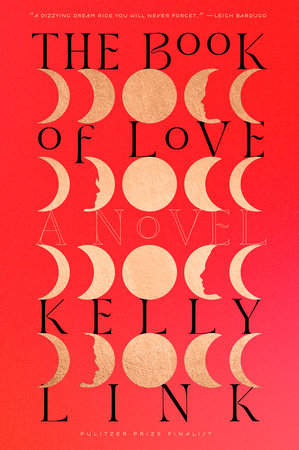
The Book of Love
Almost a year after disappearing from Lovesend, Massachusetts, Laura, Daniel and Mo return to their high-school music room, though they are dead.
About
Spoiler notice: Contains spoilers for the opening premise, the teenagers’ return from death, and the terms of their supernatural bargain. It does not disclose the outcome of their tasks or the ending.
The Book of Love opens in Lovesend, a small Massachusetts seaside town, almost a year after three high-school students vanished and were presumed dead. Laura, Daniel and Mo find themselves back under the lights of their school music room with their teacher, Mr. Anabin. They are, in fact, dead, and their return comes with conditions: a series of magical tasks and a rule that they cannot tell their families and friends where they have been. The bargain offers a possible route back to ordinary life while making clear that there will be winners and losers. That collision of the familiar school setting and an impossible afterlife question establishes the novel’s central pressure without turning the town into a remote fantasy kingdom.
The opening excerpt approaches this mystery through Susannah, Laura’s sister, who wakes in Laura’s bed and moves through a house crowded with the absent girl’s things. Nearly eleven months have passed, and Susannah’s attention catches on the ordinary objects Laura left behind: clothes, a guitar, stuffed animals, books, and the small places where each item belongs. The details make absence physical. Susannah’s attempt to put things back as Laura would have them suggests a wish that order might restore what grief has taken, even as she knows Laura is not coming home. The excerpt also sketches their mother Ruth’s demanding work in a neonatal intensive care unit and Susannah’s uncertain place in the family. It gives loss a domestic scale before the wider supernatural story takes hold.
The narrative is organized around several people rather than a single hero’s account. Link has described chapters that identify their viewpoint characters as separate “books,” including the books of Laura, Daniel and Susannah. Mo is also central to the returning group, while the publisher’s synopsis makes Susannah’s effort to reconcile memory and fear part of the larger conflict. This arrangement lets the supernatural event matter differently to siblings, former friends and the teenagers themselves. The book’s questions are therefore social as well as magical: what does a person owe to family, what can friendship preserve after a rupture, and how does a community absorb the return of people it had mourned? The title’s repeated-book structure gives these distinct lives room without reducing Lovesend to one explanation.
Link has said she wanted a novel because the form could hold multiple points of view and leave space for characters who were not always attached to the central plot. That choice suits a story whose premise quickly expands beyond the classroom. The publisher describes other supernatural figures taking notice of the resurrection, bringing their own agendas into a town already trying to make sense of the missing year. The teens must navigate their relationships and the bargain while a broader conflict gathers around them. Rather than making magic a puzzle with only one person’s solution, the novel’s design connects private histories to forces that exceed any one character’s understanding. Its supernatural machinery gives the plot momentum, while shifting attention keeps the emotional consequences distributed across the people who live in Lovesend.
The setting is contemporary and specific. Link has identified the story’s time as Christmas 2014, the period when she began imagining the project, and has described Lovesend as an idealized version of the Massachusetts towns she knows. The publisher’s description places the story in a small seaside community; Link has discussed wanting a place that feels like a distinct living organism, shaped by its local history and people. That grounding makes the extraordinary events press against recognizable routines: school, family homes, music, shops and seasonal life. It also lets the town’s residents matter beyond their proximity to the main trio. The supernatural does not arrive in an empty landscape; it unsettles a community with its own bonds, memories and habits.
Music and familiar genre forms are part of the book’s texture. Link has called the novel a love letter to romance, gothic fiction, young-adult fantasy, supernatural television melodrama and people who make music. The publisher’s excerpt shows Laura’s guitar as one of the things Susannah associates with her sister, while the broader setup places a music teacher at the center of the return. These elements help the book move between everyday adolescence and mythic stakes. Link has also described being interested in small, granular details because the characters’ appetite for life is at issue. In that frame, the meaningful and the mundane can sit beside each other: grief over a sister, the pleasures of music, the awkwardness of family, and the strange rules of an afterlife all belong to the same story.
The book’s governing question is not simply whether the dead can return, but what makes a life worth reclaiming and how love binds people to one another. Link has spoken about wanting to explore romantic, familial and community love, and about using fantasy to ask what anchors people to the world. The resurrection bargain makes those questions urgent for Laura, Daniel and Mo, while Susannah’s viewpoint keeps the cost of their disappearance in sight. The official synopsis promises danger as other supernatural figures arrive and the mystery of the teenagers’ deaths becomes pressing. This account stays with that documented setup and the novel’s stated concerns; it does not resolve the tasks or reveal the ending. Lovesend is introduced as a place where loss, humor, music and magic coexist, and where private relationships become inseparable from a larger struggle.
Book details
- Author
- Kelly Link
- First published
- 2024
- Series
- No series listed
- Subgenre
- Urban fantasy, Literary fiction
- Primary genre
- Fantasy, Literary Fiction
- Tags
- No tags for this book.
Review
Editor profile
Baby Bat
Goodreads and social links will be added soon.
- Goodreads — link coming soon
- Social media — link coming soon