
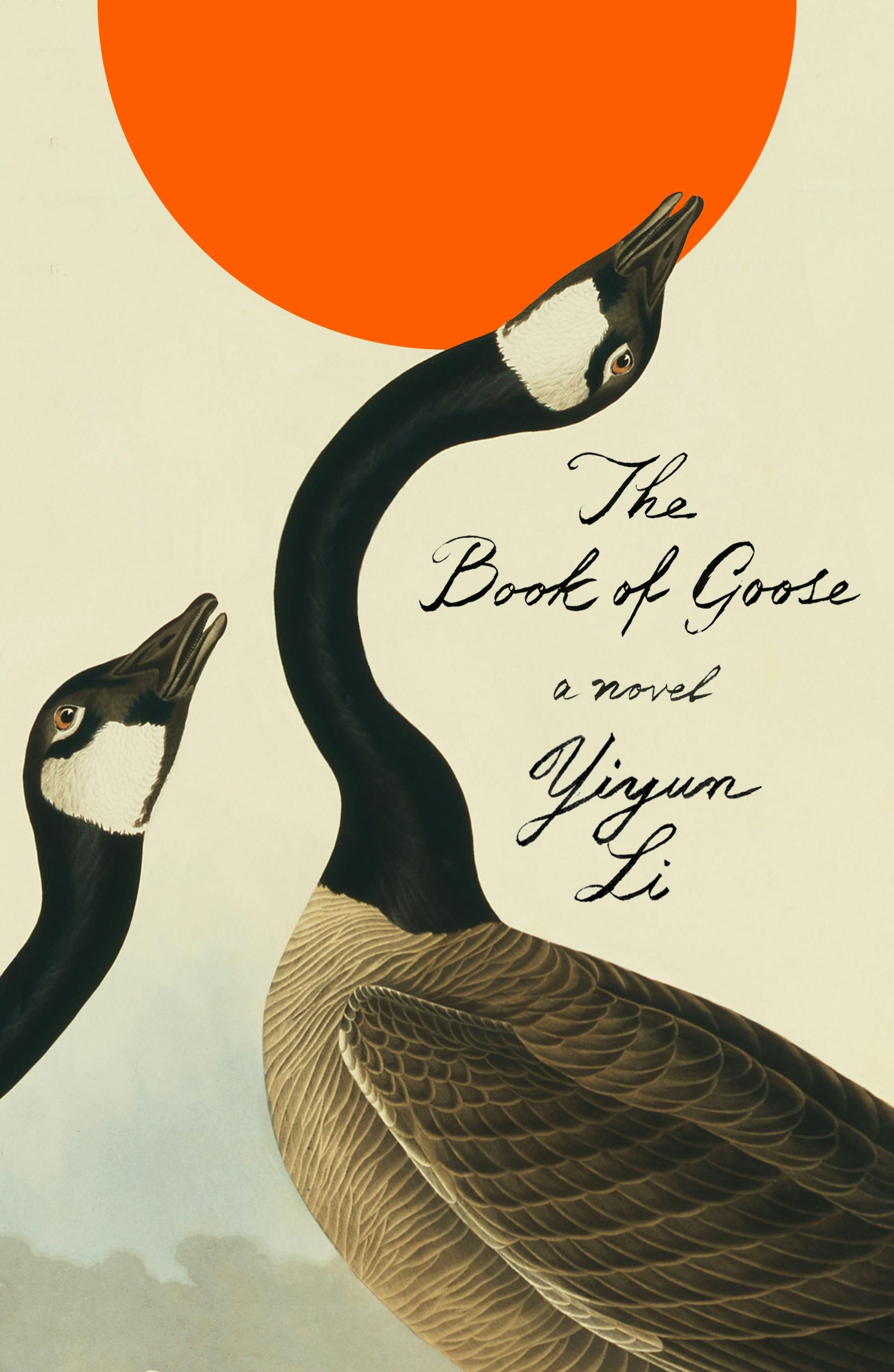
The Book of Goose
Living in America years after her childhood in rural France, Agnès learns that her closest friend, Fabienne, has died.
About
Spoiler notice: Spoilers for the publisher-authorized opening excerpt, through Agnès and Fabienne's plan to approach M. Devaux about writing a book. This account does not summarize the rest of the novel or its ending.
The opening of The Book of Goose begins with a deliberately unstable image: an orange divided into two halves that cannot become a whole again. Agnès uses knives, fruit and dolls to introduce a way of thinking about names and stories. A name, she suggests, may tell less than people assume; a doll remains a doll whether it is dressed and cared for or not. Fabienne, the friend at the centre of her account, seems capable of becoming many things through invention. Agnès is speaking after Fabienne's death, arranging memory into a narrative rather than offering an untouched record. The opening's plain objects carry emotional weight because they help Agnès describe a friendship that was once hard to separate into two people.
A letter from Agnès's mother brings the adult narrator back to Saint Rémy. Its main purpose is to announce the birth of a great-grandchild, but a postscript reports that Fabienne died the previous month, in 1966, at twenty-seven. Her sister Joline had died in childbirth at seventeen, twenty years earlier. Agnès lives in America, is married to Earl and has become famous; she remarks that distance and fame have both helped free her from her mother's concern. The news makes her imagine becoming pregnant herself, as if surviving childbirth could prove that she is an ordinary person rather than someone governed by a cruel destiny. She rejects the routes she considers because she loves Earl and her marriage. The old family tragedy enters Agnès's present choices, including whether she can live without measuring herself against her friend.
The narrative then returns to the girls at thirteen, when Fabienne asks whether happiness can be grown. Agnès imagines something visible and elevated, like fruit on a branch; Fabienne compares happiness to potatoes and proposes planting one girl's happiness as beet and the other's as potato, so a failed crop will not leave them starving. The girls live with scarcity, and Fabienne's sister's death has made mortality part of their private language. They joke about what they would do if both crops failed, then spin questions about God, prayer and the difference between happiness and misery. This is how they build a world between themselves out of absurd possibilities. Fabienne can tease Agnès as an idiot and still treat her as the person who belongs beside her.
Agnès remembers that the girls liked M. Devaux's pigeons and imagined using them to carry messages between pasture and school. They never put the plan into practice; imagining that they could change things was enough. When Devaux's wife dies, their attention shifts from the birds to the cemetery. On the evening of the funeral, Fabienne takes flowers and the girls scatter them over the fresh grave, pretending the blooms are clothes for the dead woman. They lie on a nearby stone and watch the night sky. The stars are familiar from school but too distant and alike to become one of Fabienne's stories. The scene is physical: cold stone beneath them, chill air, their breathing slowing as they wait to see which one will move first. Fabienne makes testing hunger, thirst and cold into a rule for delaying the world's demands. Agnès follows her lead.
From the cemetery, Fabienne proposes visiting the widower. She says he may be useful and suggests they ask for his friendship because they want help writing a book. Agnès is surprised: Fabienne has been away from school for two years, and neither girl has seen a real book, but Agnès writes neatly while Fabienne invents stories. Fabienne can draw on animals, neighbours and family history; Agnès has the schooling to put the stories down. Their plan is not yet a completed book or a proven route out of the village. The excerpt ends as they prepare to approach Devaux, with Agnès asking why and Fabienne answering in terms of usefulness. This unfinished proposal links their make-believe with an adult world where writing and other people's attention may have consequences.
Fabienne's stories have roots in grief as well as mischief. She invents ghosts for Joline, Joline's baby and Bobby, the American soldier the girls remember from early childhood. Agnès recalls scraps of what they witnessed: Joline's anger when they followed her, chocolates Bobby tossed to distract them, and the baby's death. In Fabienne's tales, the dead return to play tricks. Bobby hides oranges for the girls, a rare fruit they saw only a few times, and these stories turn painful absences into something they can handle together. Agnès was not the one who invented these worlds; she was good at listening. Fabienne directs the stories, while Agnès preserves details and makes them legible. The adult narrator also recognizes gaps in her memory, including what Fabienne knew. Her account records what she cannot recover.
Agnès tells these memories from her later life in America, after fame has changed how others see her and Fabienne's death has made their shared childhood impossible to revisit together. Ordinary scenes carry the tension: tending animals, imagining messages by pigeon, leaving flowers, lying on cold graves and deciding to ask a widower for help. She does not present childhood as an uncomplicated sanctuary. Their play grows beside poverty and death, while her present narration lets affection coexist with resentment and uncertainty. The orange image resists a neat lesson: two halves may once have belonged together, but remembering does not restore them. The opening shows how friendship produces stories and how the surviving friend tries to decide which parts of that shared world can still be told.
Book details
- Author
- Yiyun Li
- First published
- 2022
- Series
- No series listed
- Subgenre
- Literary fiction
- Primary genre
- Literary Fiction
- Tags
- No tags for this book.
Review
Editor profile
Baby Bat
Goodreads and social links will be added soon.
- Goodreads — link coming soon
- Social media — link coming soon