
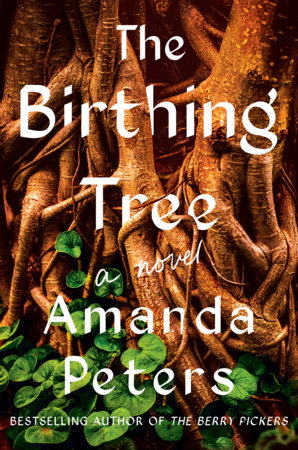
The Birthing Tree
Born beneath a tree sacred to generations of Mi’kmaq women, Aliet Paul is raised by her grandmother Kiju after her mother dies in childbirth.
About
Spoiler notice: Spoilers cover Aliet's birth, her upbringing by Kiju, the conflict over traditional midwifery, and her return after Kiju's death. The hidden family truths and ending are not revealed.
The Birthing Tree begins with a life and a death bound to the same place. Aliet Paul is born beneath a tree that generations of Mi’kmaq women have used for childbirth, and her mother dies during that birth. The tree is therefore not scenery around Aliet’s story: it marks the beginning of her life while carrying the absence that shapes it. Her grandmother Kiju raises her outside a small Nova Scotia town, where the tree, the land and family memory belong together. Aliet grows up without a father anyone will name and without her mother’s presence to explain the family past. The premise sets a personal mystery beside a community history, asking how a person comes to understand an inheritance when its most important witnesses are gone or silent.
Kiju’s care gives Aliet a daily connection to knowledge that is passed through family and community practice. The publisher describes Kiju as fierce and loving, and identifies medicinal wisdom and traditional midwifery among the old ways that shape Aliet’s childhood. That inheritance is practical as well as emotional: it concerns how women care for one another, how birth is understood, and what a place remembers. The title tree concentrates those strands. Its significance comes from repeated lives and losses rather than from any claim that it solves Aliet’s questions. The novel gives the relationship between grandmother and granddaughter room to carry both tenderness and uncertainty, since Kiju can offer a way of living while still leaving parts of the family story unexplained.
The world around Aliet does not treat Kiju’s knowledge as an equal authority. As the community changes, traditional midwifery is condemned and prejudice deepens. A birth witnessed by the wrong person brings disastrous consequences, placing private acts of care under public scrutiny. The conflict links Aliet’s family experience to the pressure on the community’s traditions: practices that have sustained women can be recast as improper by people with different power and assumptions. The novel follows this tension without making it a simple choice between old and new. Aliet will later train as a nurse in modern medicine, and she carries Kiju’s teachings with her. Her life therefore holds both forms of knowledge, along with the losses and judgments that accompany their unequal treatment.
Aliet’s childhood also takes shape around the seasonal apple pickers who come through the area and John, a boy whose quiet presence becomes an anchor. The publisher’s description connects their closeness with the memories of young love that remain important when Aliet looks back. This strand places growing attachment within a life already marked by questions of belonging. Aliet’s family history is incomplete, and the community around her is changing; John offers a relationship formed through shared time rather than explanation. As Aliet comes of age, love and loss intersect with a personal tragedy that turns her away from the path Kiju hoped for her. The book treats those turns as parts of a longer life, allowing youthful connection to echo into later choices without reducing Aliet to one romance.
The adult Aliet becomes a nurse and works with modern medicine, but professional training does not erase what she learned from Kiju. She keeps her grandmother’s teachings close, alongside memories of the tree and the life that began there. This movement away from home and into a new vocation complicates any easy account of tradition being simply preserved or abandoned. Aliet can carry knowledge forward while still living at a distance from the place that formed it. The publisher frames her adulthood through love, loss and tragedy, but does not disclose those events in detail; the story’s emphasis remains on their effect on her direction. The result is a portrait of an inheritance that continues to matter even when its recipient has tried to move beyond it.
Kiju’s death brings Aliet back to a crumbling house, a scattered community and a past she believed she had outrun. As she restores the house room by room, the work of repair accompanies a return to questions of lineage, the old ways and her own bloodline. The tree and the house offer different kinds of connection: one holds generations of births and memory, while the other is a family home that can be entered, repaired and reconsidered. Aliet’s search is not only for a name or a single answer. The publisher describes long-guarded silences, dangerous loyalties and generational wounds, including uncertainty about what happened in the orchard and what her family knew about her mother’s final moments. The past is consequential because it shaped the choices available to the living.
Across decades, the novel brings together a woman’s private grief and the fragile future of the community to which she returns. Aliet must decide which parts of her inheritance she will carry forward as she tries to protect land, traditions and the memory of earlier generations of women. That question gives the family mystery its wider stakes: knowing the past can change how a person understands home, but it does not make repair automatic. The tree’s long presence stands beside human lives that can be scattered, silenced or lost, while Kiju’s teachings remain part of Aliet’s way of seeing. The Birthing Tree follows the distance between belonging and departure, and the difficult work of returning to a place with new knowledge. It keeps the concealed answers and the resolution outside this account.
Book details
- Author
- Amanda Peters
- First published
- 2026
- Series
- No series listed
- Subgenre
- Literary fiction, Family saga, Historical fiction
- Primary genre
- Literary Fiction
- Tags
- No tags for this book.
Review
Editor profile
Baby Bat
Goodreads and social links will be added soon.
- Goodreads — link coming soon
- Social media — link coming soon