
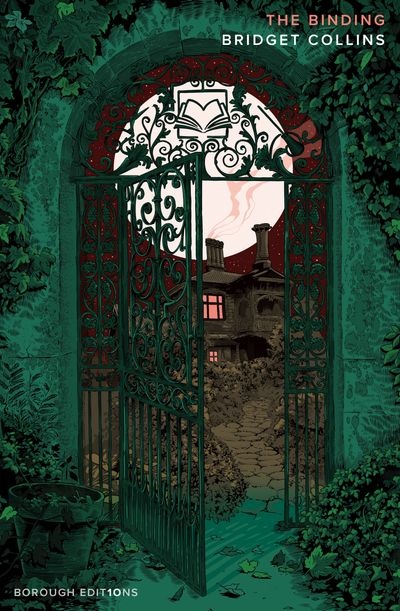
The Binding
Emmett Farmer is summoned from his family farm to apprentice with a bookbinder, a trade that can remove a memory and preserve it in a handmade volume.
About
Spoiler notice: This About covers the binding craft, Emmett’s apprenticeship and the early discovery of a volume bearing his name. It does not reveal the book’s contents, the later turns in the love story or the ending.
The Binding asks what a person might give up to escape a painful memory. In Bridget Collins’s imagined society, a bookbinder can take a memory from someone and preserve it inside a handmade book. The trade is feared and treated as taboo, yet people still seek it when they want to hide a secret or leave a hurt behind. Emmett Farmer, a young man called away from his family to become an apprentice, is drawn into this work. The books he learns to make are beautiful objects with an unsettling purpose: they hold parts of people’s lives that their owners can no longer remember.
Collins places this craft in a society broadly shaped by the late Victorian period, with visible class divisions and strong suspicion around unfamiliar power. Bookbinders are needed, but their work makes other people uneasy. That tension gives the profession a public face as well as a private one. A binding can be understood as care for someone who cannot bear a memory, but it also places another person in charge of what may be forgotten. The book’s world therefore treats memory as something with social consequences. What one person wants removed can affect relationships, status and the way a community understands its own past.
The process begins with an ordinary object, a carefully made volume, and turns it into a private record. The memory is taken from its owner and kept in the book, stored among other volumes beneath a binder’s workshop. A person seeking relief may leave without the knowledge of what was removed, while the book preserves what that person no longer carries consciously. Collins uses the physical work of bookbinding to make this strange exchange tangible. Paper, binding and storage become part of a system for dealing with grief and secrets, while the craft’s careful routines sit beside an ethically difficult question: who should be able to alter another person’s memory?
That question matters because the binders do not all occupy the same place in society. Collins describes a contrast between Seredith, whose work leaves her isolated, and more privileged binders who move among wealthy people. The power to alter memory can invite respect from those who need it, suspicion from those who fear it, and resentment when something goes wrong. The arrangement also raises questions about choice. A person may ask to forget, but need, money and differences in power can shape what consent means. The novel keeps these pressures close to the magical premise, so the craft is never just an unusual skill or a convenient answer to pain.
Emmett enters the trade from a family farm after a letter summons him to an apprenticeship. His new position gives the story a way to introduce bookbinding as work: volumes must be made by hand, and the memories inside them must be kept in an ordered vault. He is learning a profession that others consider frightening even as it provides a service they may want. This creates a difficult first step into adulthood. Emmett has to understand the craft’s rules while also living with the fear and prejudice surrounding it. His apprenticeship puts him close to the books, but it does not make their contents simple or safe.
Then Emmett finds a volume bearing his own name. The discovery makes the binder’s vault personal. Until then, the books represent a hidden system used by other people; now one appears to connect that system to Emmett’s own life. The premise offers a mystery without immediately explaining what the book contains or how it came to be there. Its force comes from the gap between the object and the person named on it. If a book can hold a memory that its owner does not have, then the name on its cover raises questions about what Emmett knows, what he may have lost, and who might know more than he does.
Memory also shapes the novel’s love story. At its heart is a love story between two people who love one another but do not always know that they do, a premise that fits closely with the possibility of removing memories. A relationship depends on what its people remember, but the books offer a way for those memories to be removed and stored elsewhere. That possibility makes affection vulnerable to the same forces as grief and secrecy. The emotional question is not simply whether forgetting can make life easier. It is what happens to a bond when one person’s understanding of it changes, and whether love can survive the absence of the memories that formed it.
The Binding connects its handmade books, its divided social world and its romance through one recurring choice: whether painful knowledge should be kept or surrendered. Its fantasy rests on a clear rule, but the consequences of that rule are human and difficult. Forgetting may promise relief; preserving a memory may protect a truth; either decision can alter how people see themselves and one another. Emmett’s apprenticeship and the book with his name give that conflict a personal shape, while the binders’ place in society broadens it beyond one life. The story’s mystery begins with what a book can contain, then turns toward what a person is without the memories they once carried.
Book details
- Author
- Bridget Collins
- First published
- 2019
- Series
- No series listed
- Subgenre
- Historical fantasy, Fantasy romance
- Tags
- No tags for this book.
Review
Editor profile
Baby Bat
Goodreads and social links will be added soon.
- Goodreads — link coming soon
- Social media — link coming soon