
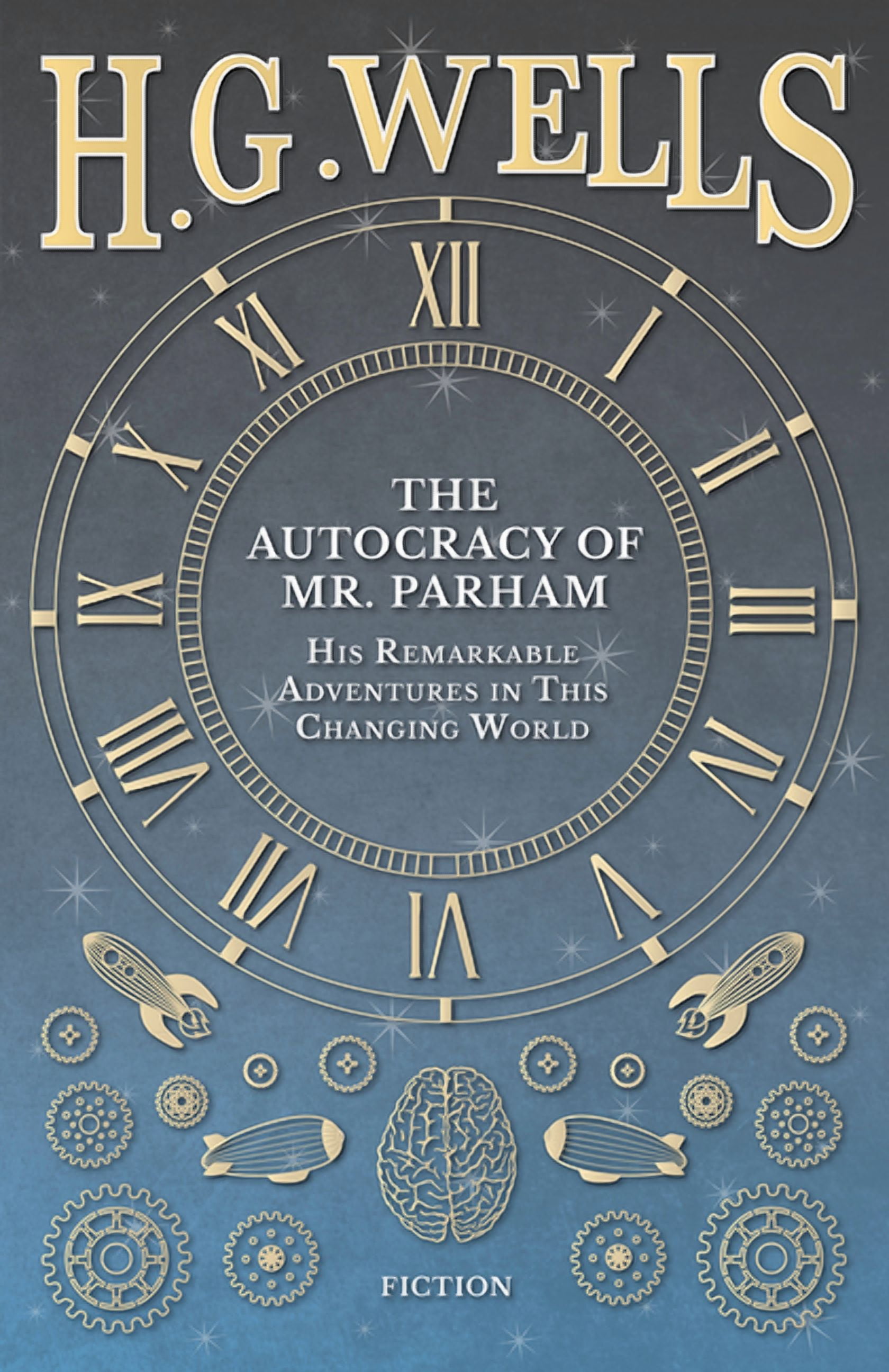
The Autocracy of Mr. Parham
Historian Mr.
About
Spoiler notice: This overview discusses the dictatorship, imagined war and the séance revelation and newspaper disappointment at the ending.
The Autocracy of Mr. Parham begins with a scholar imagining what he could accomplish if he possessed another man's power. Mr. Parham is a historian and university tutor, accustomed to explaining events through the purposes of rulers, nations and influential minds. Sir Bussy Woodcock has the money, business interests and obedient household which Parham lacks, but seems unwilling to give them the grand historical direction his companion considers necessary. Their association depends upon this imbalance. Parham tolerates manners he dislikes because access to wealth might make his own ideas effective. H. G. Wells builds the satire from the distance between the cultivated man's picture of himself and the ambitions that become visible when he thinks he is being overlooked.
For six years, one particular hope has sustained the relationship: Sir Bussy might finance an influential periodical with Parham at its centre. The proposed paper represents more than an occupation. It promises the public authority which scholarly work and occasional articles have failed to supply. Parham wants to interpret the changing world, but his preferred categories increasingly fail to organize it. Modern business and scientific developments do not behave like the historical actors he expects to find. Sir Bussy's abrupt interjections can therefore unsettle him more deeply than a disagreement expressed in the proper language. Wells allows social embarrassment and dependence to accumulate before the plot gives Parham a much more spectacular opportunity to impose a pattern upon events.
That opportunity arrives through a séance and the medium Carnac Williams. Parham initially wishes to avoid the proceedings without losing Sir Bussy's company, then becomes involved in competing explanations of the manifestations. Questions of belief and exposure prepare the transformation in which a Master Spirit enters him and gives his intellectual ambitions an apparently commanding form. The experience leads into his rise as the Lord Paramount, a public figure whose authority depends upon spectacle, decisiveness and promises of national renewal. The eventual ending changes the status of this sequence, so its extraordinary events belong to the novel's imagined experience rather than to an account of actual British history. Within that experience, Parham's desire to make history has become a chance to rule.
The coup against parliamentary government translates dissatisfaction with debate into the removal of people who might object. Members of the Commons are pushed out, with sympathy and amusement among some of those who witness the spectacle. The scene presents authority as something partly manufactured by the willingness of others to accommodate it. As Lord Paramount, Parham gives his earlier geopolitical abstractions the force of policy, seeking imperial power and military coordination. General Gerson increasingly supplies the practical direction behind those ambitions. The supposed guiding intelligence discovers that ruling a forceful associate requires concessions to him. The ambition to stand above ordinary confusion has produced new dependencies, this time with consequences much greater than the humiliation of waiting upon a wealthy patron.
The military episodes undermine Parham's wish to make war magnificent. Modern weapons require him to confront experiences which do not fit the ceremonial images through which he has understood conflict. Poison-gas demonstrations make him sick, while Gerson answers his reservations by treating war itself as the ultimate resort. The logic of preparing for violence draws the ruler towards measures he would prefer to regard as exceptional. International conflict widens into an imagined second world war involving the United States, with a devastating naval battle giving material scale to the ambitions behind it. Domestic resistance also meets repression. Wells connects the grandeur of national destiny with the physical destruction and coercive administration required when a governing vision refuses to recognize limits.
Sir Bussy and Camelford provide resistance to that course, bringing business power and scientific knowledge into conflict with the regime's demands. The struggle eventually reaches a laboratory confrontation and apparent catastrophe, before the narrative returns abruptly to the séance room at Carfex House. Parham and Sir Bussy have fallen asleep and experienced related dreams. Their accounts overlap without being identical: Sir Bussy remembers an imperial government and a war, while Parham can keep his own brief career as Lord Paramount private. The return does not remove the significance of what has been imagined. It exposes their opposed expectations, showing how the same social anxieties can become quite different stories when interpreted through the interests and self-images of the people experiencing them.
Sir Bussy emerges determined to enter newspaper publishing and warn a mass readership against the drift towards another war. For an instant, Parham hears the fulfilment of his long-standing hope. He proposes the sort of weekly he has always wanted, only to discover that Sir Bussy has not considered him for the editorship. The new paper would oppose the ideas Parham represents. Their parting leaves the scholar without either his imagined dictatorship or the practical influence he had expected from the friendship. He turns towards the anticipated comfort of Mrs. Pinchot, while the narrator dismisses him with a mixture of criticism and unexpected affection. The ending keeps the scale of the joke personal and political at once: a deflated publicist has dangerous convictions even when his power remains confined to dreams.
Book details
- Author
- H. G. Wells
- First published
- 1930
- Series
- No series listed
- Subgenre
- Literary fiction, Modern classics, Dystopian
- Primary genre
- Literary Fiction
- Tags
- No tags for this book.
Review
Editor profile
Baby Bat
Goodreads and social links will be added soon.
- Goodreads — link coming soon
- Social media — link coming soon