
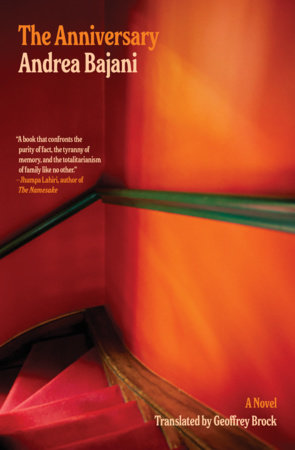
The Anniversary
Ten years after cutting contact with his parents, an unnamed son looks back on a family shaped by his father’s violence and his mother’s silence.
About
Spoiler notice: Spoilers cover the son’s estrangement from his parents, the father’s violence, and the mother’s constrained position in the family. The narration’s later reckoning and the ending are not disclosed.
The Anniversary begins ten years after an unnamed son last saw his parents. On that date he looks back toward the family he left and asks what it means to close the door on one’s origins. His father’s violence shaped the household, while his mother’s quiet acceptance of that violence left her difficult for the son to understand. The narrator’s decision to sever contact is presented as a turning point, yet the anniversary also gives him a reason to return to the past in words. His account considers both the harm he experienced and the question of what a child owes to parents who caused harm. The story therefore opens with an apparent ending: a family relationship has been cut off. The book’s central movement is the son’s attempt to understand what that break means and how a life can be built beyond it.
As the narrator reconstructs his childhood, the family home appears as a place governed by the father’s authority. The publisher describes a marriage devastated by his violence and a woman who silently accepts him; independent accounts likewise identify him as controlling and oppressive. The mother is not simply a background figure in the son’s story. His effort to tell the family history repeatedly turns toward her, trying to make sense of a person whose wishes and choices were constrained and whose inner life was hard to see from inside the household. The son’s memories do not offer a neat explanation for her submission. Instead, they expose the difficulty of interpreting another person’s silence, especially when the family structure has trained everyone to accommodate the person who dominates it.
The domestic world is narrow and airless, and small interruptions acquire weight. In the publisher’s description, a telephone rings, a classmate visits, and a friend is soon pushed away. These moments suggest how the father’s control reaches beyond arguments between the parents: it affects the family’s contacts with people outside the home. A brief visit or call can become a measure of what the household permits, and the loss of those connections deepens the mother’s isolation. The son looks back at these details as evidence of a pattern rather than as unrelated incidents. His account traces how family life can limit a person’s access to companionship and support while making those restrictions seem ordinary to the people living under them.
The narrator tells the story from a later vantage point, after a decade without contact. The distance gives him room to describe events, but it does not make memory simple or complete. Independent reviews characterize the narrative as a series of revisited fragments, with the adult narrator reflecting on what childhood scenes might mean. He circles the same family questions from different angles: what happened, what he understood at the time, and how his mother’s position appeared to him then versus now. Rather than presenting a detached record, the book makes the act of remembering part of its subject. The son wants to tell a story that feels truthful, yet he recognizes that a family member who had little room to speak may require imaginative attention to become visible on the page.
That tension between fact, memory and invention gives the book its self-conscious form. The narrator frames his account as a novel, not as a claim that an exact transcript of family life can settle every uncertainty. A review notes that the son turns to fiction partly because his mother had been so thoroughly effaced in the home. This does not remove the real weight of the events he recounts; rather, it makes the limits of his perspective central to the telling. He is both the child who lived within the family system and the adult trying to interpret it. The story asks what it means to represent someone else, particularly a mother whose silence shaped the son’s understanding but whose private experience he cannot fully possess.
The son’s estrangement is therefore not a simple declaration of victory or a final explanation of the past. The ten-year anniversary marks the time since he last saw his parents, while his writing shows that separation has not erased their influence from his thoughts. He describes a desire to live freely, to form relationships and to approach other people without fearing reprisals. The account places this aspiration beside the harm that made distance necessary, without promising that a clean break answers every question. The son’s attention remains divided between the family he left and the independent life he wants to claim. His decision opens space for self-determination, but the act of narrating shows how difficult it can be to leave a family’s patterns behind.
Bajani’s novel brings a private family rupture into conversation with broader questions about patriarchy, obligation and personal freedom. Set in Italy, the story follows a marriage shaped by the father’s violence, a mother whose voice and autonomy are diminished, and a son who eventually chooses no contact. The narrative keeps its focus on the family’s intimate dynamics and on the narrator’s effort to look again at what he once endured. Rather than resolving the moral questions through a simple judgment, it asks how much responsibility children carry for parents and whether leaving can be necessary for a person to live on their own terms. The Anniversary is a translated literary novel by Italian author Andrea Bajani, rendered into English by Geoffrey Brock, about the work of remembering a family after choosing to leave it.
Book details
- Author
- Andrea Bajani
- First published
- 2025
- Series
- No series listed
- Subgenre
- Family novel, Translated literary fiction
- Primary genre
- Literary Fiction
- Tags
- No tags for this book.
Review
Editor profile
Baby Bat
Goodreads and social links will be added soon.
- Goodreads — link coming soon
- Social media — link coming soon