
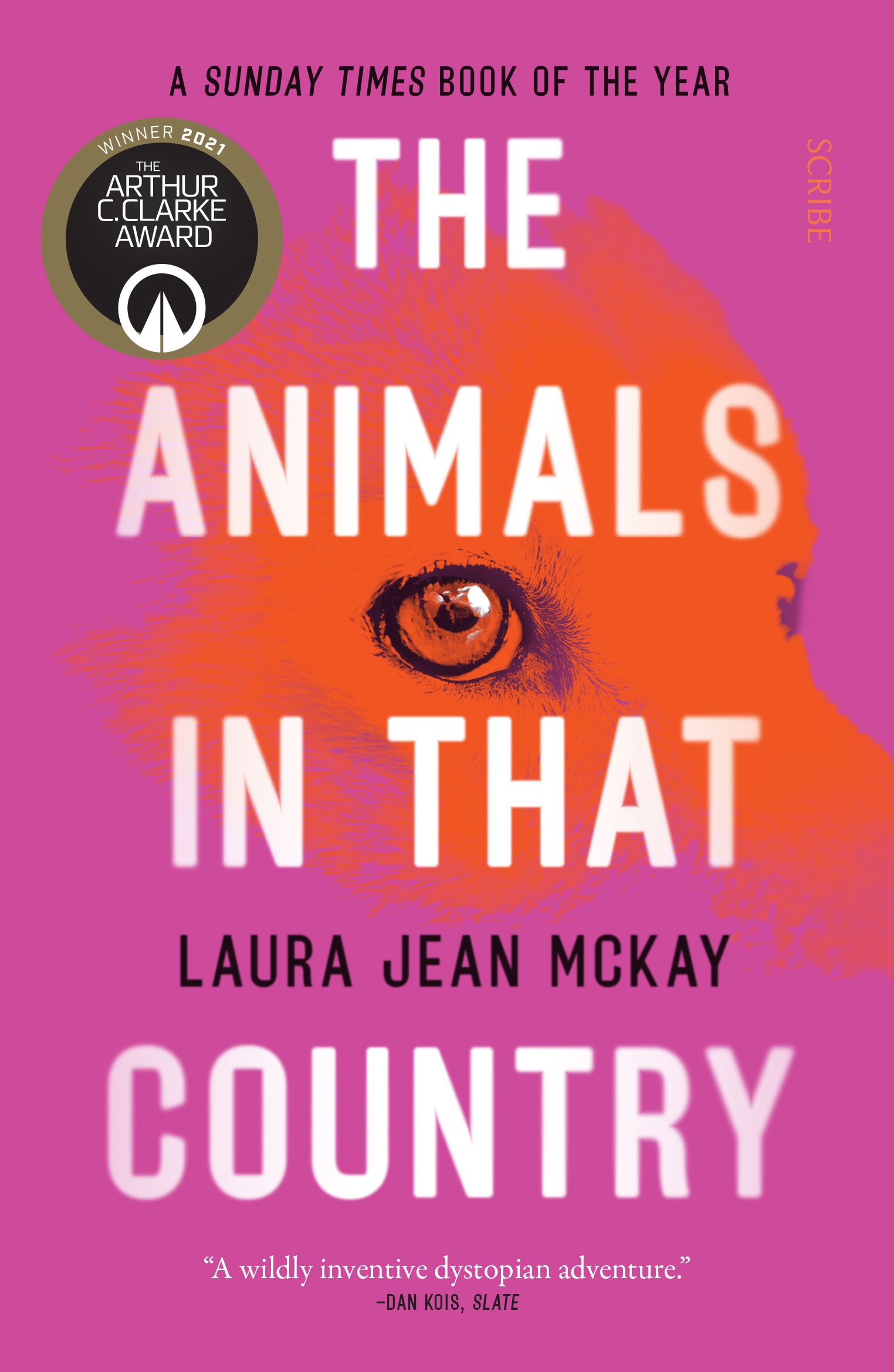
The Animals in That Country
When a flu begins letting people understand animals, wildlife-park guide Jean faces a country transformed by new voices and an emergency close to home.
About
Spoiler notice: Spoilers include the Zoo Flu’s early effects, Lee leaving with Kimberly, Jean and Sue’s journey, and the novel’s animal encounters. Later outcomes and the ending are not disclosed.
The Animals in That Country begins with a change in how people experience the world around them. A flu moves across Australia, and those it infects start to understand what animals are communicating. Mammals are heard first; birds and insects follow as the illness progresses. This new awareness does not arrive as a calm gift. Animal voices become difficult to escape, and some people lose their grip on ordinary life. The novel takes a speculative idea and places it inside a recognisable emergency: a society trying to respond while its members face a rapid shift in what they can hear, notice and understand. The result is a story where a pandemic changes the terms of everyday human and animal contact, while the people caught inside it still have urgent family ties to attend to.
Jean is the person at the centre of that upheaval. She is a grandmother, a wildlife-park guide and a woman who has never found it easy to get along with most people. Animals are already a large part of her life before the flu begins to alter communication. She has a close bond with her granddaughter, Kimberly, and a particular attachment to Sue, a young dingo. Jean’s son, Lee, is also part of the family she is trying to hold together. When he becomes infected and leaves with Kimberly, heading south, Jean has to decide how to respond. Her pursuit of them gives the story its immediate direction, but it also draws her into a country changed by the same illness that has affected her family.
That search places the novel on the road with Jean and Sue. Their relationship is not simply a matter of two companions learning to trade words. They approach the world with different bodies, histories and ways of sensing it, and the new communication does not erase those differences. Jean has to make sense of what Sue conveys while following Lee and Kimberly through a disrupted landscape. The road brings them into contact with a crisis that is changing people’s behaviour as well as their attention. The animals have not become human, and humans have not gained effortless understanding. Instead, the possibility of communication exposes how much each side may have missed while living close together.
Sue matters to the journey as a character in her own right. She is a dingo with a life shaped by captivity, and Jean’s bond with her sits alongside the older woman’s difficult family relationships. The story lets their connection develop under pressure, as each must rely on the other despite the limits in what they can know. The flu offers a shared language, yet speech alone cannot settle the difference between human and dingo experience. Their partnership asks what it would mean to listen when the speaker does not see or value the world as a person does. The changing balance between them gives the journey a personal thread beyond the search for Lee and Kimberly.
The expanding range of voices also gives the novel room to consider different forms of animal perception. A person may think of communication as words, but other species experience their surroundings through abilities humans do not share. The book brings that contrast into its imagined dialogue, including an encounter with whales whose sense of home is bound to the water. Moments like this stretch the flu’s premise beyond a convenient way to pass information. Understanding another animal would mean confronting its own needs and point of view. The conversations can be strange or unsettling because they resist turning every creature into a human character wearing a different shape.
As the infection reaches more species, the distance between human life and animal life becomes harder to ignore. The people Jean meets are trying to live through an emergency, while the newly audible animals have concerns of their own. Communication does not automatically bring agreement, safety or care. It can make an old arrangement feel newly visible: people have been sharing spaces with animals without having to attend to what those animals might communicate. The crisis therefore changes more than the soundtrack of the world. It presses Jean and others to reconsider what counts as a relationship, whose needs are noticed, and what responsibility follows from being able to hear.
The Animals in That Country combines an outward journey with a close family search. Jean follows Lee and Kimberly through a transformed Australia, travelling with Sue as the flu makes the country’s animal life impossible to treat as background. The book keeps its speculative question tied to concrete bonds: a grandmother and granddaughter, a mother and son, and a human and a dingo trying to stay together. Its premise asks what might happen if people could understand animals, while its road narrative shows that understanding would not make every conflict disappear. What follows is a story about attention, survival and the relationships people may have to rebuild once other voices can no longer be ignored.
Book details
- Author
- Laura Jean McKay
- First published
- 2020
- Series
- No series listed
- Subgenre
- Dystopian, Post-apocalyptic
- Primary genre
- Sci-Fi
- Tags
- No tags for this book.
Review
Editor profile
Baby Bat
Goodreads and social links will be added soon.
- Goodreads — link coming soon
- Social media — link coming soon