
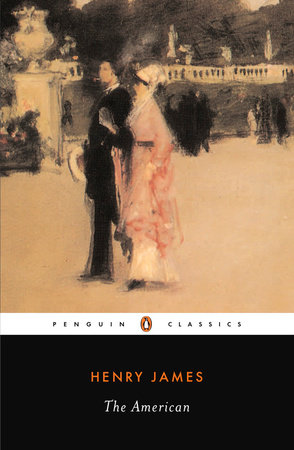
The American
Wealthy American Christopher Newman travels to Europe seeking more than business success and falls in love with the widowed Claire de Cintré.
About
Spoiler notice: Full-plot spoilers, including Valentin’s death, Claire’s religious vows and Newman’s decision about the family secret.
Christopher Newman has made money in America and come to Europe to discover what else a prosperous life might contain. The American opens in the Louvre in 1868, with him exhausted by the effort of looking at celebrated paintings. Business has trained his judgement in ways that do not immediately help him distinguish a masterpiece from an attractive copy. Henry James’s novel, first published in 1877, follows that confident traveller into situations where the rules are less familiar than he expects. Newman meets the painter Noémie Nioche and her father among the pictures, then finds other guides through his acquaintances the Tristrams. His wish for art, leisure and companionship eventually becomes a much more particular wish to marry Claire de Cintré.
Mrs Tristram introduces Claire as someone worth knowing, while warning Newman about the family around her. Claire is a widow belonging to the aristocratic Bellegardes, whose sense of their own importance is firmly established. Her mother and her elder brother Urbain control a household in which inherited position matters greatly. Newman’s wealth makes him an interesting prospect without making him socially equivalent in their eyes. He is accustomed to thinking that patience, frankness and sufficient resources can overcome a difficulty. Winning entry to the house therefore seems like the beginning of a process he can understand. Mrs Tristram’s encouragement gives him a route towards Claire, while the reserve of her relatives makes clear that the invitation to court her comes with conditions.
Claire’s younger brother Valentin becomes Newman’s friend and offers a different welcome. Their conversations allow the American to ask questions about the family and express his wish to marry Claire directly. Newman’s visits become the centre of his days, and Claire eventually accepts him. The apparent agreement of her relatives gives him reason to believe that the obstacles have been overcome. He can imagine a future in which his commercial past has financed happiness without disqualifying him from it. Yet the friendship with Valentin also exposes the limits of their shared understanding. When Valentin prepares to fight a duel, Newman argues against it, finding the demands of honour a terrible reason to risk a life he values.
Valentin goes ahead, and the duel leaves him mortally wounded. Meanwhile, the Bellegardes withdraw their acceptance of Newman’s marriage to Claire. Her mother tells him that she has commanded her daughter to give him up, and the family objects to his commercial background. Newman cannot reconcile this decision with the promises he believes they made. At Valentin’s bedside, the dying man is ashamed of his relatives’ conduct and asks Newman to forgive Claire if she cannot explain herself. He also points him towards a family secret, telling him that Mrs Bread knows something he might use. Valentin’s death removes a friend while leaving an invitation to retaliate against the people who have broken Newman’s engagement.
Mrs Bread’s account concerns the death of Claire’s father. She remembers tending the sick marquis, being told that he had died, and then finding him able to speak again after his wife left the room. According to her, he accused the marquise of killing him and insisted on writing something down. Mrs Bread helped him hold the paper and later concealed it, although she did not read it herself. Newman acquires material that he believes can expose the family and make them answer for their treatment of him. The account reaches him through a witness recalling a disturbing night; its accusation should not be mistaken for a judicial finding. His possession of the paper nevertheless changes what he thinks he can demand.
The threat fails to recover Claire. Newman spends time in England and America, carrying both his disappointment and the possibility of revenge. Ordinary business cannot absorb him as it once did, and he repeatedly returns to the sense that he has been wronged. News that Claire has taken the veil with the Carmelites brings him back to Paris. He walks to the convent and stands outside its blank walls, confronting the life from which he is excluded. Afterwards, sitting in Notre Dame, he finds his determination to punish the Bellegardes weakening. He has no sudden new arrangement to replace the marriage, but the effort of sustaining retaliation begins to seem like something he no longer wants to do.
During his final visit to Mrs Tristram, Newman burns the paper. He explains that it contained a secret capable of damaging the Bellegardes and that he had threatened to expose them. Mrs Tristram regrets losing the chance to read it and questions how much fear the threat really caused. Newman believes they were frightened; she suggests that they relied on his good nature to prevent him following through. That disagreement survives the evidence itself, which has disappeared in the fire. Newman leaves Paris the next day, and the narrator says he has not returned. Mrs Bread remains in the apartments he maintains for her, while Claire’s vows and the abandoned engagement remain unchanged. The ending releases him from revenge without restoring the life he had hoped to share.
Book details
- Author
- Henry James
- First published
- 1877
- Series
- No series listed
- Subgenre
- Literary fiction, Modern classics
- Primary genre
- Literary Fiction
- Tags
- No tags for this book.
Review
Editor profile
Baby Bat
Goodreads and social links will be added soon.
- Goodreads — link coming soon
- Social media — link coming soon