
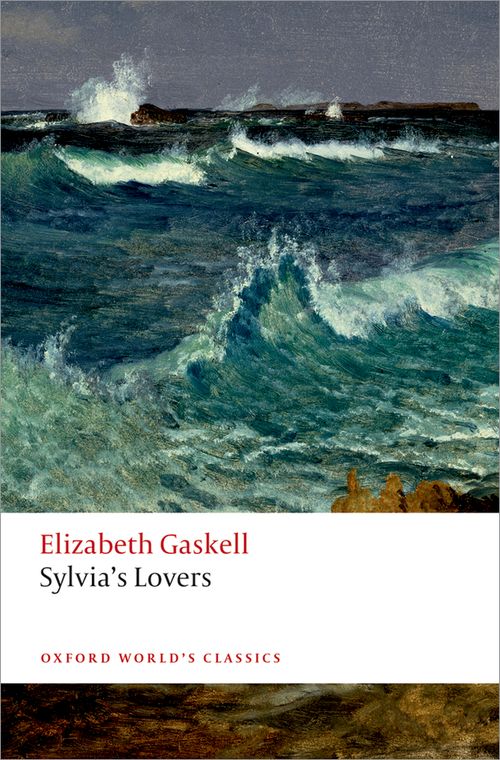
Sylvia's Lovers
In the whaling town of Monkshaven, Sylvia Robson loves the sailor Charley Kinraid, while her cousin Philip Hepburn quietly hopes to marry her.
About
Spoiler notice: Full-plot spoilers, including the concealed impressment, Daniel's execution, Sylvia's marriage, Philip's military service and the final rescue and death.
Monkshaven lives by the sea, but the sea also gives distant authorities a way to intrude upon its homes. In Elizabeth Gaskell's coastal town, whaling supports work, trade and the expectations of young men who hope to become sailors. War makes those men valuable to the navy, and press-gangs turn an ordinary journey into a possible disappearance. Sylvia Robson's life at Haytersbank belongs to that same unsettled world, even though she is a farmer's daughter rather than a sailor. Her parents, Daniel and Bell, have their own habits and loyalties, while her cousin Philip Hepburn offers a quieter, more dependable presence than the company that excites her. The novel's love story grows out of this setting: public violence creates private uncertainty, and news that fails to reach the right person can change an entire life.
Sylvia loves Charley Kinraid, the whaler whose confidence and adventurous life contrast with Philip's manner. Philip loves her in turn, and his jealousy makes his knowledge of Kinraid's fate a terrible advantage. He witnesses a press-gang capture Kinraid despite the sailor's claim to protection. The captive calls Philip near and asks him to tell Sylvia what has happened and that he means to return. Philip hears enough to understand the duty placed upon him, but begins finding reasons to evade it. Rumours about Kinraid's attachments to other women become part of his justification. When Sylvia believes her lover has drowned, Philip withholds the truth. Gaskell follows the concealment through his divided thoughts, allowing the reader to see both his suffering and the choice by which he makes another person's suffering serve his hope.
The press-gangs bring a separate disaster upon Sylvia's father. Daniel joins resistance to their activities, helping free captured men during a violent attack on the rendezvous at the Mariners' Arms. Those who benefit from the rescue can greet him as a hero, while the authorities treat the same conduct as a crime that must be punished. His arrest, trial at York and execution break the family's remaining security. Bell's grief leaves her weakened, and Sylvia faces the practical consequences of bereavement alongside her anger at what has been done. Philip's assistance matters in that crisis. He is useful, attentive and present when the family has lost someone who once seemed indispensable. That kindness is real within the story, but so is the silence he continues to maintain about the other man Sylvia believes she has lost.
Sylvia marries Philip, and their household gradually acquires the routines and obligations of married life, including their daughter Bella. Her feelings do not simply become what he has hoped for, and domestic tenderness exists beside disappointment and strain. Then Kinraid returns alive, now a naval officer. His account brings Philip's concealment into the open at once. Sylvia prevents Kinraid from striking her husband, but she also demands an answer from Philip and hears his desperate defence. Kinraid urges her to leave, claiming that their earlier promises should outweigh the marriage obtained through deception. Bella's cry interrupts them. Sylvia refuses to abandon her child or follow Kinraid, while declaring that she will never forgive Philip or live with him as his wife again. Remaining in the household is no restoration of trust.
Philip leaves in despair and eventually enlists in the marines under another name, Stephen Freeman. Military service gives him a different existence, though the old attachments have not disappeared. At Acre, he recognises Kinraid lying wounded outside the shelter of the defences and carries him to safety under fire. The rescue places the former rivals in a relationship neither could have imagined during the capture on the English shore. Philip's own disfiguring injuries come from a separate explosion aboard the Theseus, after which he is sent home. Meanwhile Sylvia learns that Kinraid has married another woman. His wife's visit also brings news of Philip's courage. The information changes the balance of her feelings, exposing qualities in her absent husband that the last bitter encounter could not contain, without making his earlier deception cease to matter.
When Philip returns to Monkshaven, his burned face and poverty keep him from being recognised. He lodges with Widow Dobson near the home where Sylvia and Bella have enough to eat, and Sylvia unknowingly supports sending the troublesome stranger away. Her earlier vow has helped hold her apart from the possibility of reconciliation even as her feelings soften. The final crisis comes when Bella is swept into the sea. Philip plunges in and saves her, but the waves dash him against the cliff and leave him mortally injured. Kester brings Sylvia to him, telling her who the rescuer is and how long he has been close by. The distance between their households suddenly becomes unbearable to her: someone she had imagined elsewhere has been hungry almost at her door, and the man she feared meeting is now dying.
Their last conversation makes room for mutual pity without pretending that either has escaped responsibility. Philip acknowledges the wrong he did, and Sylvia grieves over her unforgiving words and the suffering she did not recognise. They can finally speak tenderness plainly, but the recognition arrives too late to give them another shared life. He dies as morning comes, and Bella is brought to see the father whose identity she had not known in the hungry stranger. Gaskell then carries the story beyond the room and into its later retelling. The town remembers a man starved beside a hard-hearted wife's plenty, a simplification the narrative explicitly corrects. Hester cares for Bella after Sylvia's later death and commemorates suffering through provision for disabled sailors and soldiers. The shore endures, while human memory turns complicated lives into an easier legend.
Book details
- Author
- Elizabeth Gaskell
- First published
- 1863
- Series
- No series listed
- Subgenre
- Literary fiction, Historical fiction, Family novel
- Primary genre
- Literary Fiction, Historical Fiction
- Tags
- No tags for this book.
Review
Editor profile
Baby Bat
Goodreads and social links will be added soon.
- Goodreads — link coming soon
- Social media — link coming soon