
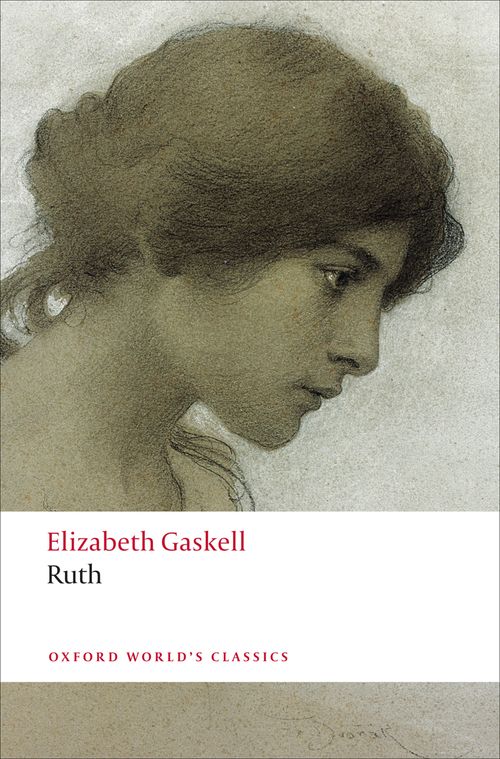
Ruth
An orphaned dressmaker’s apprentice, Ruth Hilton loses her position after forming an attachment to wealthy Henry Bellingham.
About
Spoiler notice: Full-plot spoilers, including Leonard’s parentage, Ruth’s death and the final scene.
Ruth begins in a dressmaker’s workroom, where the beauty prepared for a public ball depends on young women working late into the night. Ruth Hilton is an orphan apprenticed to Mrs Mason, and her attendance at the shire-hall is part of that labour: she is there to repair dresses, rather than to enjoy the evening as a guest. Henry Bellingham’s attention brings her into contact with a wealthy man whose freedom is very different from her own. Elizabeth Gaskell’s 1853 novel follows the consequences of that unequal relationship through households, employment and religious judgement. Ruth has little security beyond her position, so a private attachment can threaten her livelihood as well as her reputation. The opening makes that dependence visible before the town begins deciding what kind of person she is.
Bellingham continues to seek Ruth’s company, and the attachment develops outside the protection of an established family home. When Mrs Mason sees them together, she dismisses Ruth, treating the association as a danger to the reputation of her other apprentices. Later, in Wales, Bellingham’s mother removes her son while Ruth is ill, leaving Ruth behind. His acknowledgement that he has wronged her does not become an effective refusal to go. The consequences fall most heavily on the young woman with the fewest resources. Gaskell follows her distress into the question of whether anyone will offer care without first demanding that she disappear from respectable society. Ruth’s pregnancy makes that question more urgent, placing the future of a child within a judgement already being passed upon his mother.
Thurstan Benson, a minister, and his sister Faith provide the refuge that Ruth lacks. Their decision involves practical sacrifice and disagreement as well as sympathy: taking her in changes what their own household must afford and what it must explain to others. They present her as a widow, giving her a socially acceptable identity under the name Mrs Denbigh. Ruth knows that this account is untrue. The deception protects her and her unborn child, but it also means that their safety rests partly on a story that cannot withstand discovery. The Bensons’ kindness therefore carries a difficult compromise into their home. Their willingness to shelter Ruth challenges the assumption that condemnation is a sufficient response to wrongdoing, while the invented widowhood shows how strongly they still feel the pressure of that assumption.
Leonard’s birth gives Ruth’s life a lasting centre within the Benson household. Motherhood brings affection and responsibility together, and paid employment becomes part of her effort to provide for him. She works as a governess to Mr Bradshaw’s daughters under her assumed identity, entering another family whose respect depends on what it believes about her past. After a passage of years, Bellingham reappears in the Bradshaws’ wider circle as Mr Donne. Recognition brings the history Ruth has tried to live beyond into her present surroundings. In their private conversation she refuses to hide the truth from him, but she also refuses to renew their relationship. Leonard’s welfare remains central to what she says. Donne’s renewed interest does not give him the authority to decide how Ruth should live or to erase the consequences of his earlier departure.
The exposure of Ruth’s history threatens the position she has built, and Leonard must confront the shame that other people attach to his mother. Gaskell’s attention to him extends the consequences of social judgement beyond the person it claims to punish. Ruth’s determination to do her duty to her son continues, but she cannot simply prevent the knowledge from affecting him. Later, during a fever outbreak in Eccleston, she volunteers to serve in the fever ward. The work involves danger and separation from Leonard, while also giving her a public role founded on the care she offers. Dr Davis subsequently proposes help with Leonard’s education and a possible apprenticeship. Ruth asks for time to consider it, so this conversation supplies an offer of a future rather than a completed arrangement.
When Donne becomes ill, Ruth insists on nursing him. She privately tells Dr Davis that he is Leonard’s father, explaining a connection the doctor has not previously known. Asked whether she still loves him, she cannot give a simple answer; she knows he is ill and cannot bear to leave him without her care. She hopes to go before he recognises her, and her decision should not be mistaken for an agreement to resume their old relationship. At his bedside she follows the doctor’s instructions through the crisis. Donne improves, but Ruth becomes feverish, collapses and is taken home. Her strength fades despite the efforts to save her, and she dies. The narration considers exhaustion after nursing among its explanations; it does not provide a definitive medical diagnosis that can safely be added to the story.
The ending follows those left around Ruth rather than allowing her death to settle everything at once. Leonard’s grief breaks into the quiet of her room, and the Farquhars care for him afterwards. Donne visits and offers money for his education, but Benson refuses the provision and resolves to keep the father’s identity from the boy. Donne’s own claim that Ruth nursed him from continuing love remains his interpretation of her action. At the funeral, Benson puts aside the sermon he prepared and reads from Revelation. The final movement is smaller and more personal: Mr Bradshaw finds Leonard at the grave, comforts him and leads him home to Benson. Ruth cannot receive the changed understanding herself, but the last scene places a grieving child within an act of care, where judgement has finally given way to human responsibility.
Book details
- Author
- Elizabeth Gaskell
- First published
- 1853
- Series
- No series listed
- Subgenre
- Literary fiction, Modern classics
- Primary genre
- Literary Fiction
- Tags
- No tags for this book.
Review
Editor profile
Baby Bat
Goodreads and social links will be added soon.
- Goodreads — link coming soon
- Social media — link coming soon