
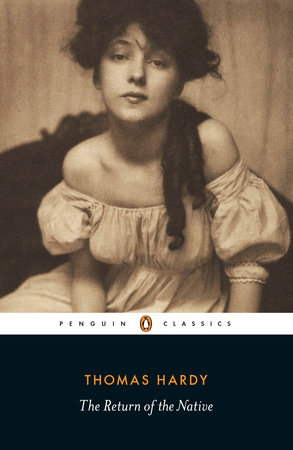
The Return of the Native
On Egdon Heath, Eustacia Vye dreams of leaving for a wider life, while Clym Yeobright returns from Paris hoping to teach the local poor.
About
Spoiler notice: Full-plot spoilers, including the Yeobright family estrangement, Mrs Yeobright’s death, Eustacia and Wildeve’s final meeting, their deaths at Shadwater Weir, and Thomasin’s later marriage to Venn.
Hardy opens on Egdon Heath as a presence larger and older than the people crossing it. On a November evening, an old traveller follows the road and watches a woman on Rainbarrow vanish among the hills. The narrator imagines how a furze-cutter might read the sky and ground, then returns to the traveller, later identified as Captain Vye. The shifting view turns labour, local custom and an ancient burial mound into parts of a place that seems to preserve its own time. From this heath emerges Diggory Venn, a travelling reddleman whose trade has stained his appearance. He carries Thomasin Yeobright, exhausted after an unsuccessful attempt to marry Damon Wildeve, toward her aunt’s home. Overlapping accounts and withheld histories shape what the reader can know, while the landscape limits how far its inhabitants can imagine another life.
Thomasin’s first attempt to marry Wildeve fails when the parson refuses to perform the ceremony because the licence applies to Budmouth, whereas the couple have gone to Anglebury. Thomasin returns unmarried and distressed. Mrs Yeobright doubts Wildeve’s reliability but eventually lets Thomasin marry where she wishes. Venn, who loves Thomasin, tries to help without turning his service into a demand. Wildeve’s interest in Eustacia Vye grows as he realizes she is drawn to him. Eustacia remembers the livelier seaside town of Budmouth and longs to escape Egdon’s narrow social world. At a bonfire she and Wildeve meet in secret, but Venn watches them. Eustacia imagines desire as a route out; Wildeve, who prefers the difficult object once another man wants her, encourages her hope without offering a settled future. Their divided motives run alongside Thomasin’s quieter devotion.
The title’s native is Clym Yeobright, Mrs Yeobright’s son, who comes home from Paris after deciding that his work in the diamond trade is empty. He wants to educate the people of Egdon, a plan his mother regards as a needless surrender of opportunity. Eustacia treats his return as a possible passage to Paris and falls in love with the worldly man she imagines. Clym is drawn to her, but he wants to stay and teach. They marry after a period of secrecy, with Mrs Yeobright absent from the ceremony and each spouse carrying a different picture of their future. Clym’s eyesight worsens under the strain of study, so he gives up his books and earns money cutting furze. His altered circumstances leave Eustacia with a husband whose work and chosen home contradict the escape she expected.
The marriage’s strain becomes inseparable from the breach between Clym and his mother. Mrs Yeobright walks to Alderworth hoping to reconcile, while Eustacia is hiding Wildeve, who has come to see her. Eustacia sends him out by the back way, expecting Clym to wake and answer his mother’s knock. He stirs and murmurs but remains asleep. When Eustacia later discovers this and opens the front door, Mrs Yeobright is already gone; she has seen Eustacia at the window and the furze tools by the entrance, and believes her son has let his wife shut her out. On the hot walk home she becomes exhausted, is bitten by an adder and dies despite the neighbours’ efforts. Clym learns the details only later, so grief hardens into accusation. Hardy builds the catastrophe through partial knowledge, missed timing and separate assumptions rather than a single deliberate act of malice.
After his mother’s death, Clym and Eustacia cannot recover their former closeness. Clym learns from a child that his mother came to Alderworth and saw Eustacia at the window; he also hears that a gentleman entered after he had left. Eustacia confirms the encounter but refuses to identify the visitor, and Clym’s suspicions deepen. His guilt and failing sight keep him tied to Egdon; she feels trapped there and believes only departure can restore a future. Wildeve, now unexpectedly wealthy, is married to Thomasin, but his old attachment to Eustacia survives. When Eustacia tells him she wants to leave for Paris, he offers to take her to Budmouth and hopes to accompany her. The novel delays certainty about her intent. On a stormy night, Thomasin tells Clym that Wildeve has taken money and left; he heads toward the inn, believing Eustacia may be with him.
Eustacia has signalled from Rainbarrow, and Wildeve waits below the inn in a gig for her. Captain Vye sets out toward Mistover, while Clym takes the track toward the inn. Thomasin, left at Clym’s house with her baby, starts for home, loses the path in the storm and finds Venn’s van. When she hears that a woman in a silk dress has just passed and sees a gig lamp below the inn, she asks Venn to guide her toward it. Clym reaches Wildeve’s carriage; before either can establish what the other is doing there, they hear a body fall into the water. Venn helps recover the three people from Shadwater Weir. Clym survives, while Eustacia and Wildeve die. The text leaves Eustacia’s precise intention and the moments before the plunge uncertain. Thomasin grieves for Wildeve; Venn continues to care for her, and they eventually marry. Clym remains apart, burdened by grief.
The six-part construction follows several lives rather than a single hero’s steady progress. Descriptive openings and local conversation give the heath and village custom narrative weight. Hardy moves between what a character believes and what the reader can infer, then lets delayed messages alter earlier scenes. This method matters in the closed-door encounter, the competing accounts of Eustacia and Wildeve, and the uncertain night at the weir. The tragedy grows from affection and generosity as well as vanity, pride and thwarted desire. Clym eventually finds a vocation preaching outdoors, returning to his wish to address the people around him after his private hopes have collapsed.
Book details
- Author
- Thomas Hardy
- First published
- 1878
- Series
- No series listed
- Subgenre
- Literary fiction, Modern classics
- Primary genre
- Literary Fiction
- Tags
- No tags for this book.
Review
Editor profile
Baby Bat
Goodreads and social links will be added soon.
- Goodreads — link coming soon
- Social media — link coming soon