
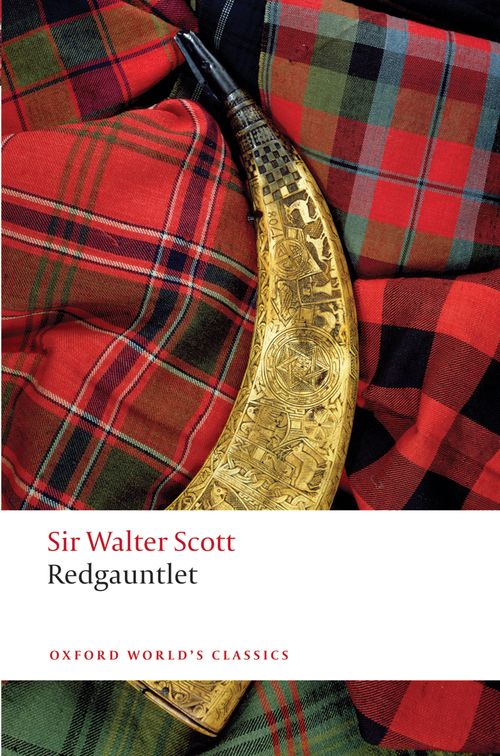
Redgauntlet
Told first through letters between friends, Scott’s novel follows Darsie Latimer, a young Scotsman travelling near the Solway Firth while puzzling over the family history kept from him.
About
Spoiler notice: Full-plot spoilers, including Darsie's family identity, the conspiracy's collapse and the concluding marriage and exile.
Darsie Latimer can afford to wander, but he cannot explain the circumstances that give him that freedom. His guardian supplies money and promises a larger fortune when he reaches twenty-five, while instructing him to avoid England and leave questions about his family unanswered. In the opening letters of Walter Scott's Redgauntlet, published in 1824, Darsie writes to his friend Alan Fairford from a position that is comfortable and strangely incomplete. Alan is returning to legal work; Darsie wants him to share the pleasures of travelling. Their affectionate arguments establish two temperaments as well as a friendship. One young man imagines the possibilities concealed behind his uncertain birth, while the other warns that a taste for romantic adventure may lead him into real danger.
Their differences give the novel an intimacy before its political plot becomes clear. Darsie remembers Alan defending him at school and helping him find his place among other boys, then encouraging the intellectual work he might otherwise have neglected. Alan's own ambitions are not wholly separate from that friendship: professional success would mean less without Darsie there to recognise it. The correspondence allows each man to correct the portrait the other draws, so neither is simply the dreamer or the sensible companion. Their accounts are partial, teasing and emotionally invested. When Alan later leaves his expected course to search for Darsie, that decision grows from an attachment already given a history, rather than appearing merely as the convenient action of a rescuer.
Darsie's wanderings bring him into the orbit of the formidable Herries, whose interest in him is far more personal than he initially understands. The mystery eventually leads to the family of Redgauntlet and to the consequences of its allegiance to the Stuarts. Darsie is Sir Arthur Darsie Redgauntlet, and Herries is his uncle Hugh. His father's death after involvement in the 1745 rising had left his mother determined to protect the children from the political commitments that had destroyed her husband. Concealing Darsie's identity was therefore intended to preserve a future, rather than simply deny him an inheritance. His uncle sees the same concealment as an interference with the duty and authority entrusted to him, making protection and possession opposing descriptions of the same family struggle.
Lilias, the young woman whose appearance has seemed another part of the mystery, is Darsie's sister. She explains how their uncle carried her away in childhood while their mother managed to keep him, and how they consequently grew up apart. Her account gives the restrictions of his upbringing a cause he had not been able to discover for himself. It also brings an ally into a situation where discovering his name does not give him control of his circumstances. Hugh wants the representative of the family to lend his standing to another Stuart enterprise. Darsie must resist the assumption that recovering an ancestry obliges him to adopt its politics, while Lilias must negotiate affection for the uncle who raised her alongside her understanding of the danger he creates.
Scott places this imagined conspiracy in 1765; the attempted new rising belongs to the novel's fiction. Charles Edward Stuart is present, and Hugh's determination confronts the doubts of people whose loyalty no longer makes another hazardous venture seem practical. The gathering cannot be understood simply as a contest between brave adherents and timid deserters. Their calculations involve the lives and families that would pay for renewed conflict, while Hugh has made restoration the object around which his own identity is organised. Alan's efforts to reach Darsie lead him into this company, where the welfare of his friend is entangled with the safety of people whose cause he does not share. Lilias urges an escape that will avoid placing others in danger, rather than treating any possible rescue as justification for an indiscriminate exposure.
The discovery of treachery within the enterprise brings the crisis to its height. A message intended for Cristal Nixon reveals preparations against the conspirators, and the arrival of General Campbell seems to promise arrests or a desperate fight. Instead, Campbell offers terms under which the meeting can dissolve and its members return quietly home. He refuses even to acknowledge an acquaintance with the prince in a way that would force a confrontation. Those who wish to leave may embark without interference. For Hugh, this mercy exposes the final weakness of the cause more completely than an honourable defeat would have done. The government can afford to let it go. He chooses to accompany Charles into exile, while recognising that Darsie can serve the reigning monarch without having first to abandon an allegiance of his own.
A separate conclusion, presented as a letter from Dr. Dryasdust, follows the survivors through supposed records and later testimony. Darsie is received at court, and Lilias marries Alan about eighteen months after the principal events. Hugh spends further years with the prince before entering a monastery, where religious discipline seems to replace political intrigue. Yet the account of a lock of hair worn beneath his habit leaves uncertainty about how completely he surrendered his old attachments: it may commemorate the brother executed for the Stuart cause. The conclusion thus gives Darsie a future released from compulsion without neatly erasing the family's memory. Redgauntlet ends with a departure from inherited conflict, but also with the knowledge that devotion and injury can persist long after a political project has lost the power to command the next generation.
Book details
- Author
- Walter Scott
- First published
- 1824
- Series
- No series listed
- Subgenre
- Literary fiction, Modern classics
- Primary genre
- Literary Fiction
- Tags
- No tags for this book.
Review
Editor profile
Baby Bat
Goodreads and social links will be added soon.
- Goodreads — link coming soon
- Social media — link coming soon