
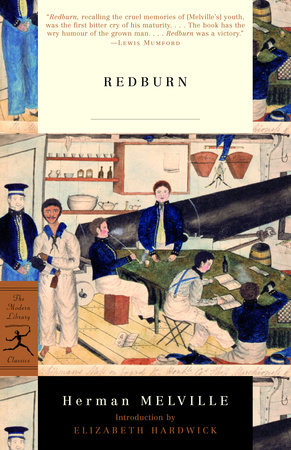
Redburn: His First Voyage
Young Wellingborough Redburn signs aboard a merchant ship for Liverpool, carrying romantic ideas of travel into the hard routines of sea work.
About
Spoiler notice: Full-plot spoilers, including the Liverpool vault episode, the return-voyage deaths, Jackson’s fall, the wage dispute and the later report of Harry Bolton’s death.
Wellingborough Redburn imagines the sea long before he understands a sailor's work. Shipping advertisements promise distant ports, and his father's stories of European travel give those destinations the warmth of family memory. His circumstances are less expansive: the family is short of money, plans for his future have failed, and he needs to support himself. His brother supplies a shooting jacket and a gun to sell for the cost of an outfit. That mixture of necessity and longing takes him to New York, where he joins the merchant ship Highlander for Liverpool. Melville tells the voyage through Redburn's later recollection, keeping the boy's eager misunderstandings alongside an older voice capable of measuring their consequences. The route is a simple outward-and-homeward crossing, but the experience gives him an education no imagined adventure had prepared him to receive.
His initiation begins with humiliation and discomfort. Sea language can turn an ordinary question into a joke at his expense, and his claim to gentlemanly origins carries little authority among the crew. The forecastle is dark, foul-smelling and cold, with bare sleeping places and no welcoming privacy. His clothes are equally unprepared for their new purpose: respectable boots become a liability in the rigging and pinch after shrinking in salt water. Being selected last for a watch reinforces his place at the bottom of the ship's working order. Yet Redburn gradually acquires skill and confidence aloft, discovering the exhilaration as well as the fear of handling sails in bad weather. The practical details matter because competence must be learned through his body, while the habits and assumptions he brought from home repeatedly make him conspicuous.
Liverpool first seems a destination he already possesses on paper. He carries his father's old guidebook, studying its map and descriptions until he imagines he could navigate the streets almost without looking. Its sentimental value makes its authority feel secure. The city he encounters has changed, however, and the gap between the book and the living place exposes the limits of inherited knowledge. Melville gives the port room to spread beyond that disappointment: docks, ships, working people and unfamiliar rigging turn Redburn's shore leave into another kind of apprenticeship. His observations frequently interrupt the forward movement of the voyage, allowing curiosity to become part of the book's form. Liverpool is at once a remembered place belonging to his father, an international centre of trade, and a city the inexperienced visitor must learn to see for himself.
What he finds in its poorer streets changes the emotional scale of that exploration. In Launcelott's-Hey, he discovers a starving woman and two girls in a vault beneath a warehouse. He asks neighbours, policemen and people at his boarding house for help, meeting refusal, indifference and excuses about responsibility. Eventually he brings bread and cheese, then carries water in a borrowed hat because he has no money for a pitcher. The effort is painfully inadequate, and later the empty vault and quicklime lead him to conclude that the family has died. He cannot learn who removed them. Redburn's helplessness gives the episode its force: compassion is present, but he has little money, influence or knowledge of how to obtain effective aid. The city's commercial abundance exists within walking distance of people whom its ordinary business can leave unseen.
Harry Bolton introduces a different Liverpool acquaintance and another promise of escape. His polished manner and apparent familiarity with fashionable life appeal to Redburn, who accompanies him to London without understanding the whole purpose of the trip. The luxurious establishment they visit briefly revives the boy's fantasies of important people and splendid rooms. Harry's secretive errands, disturbed return and torn documents make that glamour increasingly uneasy. Redburn does not disclose the papers' contents, so the episode retains gaps even in its retrospective telling. Harry subsequently joins the return voyage to America, where he proves poorly fitted to ordinary sea work. Their friendship connects two young men whose appearances and expectations offer little protection from the employment they have undertaken. Redburn's sympathy is real, although it cannot give him complete understanding of his companion's past or a secure future to offer him.
The homeward crossing carries emigrants as well as crew, bringing poverty and crowding into the ship's confined space. Illness spreads through steerage, frightened passengers try to separate the sick with a barricade, and deaths turn the ocean into a burial ground. The weather limits access to fresh air, while fear of infection reaches the comparatively comfortable cabin. Redburn's account widens into an indictment of conditions that a short shipping report could conceal. Jackson, the intimidating sailor whose own health has deteriorated, suffers a separate catastrophe near the end of the passage. He goes aloft to help reef a sail, bleeds from the lungs and falls into the sea. The work continues. These episodes make the return more than a closing stage of Redburn's adventure: the same vessel carries unequal chances of comfort, safety and having one's suffering acknowledged.
New York brings relief, but little financial reward. Captain Riga calculates deductions from Redburn's tiny wage, then claims the London absence forfeited his pay and leaves him owing money instead. Redburn must go home, and he tries to help Harry through Goodwell, an acquaintance who promises to seek work for him. Their parting at the steamboat is the last time they meet. Goodwell later reports that Harry could not find a position and has disappeared after selling clothes to pay for lodging. Years afterwards, on another voyage, Redburn hears a sailor describe a young man killed between a whaling ship and a whale. The name confirms that it was Harry Bolton. The book closes with Redburn surviving to tell the story, while his friend's fate extends the first voyage's lessons into a later life. Returning home has ended the crossing, but it has not restored the security with which he once imagined the world.
Book details
- Author
- Herman Melville
- First published
- 1849
- Series
- No series listed
- Subgenre
- Literary fiction, Sea adventure, Coming-of-age
- Primary genre
- Literary Fiction, Adventure
- Tags
- No tags for this book.
Review
Editor profile
Baby Bat
Goodreads and social links will be added soon.
- Goodreads — link coming soon
- Social media — link coming soon