
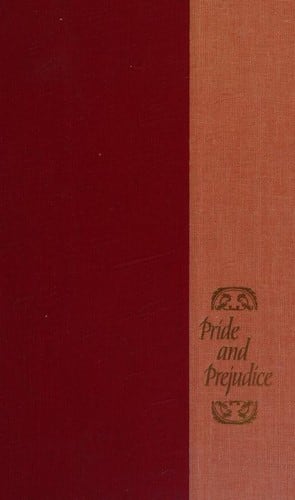
Pride and Prejudice
Mrs Bennet has five daughters and no son, which in the England of the novel means that the family estate is entailed away from the women and that all five will need to marry well or live on very little.
About
Spoiler notice: Contains major spoilers, including Lydia's elopement and the resolutions of the Bennet sisters' courtships.
The Bennet family lives at Longbourn, a country estate in Hertfordshire, where Mr and Mrs Bennet are raising five daughters: Jane, Elizabeth, Mary, Kitty, and Lydia. Because the estate is entailed through the male line, it will pass to their cousin Mr Collins rather than to the daughters when Mr Bennet dies. Their prospects therefore depend heavily on marriage and the judgments of relatives and neighbours. The arrival of Charles Bingley, a wealthy young bachelor renting nearby Netherfield, quickly becomes local news. His friend Fitzwilliam Darcy is even richer, but at the first assembly he appears reserved and dismissive of the people around him. Elizabeth Bennet, the second daughter, is quick to notice the slight and just as quick to form an opinion of Darcy from it.
Bingley is warmly received by the neighbourhood and soon spends time with Jane, whose quiet manner is easy to miss beside her mother's open matchmaking. When Jane visits Netherfield and falls ill, Elizabeth walks across muddy fields to care for her, giving her more time with Bingley's sisters and Darcy. Darcy's attention to Elizabeth grows even as he remains awkward in company; she takes much of his behaviour as evidence of arrogance. After Bingley leaves for London, Jane visits the city but finds that his sisters keep her at a distance, and Elizabeth suspects Darcy helped end the attachment. Meanwhile, the militia brings George Wickham to Meryton. His agreeable manner and story that Darcy denied him a promised living appear to confirm Elizabeth's first impression. The book allows her account of Darcy and Wickham to harden before she has evidence that could test either man's story, while the energetic Mrs Bennet and younger sisters keep adding new social complications.
Mr Collins, the clergyman who will inherit Longbourn, visits the family intending to marry one of the Bennet daughters as a gesture of reconciliation. His self-importance and repeated references to Lady Catherine de Bourgh, his patroness, make his visit a source of comedy, but the entail gives his proposal real consequence. He chooses Elizabeth, who refuses him; he soon marries her friend Charlotte Lucas instead. Elizabeth later visits Charlotte at Hunsford, where the surrounding social circle includes Lady Catherine and Darcy's cousin Colonel Fitzwilliam. At Rosings, Darcy abruptly proposes, stressing the obstacles he believes stand between them. She refuses him and challenges both his manner and his treatment of Wickham and Jane. Darcy's letter that follows disputes Wickham's account, describes Wickham's attempt to elope with Darcy's sister Georgiana, and explains Darcy's own part in separating Bingley from Jane. Elizabeth has to reconsider what she trusted and what she assumed.
Later, Elizabeth travels through Derbyshire with her aunt and uncle, the Gardiners, and visits Pemberley, Darcy's estate. The housekeeper's account of Darcy's conduct gives her a view that conflicts with the coldness she remembers. Darcy unexpectedly returns and behaves with greater ease and consideration; Elizabeth also meets his younger sister Georgiana, whose shyness surprises her after she expected to meet someone proud. Their acquaintance begins to change, but news from home interrupts it: Lydia has left with Wickham, a scandal that threatens the standing and future of the whole family. The first report is frighteningly uncertain, since no one knows whether the couple will marry. Elizabeth returns home, knowing the danger but unaware of the private effort that will determine whether the elopement can be repaired.
Wickham and Lydia are eventually found and married, and Elizabeth learns that Darcy located them and arranged the settlement, including the money that persuaded Wickham to marry. Darcy had acted without asking for credit, and Elizabeth's knowledge of his help changes her understanding of him. Bingley returns to Netherfield with Darcy, renewing his visits to Jane and bringing their interrupted attachment back into view. Lady Catherine then visits Longbourn to demand that Elizabeth promise not to marry Darcy. Elizabeth refuses to make that promise. The pressure exposes how little control her relatives can exert over her decision, even as the prospect of such a match remains a source of anxiety and hope for the Bennet family.
Lady Catherine's report gives Darcy reason to hope that Elizabeth's feelings may have changed. He renews his offer, and this time she accepts. Bingley has also asked Jane to marry him, giving the eldest sisters futures that differ from the uncertain prospects that opened the story. Mr Bennet is reluctant to believe Elizabeth's choice at first, while Mrs Bennet's excitement looks ahead to the family advantages the marriages will bring. The narrative follows Elizabeth closely, letting readers share her confidence in Wickham and her suspicion of Darcy before the letter and later events revise her view. Around her, Mr Collins's ceremony, Lady Catherine's authority, Mrs Bennet's schemes, and the neighbourhood's gossip show how private decisions unfold in public. The plot makes visits, letters, proposals, and family news carry both practical consequences and changing knowledge of other people.
Book details
- Author
- Jane Austen
- First published
- 1813
- Series
- No series listed
- Subgenre
- Historical romance, Literary historical fiction
- Primary genre
- Historical Fiction, Romance
- Tags
- No tags for this book.
Review
Editor profile
Baby Bat
Goodreads and social links will be added soon.
- Goodreads — link coming soon
- Social media — link coming soon