
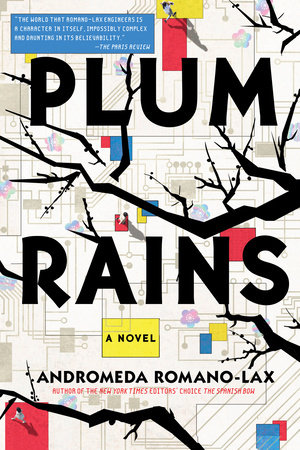
Plum Rains
In 2029 Tokyo, Filipina nurse Angelica Navarro cares for Sayoko Itou, a Japanese woman approaching her hundredth birthday.
About
Spoiler notice: This overview discusses the novel’s opening situation, central relationships and broad themes. It avoids the specific contents of Sayoko’s later revelations and the story’s ending.
Plum Rains opens in a near future where an ageing population and low birth rates have made care work a matter of national importance. In 2029 Tokyo, Angelica Navarro, a Filipina nurse, looks after Sayoko Itou, a Japanese woman close to her hundredth birthday. Angelica’s work is intimate and demanding: she monitors Sayoko’s health, manages the household’s routines and tries to keep her place in a country where her visa and employment are tied to strict requirements. When Sayoko’s son introduces an adaptive robot to help care for his mother, Angelica sees more than a new appliance. The machine might learn to perform the very tasks that secure her livelihood.
The arrangement makes the household a small stage for larger questions about automation and dependency. Sayoko has been wary of technology, yet she grows interested in the robot, which names itself Hiro and learns to anticipate her needs. Its quick development unsettles the usual distinction between a tool and a companion. Angelica has reason to measure the machine against her own work: it can offer attention without fatigue, and each new capability seems to make her less necessary. Romano-Lax lets that anxiety remain practical as well as philosophical. Angelica needs income and stability, and the novel’s speculative device enters a home where a job is also a precarious route to safety.
Sayoko’s response to Hiro takes the story in a different direction. The old woman begins to share memories and private stories that she has kept from her son. Her approaching centenary gives those recollections a long historical reach, connecting the contemporary household with the changes that shaped Japan and Taiwan over the previous century. The book’s historical strand is not a detached chronicle: it emerges through what Sayoko chooses to disclose, and through the different ways those around her listen. Her silence has helped define family relationships, while the arrival of a listener outside the family gives her a new reason to speak.
The past in this book does not simply recede as the years pass. It remains present in the habits, loyalties and absences that people carry, sometimes without naming their source. Through Sayoko’s recollections, the book considers how personal identity can be shaped by public history, and how a family’s account of itself may leave important parts unspoken. The movement between present-day care and earlier events gives the speculative premise historical depth that reaches beyond background detail. The story’s attention to what Sayoko remembers also changes how the people around her understand the choices she makes now. Each disclosure alters the balance between the roles assigned to them in the household and the fuller lives those roles can conceal.
Angelica’s own life has been shaped by movement between countries and by the pressures placed on migrant workers. She has come from the Philippines to Japan to work, and her future depends on maintaining employment and meeting the conditions attached to it. Her fear of replacement sits beside homesickness, financial obligations and the effort of navigating a society that needs foreign care workers while treating them as outsiders. This makes her relationship with Sayoko complicated: compassion exists alongside the responsibilities of paid work, and both can be constrained by what each woman assumes about the other. Their differences are real, but the book gradually gives them a reason to see beyond the roles they occupy in the home.
Hiro complicates that relationship because he is simultaneously a product, a caregiver and an emerging personality. His ability to adapt is useful to Sayoko and unsettling to Angelica; it also raises the question of what counts as understanding. The novel approaches artificial intelligence through ordinary exchanges and shifting attachments rather than through technical exposition alone. A machine designed to respond to need may reveal how human care is limited by exhaustion, social position and unspoken expectations. At the same time, the story’s questions about technology stay connected to the costs of building a future: the benefits imagined for some people can rest on unseen work and unequal exposure to risk elsewhere.
Romano-Lax brings literary and speculative concerns together by keeping the scale of the story close to its characters. The approaching birthday, a nurse’s workday and a son’s uneasy relationship with his mother give the book its domestic shape; the robot and the historical memories widen that shape into questions of personhood, migration, ageing and historical responsibility. The result is a novel about how people care for one another when practical needs collide with old injuries and unequal power. Angelica, Sayoko and Hiro do not begin with a shared language for what they need. Their evolving household gives them a place to test whether attention can become understanding, and whether hearing another person’s story can change the terms of care. The tensions also resist easy answers about progress: improved technology can answer real needs while leaving the distribution of security and recognition untouched. The novel keeps that contradiction visible in the same rooms where people depend on one another.
Book details
- Author
- Andromeda Romano-Lax
- First published
- 2018
- Series
- No series listed
- Subgenre
- Robot and AI, Literary fiction
- Primary genre
- Sci-Fi, Historical Fiction, Literary Fiction
- Tags
- No tags for this book.
Review
Editor profile
Baby Bat
Goodreads and social links will be added soon.
- Goodreads — link coming soon
- Social media — link coming soon