
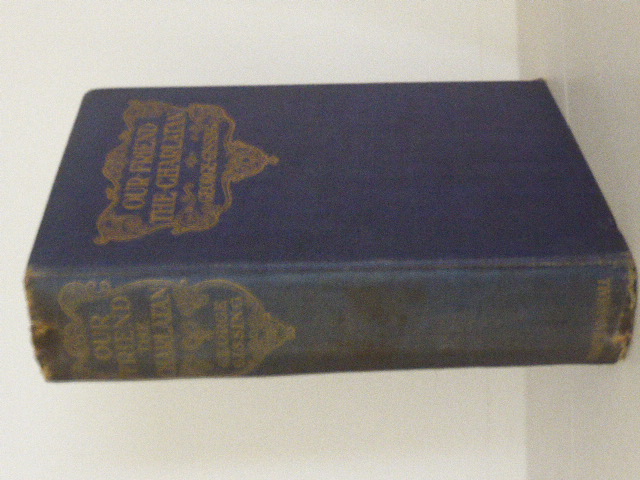
Our Friend the Charlatan
Dyce Lashmar hopes to turn his talent for persuasive conversation into an influential public career.
About
Spoiler notice: This overview discusses Dyce’s borrowed theory, his changing marriage plans, the election and the financial reversal in the final chapter.
Our Friend the Charlatan begins in a vicarage where public respectability conceals dwindling resources and considerable domestic friction. The Reverend Philip Lashmar’s income has fallen, agricultural depression affects his glebe, and the private fortune that once supported his generosity is nearly exhausted. His wife’s commanding manner offers little relief from his worries. Their son Dyce inhabits another kind of financial uncertainty: he has education, social ambitions and confidence in his conversational gifts, but no secure route to the distinction he believes himself capable of achieving. George Gissing’s 1901 novel follows his attempt to turn an intellectual persona into influence. Money matters throughout, because the freedom to develop grand ideas repeatedly depends on someone else paying for the speaker’s accommodation, leisure or next opportunity.
Dyce presents himself as a thinker who has moved beyond the conventional ambitions of writing books. Talking seems to him a more direct and effective means of communicating, and his confidence grows when an audience responds. He also claims unusually enlightened attitudes towards women, treating the rejection of familiar courtesies as evidence of intellectual equality. Constance Bride, who knew him before this latest version of himself, does not necessarily experience his behaviour as liberating. Her own independence has required sustained effort after the financial damage endured by her clerical family. She has trained for useful work and now serves as secretary to Lady Ogram near Hollingford. Dyce quickly recognizes the opportunity in that connection and asks Constance to introduce him to her wealthy employer.
Lady Ogram’s patronage opens the world he wants to enter. At Rivenoak, his account of society as an organism gives political ambition the vocabulary of science and natural hierarchy. He can speak of service and the advancement of capable people while imagining himself among those entitled to lead. The narrator makes clear that his eloquence owes its ideas to a French author, and that Dyce regards his superior delivery as sufficient answer to the possibility of plagiarism. His hostess has purposes of her own, involving her mill, local influence and a Liberal challenge at Hollingford. Becoming her chosen man therefore brings expectations as well as advantages. Dyce’s prospects depend on continuing to please someone accustomed to directing the people around her.
Iris Woolstan supplies a different form of support. A widow with a son, Leonard, she is susceptible to Dyce’s attention and increasingly invested in his success. Financial help becomes part of their relationship, including a loan of three hundred pounds that offers him breathing space. He values independence as an ideal while accepting the arrangements that permit him to avoid its harder practical demands. Iris’s hopes give the money an emotional meaning he does not consistently share. Her admiration also allows him to enjoy an image of himself that another, more questioning companion might challenge. Gissing makes this a pattern across Dyce’s dealings: he wants recognition of his exceptional qualities, but finds the obligations created by other people’s affection inconvenient when they interfere with a more promising possibility.
The discovery of May Tomalin as Lady Ogram’s relative further complicates the relation between marriage and advancement. Dyce’s interest in May and his engagement to Constance become entangled with the older woman’s wishes. What he initially proposes to Constance as a pretence creates a commitment that he later wants removed when his desires change. The women are neither identical obstacles nor interchangeable rewards. Constance’s understanding of his weaknesses makes her harder to deceive, while May’s expectations and developing social confidence alter the attraction she represents. Lady Ogram eventually confronts the divided courtship and demands a decision. Dyce repeatedly tries to preserve all his advantages through explanation and postponement, discovering that persuasive speech cannot indefinitely keep incompatible promises from meeting in the same room.
Lady Ogram’s death and Dyce’s defeat at the election end the most ambitious version of his scheme. Meanwhile, similarities between his doctrine and the French book become a topic of social conversation. Mrs. Toplady’s circulation of the report combines apparent concern with pleasure in exposing the man she had found entertaining. Lord Dymchurch’s reaction widens the novel’s questions about public life: he is tired of grand words, suspicious of professed social service and aware that his own desire for quiet is also a form of individualism. His turn towards working his land offers an alternative to self-advertisement without becoming a universal solution. Dyce, for his part, must find a new arrangement after the audience, connections and political opportunity on which he relied fail to produce the career he expected.
He marries Iris, whose devotion and income now promise a comfortable refuge. Their honeymoon at Dawlish briefly permits him to enjoy the very domestic security he had accepted reluctantly. Then a newspaper reports the disappearance of Wrybolt, the trustee holding much of her money. Inquiries establish the fraud, and the couple return to West Hampstead with their means drastically reduced. Dyce’s anger falls on Iris, who is frightened of losing his affection as well as her fortune. Back at the house, the study she has lovingly prepared begins to restore his satisfaction. They still have nearly two hundred pounds a year, though Leonard’s schooling and household expenses will need attention. Dyce imagines a new beginning for his career; Iris responds with gratitude. The ending preserves their unequal dependence rather than showing that adversity has remade him.
Book details
- Author
- George Gissing
- First published
- 1901
- Series
- No series listed
- Subgenre
- Literary fiction, Modern classics
- Primary genre
- Literary Fiction
- Tags
- No tags for this book.
Review
Editor profile
Baby Bat
Goodreads and social links will be added soon.
- Goodreads — link coming soon
- Social media — link coming soon