
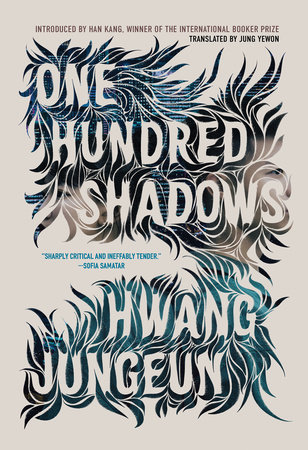
One Hundred Shadows
In a Seoul electronics market threatened with demolition, repair-shop assistants Eungyo and Mujae try to make sense of a strange occurrence: people’s shadows sometimes rise away from them.
About
Spoiler notice: This overview discusses Eungyo and Mujae’s work in the market, the rising-shadow phenomenon, and the threat of demolition. It avoids later developments and the ending.
One Hundred Shadows follows Eungyo and Mujae, two young assistants who work in repair shops inside a sprawling electronics market in Seoul. Around them are older tradespeople, small shop owners, and workers whose days depend on a place that is increasingly described as an obstacle to redevelopment. The market is more than a backdrop: its floors, corridors, shops, and routines form a lived-in community where people know one another’s habits and histories. Eungyo and Mujae move through this world at the edge of adulthood, sharing meals and conversations as they try to understand what will happen to the place that gives their lives shape. Their connection grows quietly, without turning the novel into a conventional courtship plot.
A strange event unsettles this ordinary routine. Some people’s shadows begin to rise away from their bodies, and those who have seen it warn others against following a shadow that wanders off. The novel leaves the phenomenon uncanny rather than explaining it through a system of magic. It belongs to the book’s fictional world, where an impossible sight can sit beside familiar details of work, debt, family, and eviction. That balance matters: the shadows do not replace the market’s material problems or offer a simple solution to them. They make visible a sense of exhaustion and danger already present in the characters’ lives, while preserving uncertainty about what the characters are witnessing and how to respond.
Eungyo is the story’s central voice, though the narration can shift and other characters sometimes tell their own histories in an unusual, indirect way. The effect is intimate but not fully transparent. A person may be physically close to Eungyo and still carry experiences she cannot know until they choose to share them. Mujae, whose family has been marked by poverty and loss, becomes someone with whom she can speak without needing to explain every silence. Their exchanges are modest: they talk, spend time together, and find comfort in each other’s company. The book gives these moments room to matter, so affection appears through attention and companionship rather than dramatic declarations.
The market’s threatened future presses on every relationship. Notices, meetings, and talk of demolition turn distant plans into an approaching fact, but the language of redevelopment can make it sound as if no one lives or works in the buildings. Hwang places that public language against the particular lives inside the market: a repairer’s expertise, a shopkeeper’s stock, a worker’s daily route, and the accumulated history of families tied to the district. The characters cannot treat demolition as an abstract change to a city map. It risks taking away income, home, and the social connections formed through years of shared work. Their knowledge of the market gives the threatened place a human scale.
The setting draws on Seoul’s real experience of redevelopment, including the 2009 Yongsan tragedy, in which a protest against forced eviction ended in a deadly confrontation. Hwang has discussed Yongsan as one of the inspirations for the novel’s market, and literary criticism has connected the book’s demolition threat to that history. The novel’s electronics market and its characters remain fictional; the rising shadows are also a fantastical invention, not a description of the real event. Keeping those things distinct allows the story to address displacement without turning its supernatural image into documentary fact. Its concern is with how a city’s language of renewal can obscure the people asked to bear its costs.
Hwang’s prose moves between plain exchanges and moments of dreamlike dislocation. Detailed attention to the market’s objects and work gives the setting weight, while the shadow episodes loosen the boundary between what can be explained and what can only be felt. The book’s pace is reflective. Small observations, casual conversations, and stories told by market regulars accumulate rather than pushing toward a series of large reversals. This approach lets the reader encounter the community through separate encounters and memories. The voices do not all serve as exposition for Eungyo’s journey; they reveal how different people understand the same place, and how private grief can persist inside a public struggle over property and development. The unusual scenes enter through familiar rooms and exchanges, not through a fully mapped mythology.
The relationship between Eungyo and Mujae offers warmth without cancelling the uncertainty around them. They can offer one another company, listen, and share the ordinary pleasures of food and conversation, but neither can control what developers or authorities will decide about the market. The shadows deepen that unease by giving physical form to a fear of losing oneself, even as the book leaves their meaning unsettled. One Hundred Shadows therefore joins a tender story of two workers drawing closer with a portrait of a community at risk of being cleared away. Its attention stays with the people who inhabit that threatened space and with the fragile ties that help them face an uncertain future.
Book details
- Author
- Hwang Jungeun
- First published
- 2010
- Series
- No series listed
- Subgenre
- Translated literary fiction, Social realism, Magical realism
- Primary genre
- Literary Fiction
- Tags
- No tags for this book.
Review
Editor profile
Baby Bat
Goodreads and social links will be added soon.
- Goodreads — link coming soon
- Social media — link coming soon