
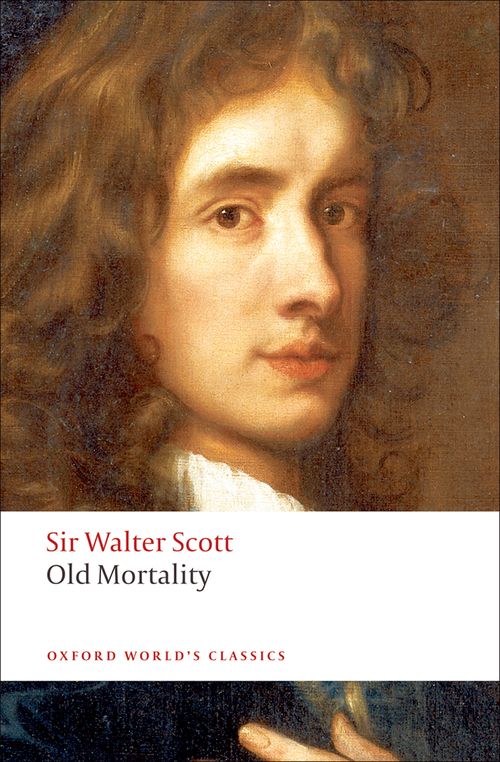
Old Mortality
In southwest Scotland during the Covenanter conflicts of 1679, Henry Morton is drawn from an uneasy neutrality into a rebellion whose cause he partly shares but whose religious extremism he distrusts.
About
Spoiler notice: Full-plot spoilers, including Morton's return, Evandale's death and the concluding marriage.
The man who gives Old Mortality its title spends his time attending to the dead. He repairs the inscriptions on Covenanter gravestones, preserving names and testimony that weather would otherwise erase. Published in 1816, Walter Scott's novel makes that act of remembrance part of its opening frame before turning to a story of religious and political conflict in seventeenth-century Scotland. The tale reaches us through Peter Pattieson and the editorial presence of Jedediah Cleishbotham, so the question of who transmits a history is present from the beginning. Within the main narrative, people fight over their understanding of duty, persecution and legitimate authority. The graveyard reminds us where those convictions can lead, while the layered storytelling asks how the struggles of one generation become the inheritance of another.
Henry Morton enters the conflict with reasons to distrust the conduct of both sides. Government oppression troubles him, but so does the conviction that religious zeal can justify whatever violence its possessors choose to commit. His encounter with John Balfour of Burley brings these positions into immediate contact. Burley is dangerous to shelter, yet Morton's late father had helped him, creating an obligation that Henry is unwilling simply to discard. Hospitality therefore becomes a political act even when its giver wishes to understand it as a personal debt. Burley's own account of his mission leaves much less room for hesitation: he treats bloodshed as the fulfilment of sacred duty. Morton can recognise a grievance without accepting that every action performed in its name becomes righteous.
Morton's love for Edith Bellenden makes the divisions still harder to negotiate. She belongs to the royalist household of Lady Margaret, and a commitment to her cannot be separated from the loyalties surrounding her family. When Morton is taken into government custody, Edith appeals to Lord Evandale, who also loves her. That appeal exposes a rival's claim upon her feelings, yet Evandale's conduct is not governed entirely by jealousy. He helps Morton despite the personal cost of keeping that rival alive and free. Scott makes generosity cross the very boundaries that political allegiance would seem to establish. These men can oppose one another and desire the same woman while still recognising obligations that neither an army's orders nor a disappointed heart entirely cancels.
The fighting at Drumclog reveals how quickly the possibility of restraint can disappear. Cornet Richard Grahame approaches with a summons under a flag of truce, but the exchange becomes a struggle over whom he has the authority to address and exclude from pardon. Burley shoots him, turning the encounter into an immediate call for vengeance. The royalist attack that follows is disrupted by the ground and the defenders' fire. Morton later intervenes to protect Evandale, an act that some insurgents interpret as assistance to an enemy. Mercy does not provide a safe position outside the conflict; it can make its practitioner suspect to his own companions. The scene gives a practical form to Morton's predicament, showing how an effort to preserve another life becomes evidence against the person making it.
The insurgents' later defeat at Bothwell Bridge changes Morton's prospects without resolving the arguments that drew him into their cause. His punishment becomes banishment, and Evandale's assistance follows him even to his departure: letters of recommendation and provision for his immediate needs are prepared before he leaves for Holland. Burley also reaches him through a letter, but with a very different offer. He wants renewed association and continues to threaten the Bellenden family, interpreting its resistance as an injury to be repaid. Morton refuses the invitation to resume that dangerous partnership. Years pass before the narrative returns to Scotland after the change of dynasty. His absence has allowed mistaken reports of his death to settle into the lives of others, and Edith is now betrothed to Evandale.
Morton's return cannot bring those lives back to an earlier point. Evandale is drawn towards another political venture, while a warning Morton sends fails to reach him effectively because the messenger drinks instead of completing his errand. The final violence grows out of plots and resentments that have survived the intervening years. Olifant, Burley and two dragoons fire upon Evandale, leaving him mortally wounded. Cuddie kills Olifant, and the arrival of Morton with cavalry does not come soon enough to save Evandale. Burley's attempted escape ends in the river, where he grapples with a pursuing dragoon and both drown. Before dying, Evandale joins Edith's and Morton's hands. His last generosity grants the lovers a future that his own death makes possible, giving their reunion an unavoidable burden of grief.
Scott follows that crisis with a separate conclusion in which Pattieson and Miss Martha Buskbody discuss what became of the surviving characters. Property and domestic arrangements matter here as much as declarations of love. Lady Margaret inherits from Olifant, the family's circumstances improve, and Cuddie's connection to his cottage and fields is restored. Only after several months of mourning do Morton and Edith marry, with Lady Margaret eventually overcoming her objection to his Covenanter parentage. The conversation also exposes a reader's appetite for every remaining life to be accounted for, while leaving some minor futures less certain. Old Mortality thus closes with restoration accompanied by an awareness of how stories are finished. A marriage can end the lovers' troubles, but the deaths, divided loyalties and work of remembrance remain part of what their happiness has cost.
Book details
- Author
- Walter Scott
- First published
- 1816
- Series
- No series listed
- Subgenre
- Literary fiction, Modern classics
- Primary genre
- Literary Fiction
- Tags
- No tags for this book.
Review
Editor profile
Baby Bat
Goodreads and social links will be added soon.
- Goodreads — link coming soon
- Social media — link coming soon