
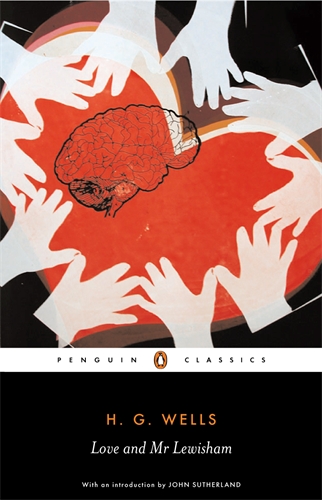
Love and Mr Lewisham
At eighteen, Lewisham is a poorly paid schoolmaster with a carefully scheduled plan for academic distinction and public work.
About
Spoiler notice: This overview includes Lewisham and Ethel's marriage and the novel's ending.
Lewisham has planned his future with the confidence of someone who has not yet had much opportunity to test it. Eighteen years old and earning forty pounds a year as an assistant schoolmaster at Whortley, he fills the space around him with reminders to work. His timetable assigns subjects to particular hours; his Schema sets dates for the qualifications and distinctions that will carry him towards a public career. Even his spectacles help create the appearance of learning, although he does not need them. H. G. Wells's 1900 novel begins with affectionate amusement at these preparations, then asks what happens when a life refuses to follow its schedule. Lewisham's ambition is sincere, but sincerity does not guarantee that he understands either his abilities or the people who will matter to him.
Ethel Henderson interrupts the programme. The excitement of seeing her makes the lessons and examinations that once occupied him seem suddenly secondary, and he tries to reconcile the change by imagining that love will make him work harder. It does not. His relationship also brings him into conflict with the authority of his school, costing him his post and disrupting his plans for matriculation. The consequences arrive through ordinary humiliations: a disappointing exercise returned by his tutor, unsuccessful applications, a testimonial that omits the assurances a prospective employer might want. Meanwhile, he watches for a letter from Ethel with far more interest than he gives those applications. Wells keeps the intensity of a first attachment close to the practical damage it causes, without pretending that Lewisham could simply switch the feeling off.
London offers another chance through scientific study at South Kensington. Alice Heydinger becomes an important companion there, sharing his interest in socialism and encouraging the ambitions he likes to express. Their discussions give him a pleasing sense of his own conversational gifts. Yet the apparently abandoned romance returns in a setting he could hardly have planned. At a spiritualist gathering arranged by Lagune, Lewisham discovers Ethel sitting among the company. She works as Lagune's typist, and the medium Chaffery is her stepfather. The exposure of Chaffery's tricks makes their reunion morally awkward. Ethel first denies knowing the truth, then admits that she did know. Lewisham's wish to be with her survives the admission. Her position between an angry employer and a reproachful stepfather also makes clear how little freedom she has within this arrangement.
The decision to marry converts romantic certainty into a series of sums and negotiations. Lewisham initially talks of having nearly a hundred pounds, but a closer calculation produces sixty-one pounds, four shillings and sevenpence. He investigates the fees and procedures for marriage with the same resourcefulness he once applied to examinations. There must also be rooms, moving expenses and a typewriter so that Ethel can contribute earnings. Finding accommodation proves embarrassing: landladies question his age, circumstances and suitability. The couple's hope depends on treating a narrow financial margin as the beginning of an adventure. Ethel asks how they will live while Lewisham tries to insist that love takes precedence over ways and means. Their different responses already reveal a difficulty that marriage itself cannot remove.
That difficulty becomes sharper when affection has to coexist with work, fatigue and jealousy. Ethel knows that Heydinger shares parts of her husband's intellectual life that she cannot easily enter. Lewisham, meanwhile, is capable of treating his own suspicions as established facts. A quarrel involving roses and another man's attention brings the marriage close to separation. Sitting apart from Ethel, he tries to preserve his indignation, but concern for her repeatedly breaks through it. He finally approaches her when the silence makes him afraid that something has happened. Their reconciliation includes his admission that he has been cruel and unjust. Ethel wants to help him and to understand his work; his hurried assumptions have made both desires harder to express. Poverty contributes to the quarrel without explaining away his responsibility for it.
The conversation with Heydinger that follows is painful for a different reason. Lewisham has allowed their friendship to continue without telling her that he is married. When he finally explains, she must reconsider an attachment in which she has invested her own hopes. She believes he could do exceptional things and offers the support she thinks those ambitions require, even suggesting that their correspondence might continue without Ethel knowing. Lewisham admits how much Heydinger understands that his wife does not, but refuses the proposed secrecy. He also questions the greatness she confidently predicts: earning an ordinary living has already consumed more effort than he expected. Her encouragement nourishes his belief in a career, while that belief helps bind him to her. Ending their association therefore costs him something more complicated than the removal of a temptation.
A coming child gives these choices a new urgency. In the final chapter, Ethel finds the old Schema and sees the scale of the future Lewisham once imagined. He answers by making fatherhood his work and placing their child at the centre of what lies ahead. The scene contains tenderness, but Wells does not erase the uncertainty around that declaration. Ethel thinks about expense and the strain of additional work; Lewisham, left alone, moves between exhilaration and the suspicion that life has played a trick on him. Calling the earlier ambition vanity is itself an emotional act, not a verdict the reader must accept without question. He tears up the Schema and carefully puts the pieces in the wastepaper basket. The novel closes on a real commitment made by someone whose feelings about its cost have not become simple.
Book details
- Author
- H. G. Wells
- First published
- 1900
- Series
- No series listed
- Subgenre
- Literary fiction, Modern classics
- Primary genre
- Literary Fiction
- Tags
- No tags for this book.
Review
Editor profile
Baby Bat
Goodreads and social links will be added soon.
- Goodreads — link coming soon
- Social media — link coming soon