
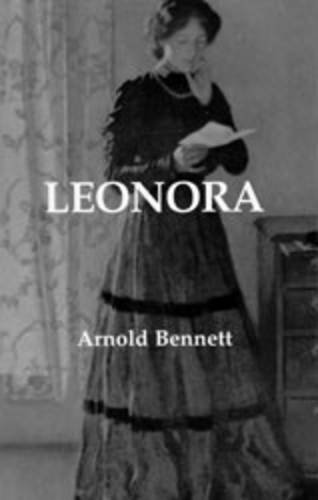
Leonora
On her fortieth birthday in Bursley, Leonora Stanway faces the strains gathering around her household: her husband John's precarious business, her daughters' competing plans and an inheritance dispute that unsettles family loyalties.
About
Spoiler notice: This overview includes John's death, the daughters' changing lives and Leonora's final decision about Arthur.
Leonora Stanway turns forty while living a life that looks much more satisfying from outside than it feels to her. Driving through the Five Towns, she presents an image of elegance and comfort against the labour and grime that sustain the district's prosperity. She accepts the distinction between her position and that of the factory girls watching her, yet shares their desire for an existence more distinguished than the one available. Arnold Bennett introduces that contradiction without making her dissatisfaction a simple lack of money or beauty. She has both, together with a household and three daughters. What troubles her is the sense that these advantages have never required the full use of her courage, love or will. A long marriage has principally tested her capacity to be patient.
John Stanway's manner gives that patience plenty of work. An irritation becomes an instruction, and his wife is expected to absorb the disturbance while preserving the ease of family life. The comfortable house contains financial uncertainties and private business that she does not fully understand. Bennett follows a woman skilled at reading moods but denied the complete knowledge that would let her judge their causes. Her apparent calm therefore conceals continual adjustment to other people's needs. Even when she feels her life is over, the feeling remains difficult to believe: she knows the date of her birthday without experiencing herself as the finished person that the number seems to describe. The novel's domestic detail keeps that inward contradiction beside the ordinary movements through which a household carries on.
The daughters give her different futures to imagine and different reasons for anxiety. Ethel's attachment to Fred Ryley moves toward a conventional marriage, while Rose seeks an education and eventually medical work in London. Millicent's gifts and appetite for notice point toward the theatre. Leonora can admire them, worry about them and feel excluded by their growing absorption in lives of their own. Their independence does not arrive as a single event that releases her from responsibility. Each departure creates another question about how closely a mother should remain available. The girls can regard her care as a dependable background while turning their attention elsewhere. Bennett lets her experience the loss involved in that change alongside pride in what they may become, without suggesting that their ambitions exist merely to wound her.
Arthur Twemlow's return from America introduces a possibility directed toward Leonora herself. His connection with the family's business history gives him a place in the world she already knows, but his life elsewhere also suggests movement beyond its familiar boundaries. Their attachment develops while the household's difficulties are becoming harder to contain. He offers an understanding of her that differs from the habitual demands of marriage and motherhood, making the prospect of another life emotionally persuasive before it becomes practically simple. The contrast is not between a person with no obligations and someone suddenly given them. Leonora already knows what it means to order her days around other people. The new question is whether her own desire can claim a comparable place in decisions about where and how she should live.
John's death leaves her a widow, but the life that follows cannot be described simply as release from his authority. Business arrangements and inheritance restore material security, while the daughters' changing circumstances continue to shape the house. Fred takes charge of the firm, and his engagement to Ethel makes his place in the family more definite. Rose commits herself to medical study, and Millicent treats theatrical opportunity with increasing seriousness. The ordinary routines at Hillport appear remarkably continuous despite the disaster through which the family has passed. That continuity is part of Leonora's difficulty: what has changed decisively in her legal and personal position does not remove the habits of solicitude through which she has understood herself for years.
Arthur wants her to join him in New York, and their disagreement turns on what she owes her daughters. He argues that she has responsibilities toward herself and toward their shared future, questioning whether Rose and Millicent require the protection she insists they need. His confidence appeals to her without eliminating her resistance. She does not want the relationship to end, but neither can she simply adopt his account of what her children can manage alone. Asking him to wait until she comes to London with Millicent postpones the decision while preserving the possibility of it. The scene makes persuasion intimate and uncomfortable at once. Affection offers reassurance, yet it also becomes part of the pressure under which she is trying to distinguish a genuine duty from an accustomed role.
London shows her how far the daughters' attention has already moved. Rose's hospital work gives her a world in which her mother has become a visitor, while Millicent looks eagerly toward professional performance. Arthur then changes the practical terms of his proposal: he will sell his American business and settle in London, allowing their life together to remain near the girls. Leonora accepts, and the final cab journey gives her the sensation of entering the richer, more varied existence she has wanted. Her relief also includes a renewed willingness to depend upon him, rather than a complete escape from dependence. Back at Hillport, Ethel and Fred begin married life in the house Leonora intends to give them. The ending distributes new possibilities across the family without making every form of freedom identical or finally secure.
Book details
- Author
- Arnold Bennett
- First published
- 1903
- Series
- No series listed
- Subgenre
- Literary fiction, Modern classics
- Primary genre
- Literary Fiction
- Tags
- No tags for this book.
Review
Editor profile
Baby Bat
Goodreads and social links will be added soon.
- Goodreads — link coming soon
- Social media — link coming soon