
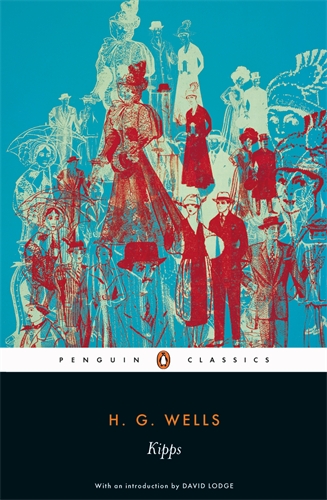
Kipps
Arthur Kipps grows up with an aunt and uncle in New Romney before entering a demanding drapery apprenticeship in Folkestone.
About
Spoiler notice: This overview includes Kipps’s marriage, the loss of his inheritance and the novel’s ending.
Arthur Kipps grows up in a New Romney shop where toys, books and household goods offer endless attractions, most of which he is forbidden to touch. His aunt and uncle have taken him in under arrangements made by his mother, whose dimly remembered presence leaves questions about his origins. Their concern with respectability shapes even his friendships: the neighbours are either too low or too grand, and children he likes may suddenly become unsuitable company. Nevertheless, he befriends Sid Pornick and Sid’s sister Ann. H. G. Wells’s 1905 novel follows this sociable, uncertain boy into a world that repeatedly tells him he does not know enough. The comedy begins in small rules about manners and play, but those rules belong to a larger system of deciding who may feel at home where.
The drapery trade makes that system exhausting rather than merely puzzling. Apprenticed at Mr. Shalford’s Folkestone Emporium, Kipps learns long hours, close supervision and the penalties attached to getting things wrong. Even leisure is measured against meals, locked doors and the next working day. Shalford calls for order while issuing demands that can make obedience impossible: the ink must be at hand, yet Kipps must also carry things elsewhere. Among the other shopmen, wit and confidence seem like accomplishments he might eventually acquire. Their talk about older workers being discarded gives him a much darker view of his prospects. He imagines escape, then gets up in the morning because he fears a fine. The novel keeps the bodily discomfort of this work alongside the shrinking expectations it produces.
Kipps also wants an education, though he has only a confused idea of what would make him properly educated. Books seem to contain meanings he ought to understand; other people’s languages and easy conversation make him ashamed of what he lacks. A newspaper article finally encourages him to join local classes. A change in their timetable moves him from freehand drawing to wood-carving, where Helen Walshingham becomes his teacher. Her university qualification and apparent command of the subject impress him enormously. He imagines an entire way of living behind the people in the classroom, complete with books, music and effortless etiquette. Wells lets the reader see both Kipps’s genuine wish to learn and the way he mistakes signs of social confidence for evidence of superior knowledge. His admiration for Helen grows within that confusion.
The unexpected inheritance arrives through another person’s enthusiasm. Harry Chitterlow finds a newspaper notice seeking Arthur Waddy or Arthur Kipps and brings it to him with excited certainty. Kipps is less confident, partly because questions about his mother threaten the account of his family he has offered other people. Confirmation from the solicitors changes his material circumstances without instantly changing his habits of mind. He acquires a house, new clothes and an income, then wonders what to do with a day no employer has arranged for him. Chester Coote supplies a conspicuously gentlemanly presence and advice about the world Kipps hopes to enter. Yet at his own front door Kipps can still feel intimidated by the servant admitting him. Possession of the house has not supplied the assurance he associates with belonging in it.
His engagement to Helen appears to promise entrance into that desired life, but it does not settle the difference between what he wants and what he thinks he ought to want. Eventually he leaves the engagement behind and goes to London with Ann, announcing their intention to marry to Sid. Their conversations make the alternative more concrete than a simple return to childhood. They discuss a manageable house, visiting friends and going out together; Ann’s experience in service gives her strong opinions about inconvenient kitchens and stairs. Kipps still assumes that they should employ a servant, while she worries about losing control of her own work. Even together they bring different expectations to their future. They marry with affection and hopes that ordinary domestic life will be easier than maintaining a position among people who continually unsettle them.
Financial disaster tests that hope. Young Walshingham has speculated with the money entrusted to him and disappeared, and Kipps comes home convinced that the whole fortune is lost. His thoughts race from shame before acquaintances to the fear of returning to the work he escaped. Ann tries to understand what is actually known while also responding to his distress. The solicitor Mr. Bean eventually offers better news: there should be enough remaining to begin again on a smaller scale. Kipps’s idea is a bookshop, a business that seems to offer useful occupation and a life they can share. A grand associated-booksellers scheme proves unreliable, but Bean’s caution prevents Kipps from sinking his capital into its shares. The larger organization disappears, leaving him an independent bookseller with a counter, shelves and a daily purpose he can understand.
A second reversal comes when Chitterlow’s play succeeds. Kipps’s share provides another substantial income, and the man whose excitement once seemed difficult to take seriously delivers very welcome news. By then Kipps and Ann have a child, and the shop has become part of a life they want to keep. Money can arrive without a proportionate achievement, just as it can vanish despite the deference paid to those handling it. Kipps does not conclude that the shop must therefore be beneath him again. He insists on staying. The last scene finds him rowing Ann along the Hythe canal, briefly stirred by a sense of life’s beauty that he cannot quite put into words. Wells leaves that feeling intact without turning it into a polished speech. Kipps’s limited vocabulary has never been a reliable measure of everything he can feel.
Book details
- Author
- H. G. Wells
- First published
- 1905
- Series
- No series listed
- Subgenre
- Literary fiction, Modern classics
- Primary genre
- Literary Fiction
- Tags
- No tags for this book.
Review
Editor profile
Baby Bat
Goodreads and social links will be added soon.
- Goodreads — link coming soon
- Social media — link coming soon