
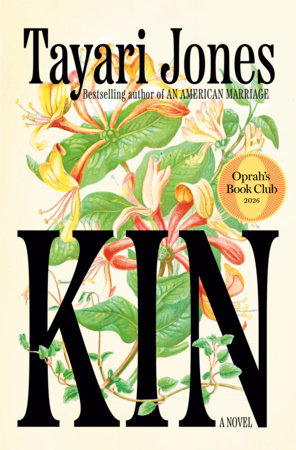
Kin
In 1950s Louisiana, childhood friends Vernice and Annie grow up motherless but imagine very different futures.
About
Spoiler notice: Spoilers cover the characters’ early losses, Vernice’s departure for Spelman, and Annie’s search for her mother. Later outcomes and the ending are not disclosed.
Kin begins in Honeysuckle, Louisiana, where Vernice and Annie grow up as neighbors and closest friends. Both girls are motherless, but their losses take different forms: Vernice knows her mother is gone, while Annie’s mother abandoned her, leaving Annie to imagine that finding her might fill the absence. Their childhood is shaped by the people who take responsibility for them, by the limits of a small Southern town, and by the bond the girls build with each other. The story keeps that friendship at its center as their lives begin to diverge. It is a relationship made from shared experience, but it is also a choice they continue to make as the world around them offers very different possibilities and demands.
Vernice is raised by her aunt Irene, whose fierce care gives the girl a home and a chance to imagine a future beyond Honeysuckle. At eighteen, Vernice leaves Louisiana for Spelman College in Atlanta. The move introduces her to a world of Black women connected by education, family standing and social networks, along with new expectations about manners, ambition and respectability. College widens her sense of what might be possible, while making visible the inequalities within that world. Vernice has to work out what independence means when she is carrying the values and obligations of home with her. Her path is not a clean escape from the past; the people who shaped her remain part of how she understands her choices and the person she hopes to become.
Annie’s route away from childhood is driven by her determination to find the mother who left her. That hope is more than a practical search: Annie has built an idea of what reunion might repair, and the longing influences how she understands herself and the relationships available to her. Her journey takes her into danger and adversity, but also into experiences of love and adventure. The novel follows the vulnerability and resourcefulness involved in trying to claim a story about one’s origins. Annie’s search unfolds beside Vernice’s education and changing social world, so the friends’ differing circumstances remain in conversation even when their daily lives no longer run along the same track. Their friendship is tested by distance, time and needs they cannot simply solve for each other.
The novel moves through the mid-twentieth-century American South, with the Jim Crow era shaping the social landscape in which the characters make their lives. History is present in ordinary encounters and personal decisions, including the unequal rules people must navigate and the dignity they try to protect. Jones keeps the focus on individuals and relationships as the world presses upon them. Vernice’s time in Atlanta and Annie’s search carry the story beyond their Louisiana childhood, opening different views of Black life, class and opportunity. The novel’s attention to those differences makes room for a broad range of experience: the characters are not reduced to one shared fate, and their ambitions, attachments and disappointments remain distinctly their own.
Mothers and daughters are a steady presence, whether through a relationship that has ended, one that never had a chance to begin, or the care offered by women who step into a family’s gaps. Irene’s role in Vernice’s life gives the story one model of responsibility, while Annie’s yearning for her absent mother gives it another. Around them are women whose influence can be protective, complicated or difficult to accept. Kin asks what children inherit from the adults who raise them, and what they may invent when important parts of their family history are missing. It also considers how being loved can come from relationships beyond biology. These questions reach into friendship, courtship and the community women create for one another, without making care seem simple or limitless.
Annie and Vernice’s friendship offers a counterweight to the separation and hardship in their lives. The two girls share an early understanding of motherlessness, yet that common ground does not make their paths interchangeable. They grow into different people with different resources and pressures, and the novel allows each to have her own perspective. Their connection asks what it means to keep choosing someone as years pass and life changes, rather than treating closeness as automatic. The story also brings older and younger women into relation, tracing how attention, advice, loyalty and conflict move across generations. Affection here can be joyful, funny and sustaining; it can also be tangled with obligation, shame or fear. The relationships matter because they shape what each character believes she can ask of the world.
Kin brings these strands together in a sweeping family novel about the bonds people are born into and the ones they build. Vernice’s movement through school and adulthood, Annie’s search for her mother, and the women who guide or complicate their lives create a story about inheritance, ambition, belonging and the work of loving another person. Its historical setting gives the characters specific social constraints, while its emotional questions remain close to everyday decisions: whom to trust, what to hope for, and how to stay connected across unequal circumstances. A measure of magical realism, including ghosts and superstition, adds another register to the novel’s treatment of memory and family. The result is a portrait of friendship and kinship in which home can be a place, a history, and a relationship that must be continually made.
Book details
- Author
- Tayari Jones
- First published
- 2026
- Series
- No series listed
- Subgenre
- Literary historical fiction, Family novel, Literary fiction
- Primary genre
- Literary Fiction
- Tags
- No tags for this book.
Review
Editor profile
Baby Bat
Goodreads and social links will be added soon.
- Goodreads — link coming soon
- Social media — link coming soon