
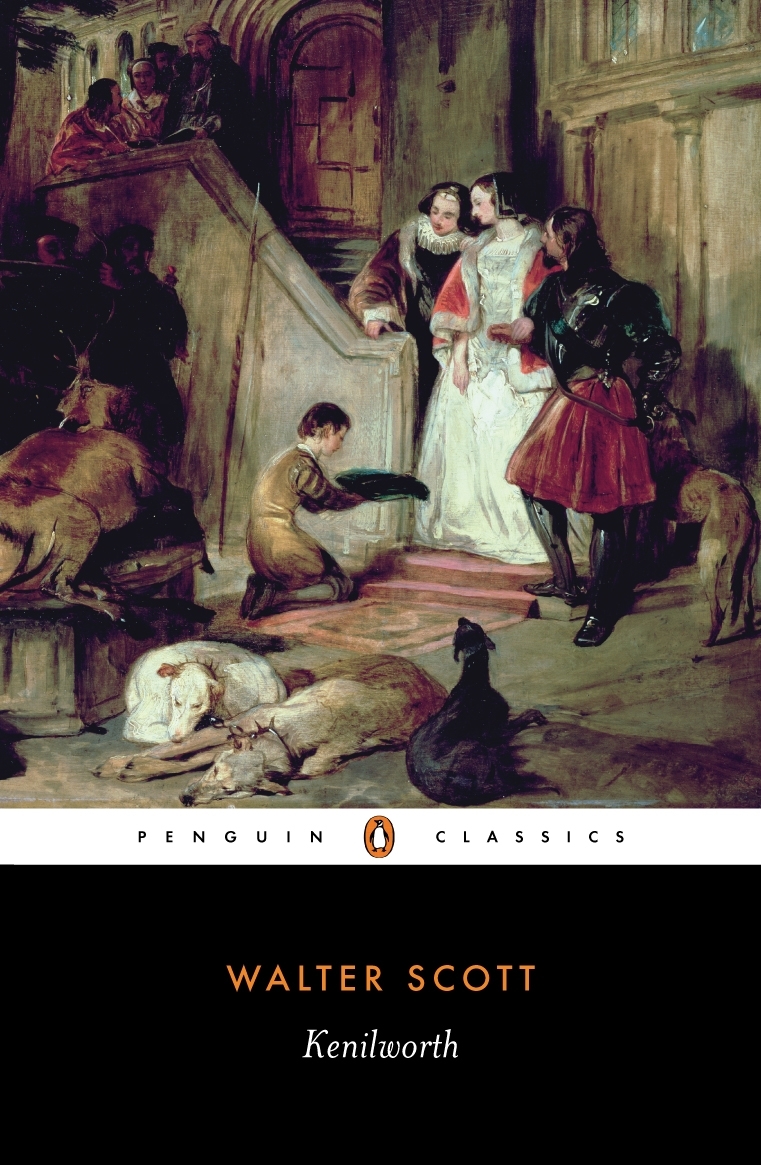
Kenilworth
In Elizabethan England, Edmund Tressilian follows Amy Robsart, his former beloved, to Cumnor Place, where she is kept under the watch of Anthony Foster and Robert Dudley, Earl of Leicester.
About
Spoiler notice: Full-plot spoilers, including the exposure of Amy's marriage, her murder and the surviving characters' fates.
Kenilworth begins some distance from the royal magnificence promised by its title. At the Black Bear inn in Cumnor, questions about a neighbouring household draw the traveller Tressilian towards a secret that people with powerful connections want kept. Published in 1821, Walter Scott's historical romance builds its Elizabethan world through the movement between such places: an inn where information circulates, a country house where it is controlled, and a court where revealing it could destroy a career. Tressilian is looking for Amy Robsart, whom he had hoped to marry. His concern leads him into circumstances he cannot fully understand, because the explanation for her disappearance is also the explanation that her husband has the strongest reason to conceal.
Amy is secretly married to Robert Dudley, Earl of Leicester, whose position as a favourite of Elizabeth I makes their private happiness a threat to his public ambitions. She lives at Cumnor Place, under Anthony Foster's supervision, while Richard Varney manages affairs on Leicester's behalf. The secrecy leaves Amy dependent upon other people for messages, movement and any understanding of what her husband intends. Tressilian's discovery of her does not simply provide an escape, because she remains committed to Leicester and to the acknowledgement of their marriage. The situation places her reputation in danger as well as her safety. Others can interpret her absence from her father's home in ways she cannot correct without disclosing the union she has been told to keep hidden.
Varney turns that dependence into a means of control. His service to Leicester gives him access and apparent authority, while his own ambitions make him far more than an obedient messenger. Foster's willingness to assist him helps convert a household into a place of confinement. Against them, Tressilian must work through a world in which the standing of the man behind a message can matter more than its truth. Wayland Smith becomes an important ally, and Janet, Foster's daughter, offers Amy a loyalty her father's conduct denies her. Their assistance is practical and risky: getting someone out of a guarded domestic situation requires secrecy, transport and an explanation that can delay discovery. The rescuers must navigate the same channels of concealment that the plotters have used to keep Amy dependent.
When Amy escapes with Janet's help and Wayland's guidance, she chooses Kenilworth rather than her father's house. Her purpose is to reach Leicester and appeal to him for protection, still believing that he will hear the truth about the people around her. Janet recognises the danger of an unexpected arrival during the Queen's visit, yet also sees that Kenilworth might offer access to Tressilian and, if necessary, Elizabeth herself. Amy's journey therefore carries hope and exposure together. She wants recognition from the person whose concealment has made her vulnerable, and she continues to distinguish her husband from the servants she fears. Leaving Cumnor's walls gives her movement without immediately giving her the freedom to speak openly about who she is.
The entertainments at Kenilworth enlarge that contradiction. Feasts, pageantry and a magnificent household display Leicester's power before the Queen, while Amy's presence threatens the arrangement that makes the display possible. By the time the truth reaches Elizabeth, private deception has become an offence against royal confidence and dignity. Tressilian is questioned about what he knew, and Leicester is compelled to recount the relationship he had concealed. Yet disclosure does not immediately protect Amy. Varney has already obtained authority to remove her, and Leicester's later counter-orders travel through Lambourne. In the final chapter, Varney learns that Lambourne carries those instructions and kills him, taking the packet. The attempt to repair an earlier decision is defeated by the very intermediary who has most to lose from its reversal.
Back at Cumnor, Amy is placed in a room reached by a narrow wooden gallery. Foster has devised a section that can be lowered to cut off access; Varney sees how it can be made into a lethal trap. With its supports withdrawn, the surface appears safe until someone steps upon it. Amy initially remains in her room, waiting for the husband she has been promised will arrive. Varney then imitates Leicester's familiar whistle. She opens the door in response, the trap gives way, and she falls. Tressilian and Raleigh arrive too late to save her. The murder depends upon the affection that has repeatedly kept her hopeful, making the false signal a dreadful culmination of the book's manipulated messages and mistaken assurances.
The aftermath distributes punishment and survival unevenly. Varney is captured and later dies by poison in his cell. Foster disappears, and his fate is discovered only years afterwards when a skeleton is found beside his gold in a concealed room whose lock had prevented his escape. Janet marries Wayland, while Tressilian's grief survives the inheritance and royal favour offered to him; he eventually goes with Raleigh towards Virginia and dies there. Leicester withdraws in remorse but is later recalled to court. These are the resolutions of Scott's fictional story, whose treatment of real historical names should not be mistaken for proof of their guilt. Within that story, the festivities end because the life hidden behind their splendour has been destroyed, and restored public standing cannot reverse what ambition and concealment have made possible.
Book details
- Author
- Walter Scott
- First published
- 1821
- Series
- No series listed
- Subgenre
- Literary fiction, Modern classics
- Primary genre
- Literary Fiction
- Tags
- No tags for this book.
Review
Editor profile
Baby Bat
Goodreads and social links will be added soon.
- Goodreads — link coming soon
- Social media — link coming soon