
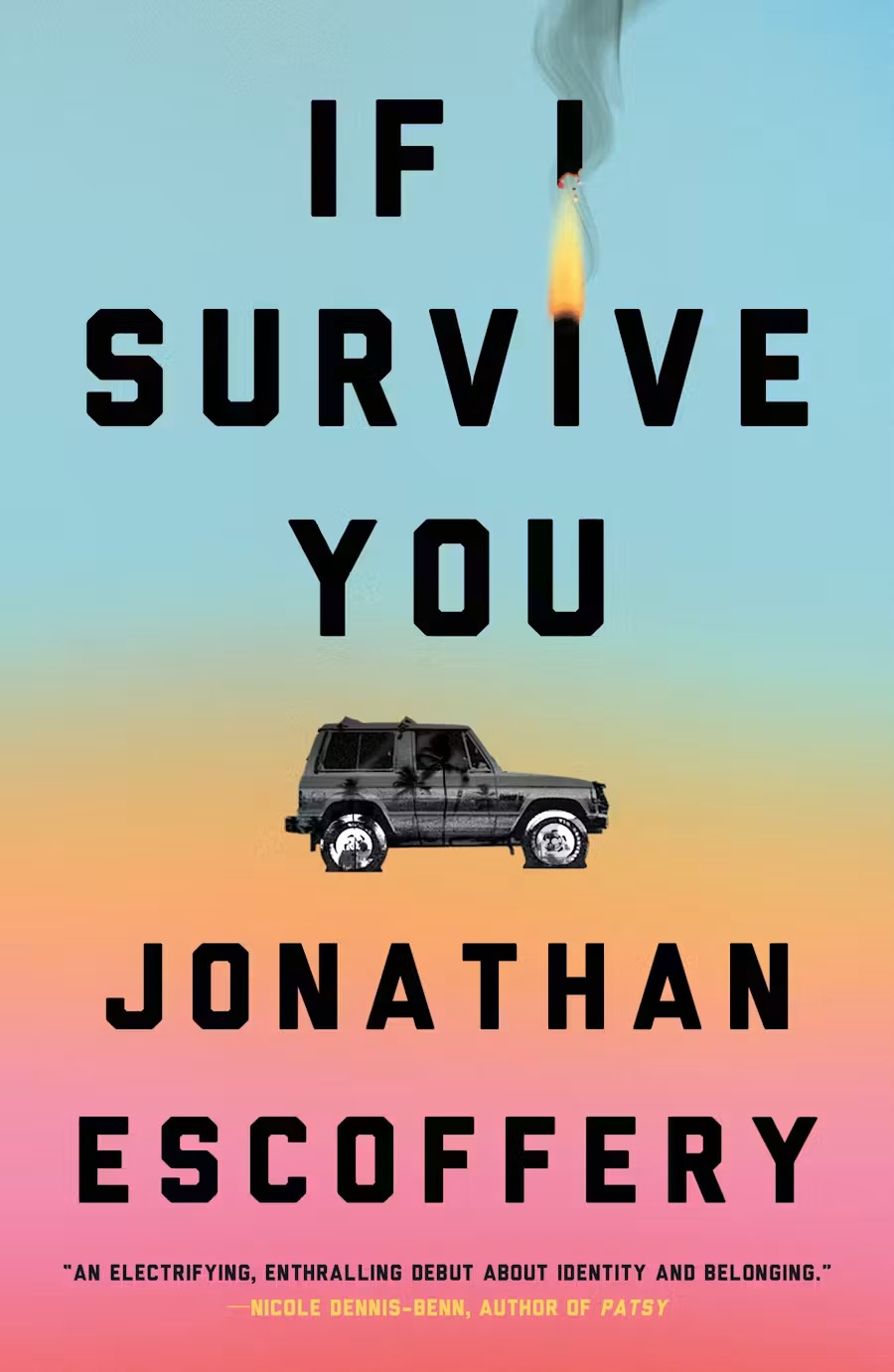
If I Survive You
Jamaican couple Topper and Sanya leave Kingston for Miami, hoping to make a home in a place that often treats them as outsiders.
About
Spoiler notice: Spoilers for the collection’s family relationships, setting, and early story premises, including Trelawny’s conflict with his father and subsequent homelessness. Later story outcomes and the ending are not summarized.
If I Survive You follows a Jamaican family making a life in Miami across several decades. Topper and Sanya leave Kingston in the 1970s as political violence bears down on their home; in America, they raise two sons amid racism and exclusion. The collection moves among relatives and periods rather than telling one uninterrupted account, but the linked stories keep returning to the question of how people hold together when money, social acceptance and security are uncertain. Miami is not a neutral backdrop: the city’s storms, neighborhoods and work shape the family’s changing prospects. The book’s frame is domestic and local, yet the pressures on its characters reach beyond one household to the forces that determine who gets stability and who must improvise without it.
Trelawny, the younger son, is a recurring center of attention. The publisher’s excerpt opens with him as a child being asked to explain what he is, a question that exposes how race and belonging are imposed on him before he has language for either. He is American-born, while his parents and much of his extended family are Jamaican; the difference between those facts does not settle how others see him or how he understands himself. School, relatives and ordinary encounters make identity a practical problem as well as an abstract one. Trelawny’s perspective gives the stories a route into this confusion, while the collection also follows other family members whose experiences complicate any single answer.
The parent-child relationship between Trelawny and Topper provides one of the book’s recurring tensions. The publisher describes their conflict as leading to Trelawny’s homelessness, after which he tries to find a way forward through an assortment of jobs. His efforts to get by connect the intimate argument with the material conditions around it: work may offer money without security, and self-reliance can become a demand placed on someone with few reliable supports. Survival in these stories is not simply a triumphant quality. It can require persistence, but it can also produce choices that make a difficult situation worse. The title’s conditional phrasing fits a world where the next foothold is never guaranteed.
The family’s timeline passes through Hurricane Andrew and the 2008 recession, tying private upheaval to events that alter life across Miami. These periods matter because the characters’ plans depend on homes, employment and a sense that tomorrow can be prepared for. A hurricane makes the fragility of place visible; an economic downturn narrows the options available to people already living close to the edge. The linked stories can revisit a family from different angles, allowing those larger changes to register through different lives rather than through a single narrator’s summary. The result is a portrait built from local consequences: how a public crisis touches relatives differently, what they can offer one another and what each person must try to carry alone.
Trelawny is not the only member of the family trying to build a future under pressure. Delano, his older brother, attempts a risky plan to regain custody of his children, while their cousin Cukie searches for a father who does not want to be found. These brief outlines show how the collection widens from Trelawny without losing its family center. Different characters want connection, independence or a chance to repair what has gone wrong, and their efforts do not all take the same form. The stories bring siblings, parents, children and cousins into view as people with their own stakes. Their proximity can be a source of obligation and conflict at once, so family functions as both a network of care and a place where competing needs collide.
The form is described by the publisher as connected short stories that read with the scope of a novel. That structure lets a later piece shift voice, time or focus while remaining linked to the same family and its surroundings. The available opening excerpt uses second person to place the reader close to Trelawny’s childhood uncertainty; the publisher’s descriptions identify other characters and periods across the wider collection. This formal movement matters to the book’s subject: a family history does not arrive as one clean explanation, and different relatives may understand the same inheritance in different ways. Returning to shared relationships from changing positions makes the whole larger than a sequence of isolated episodes, while leaving room for distinct voices and separate immediate problems.
The collection also belongs to a public conversation about fiction and national identity. It was longlisted for the 2022 National Book Award for Fiction and shortlisted for the 2023 Booker Prize, recognitions that place Escoffery’s linked-story debut in two major literary prize fields. Its own subject remains particular: Jamaican parents and children, Miami, work, weather, race and the uneven search for a secure home. The wide scope comes from following these matters through several family members and periods, not from making the characters stand for every immigrant experience. If I Survive You keeps survival unresolved as a promise. Its stories examine what people try when belonging is questioned and resources are scarce, and how the effort to continue can bind a family even when it cannot remove the conditions pressing on them.
Book details
- Author
- Jonathan Escoffery
- First published
- 2022
- Series
- No series listed
- Subgenre
- Literary fiction, Family novel, Immigrant fiction
- Primary genre
- Literary Fiction
- Tags
- No tags for this book.
Review
Editor profile
Baby Bat
Goodreads and social links will be added soon.
- Goodreads — link coming soon
- Social media — link coming soon