
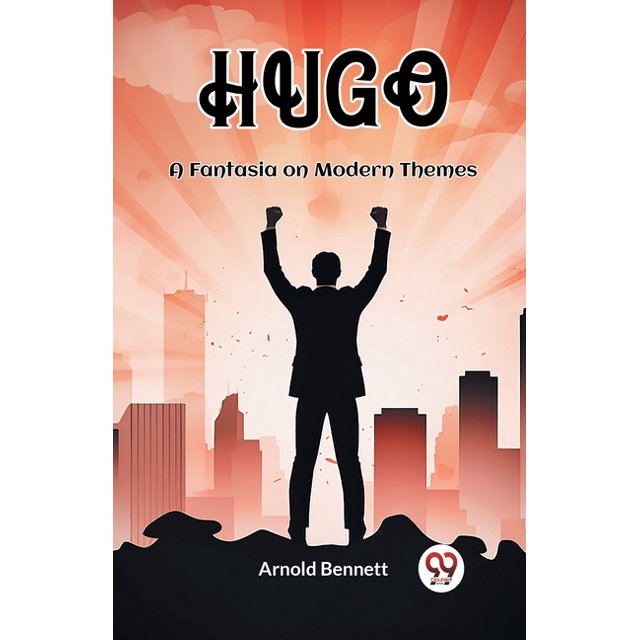
Hugo
Owen Hugo commands a vast London department store and lives above it beneath a magnificent dome.
About
Spoiler notice: This overview reveals Camilla’s apparent death, the phonograph’s explanation and the rescue and marriage at the ending.
Hugo begins above a London department store, where its proprietor lives in a magnificent circular room beneath a dome. Below him, thousands of employees arrive for work in an establishment that can supply almost anything its owner desires. Owen Hugo’s morning includes tea, music and an order for a particular woman’s hat, details that introduce both his pleasure in luxury and his capacity to make other people carry out an impulse. Arnold Bennett gives this commercial kingdom the scale of a private city. Hugo can command goods, services and information, yet his first serious experience of love will reveal how little that command guarantees when another person’s life and feelings become involved. The story turns his elaborate arrangements into the setting for an increasingly dangerous mystery.
Camilla Payne works in the millinery department, placing her within Hugo’s organization but far outside his social and financial position. His attraction quickly tests the distinction he wants to draw between being her employer and being a possible lover. When she challenges him about having her followed, his explanation mixes concern with the desire to know things she has not chosen to tell him. Camilla refuses to let that intrusion pass unnoticed. She has limited resources, and a private conversation with a wealthy man carries risks he can easily underestimate. Bennett gives her a direct account of the difficulties of being a woman without an independent home in which to receive visitors. Romance begins inside a relationship already marked by unequal power.
Francis Tudor and Louis Ravengar complicate the situation further. Tudor’s pursuit of Camilla includes an appeal to pity, while Ravengar’s interest involves a past crime and his fear of what she knows. Her connections to these men create an apparent conspiracy which Hugo initially understands only in fragments. The story repeatedly makes a confident interpretation collapse under new information. A person may be in danger for reasons different from those a would-be protector imagines, and an apparent rival may have undertaken a desperate protection of his own. Camilla’s account of her circumstances has to compete with the assumptions men make about her. Their wealth and determination give those assumptions consequences far beyond an awkward misunderstanding in a drawing room.
The department store’s modern arrangements become instruments of suspense. Sealed rooms, secure storage, telephones and a phonograph connect commercial efficiency to the withholding or recovery of information. Hugo’s access to staff and investigative help does not make every interior space transparent. The safe deposit, designed to protect valuable possessions, can also become a place in which a person is trapped. When Hugo later threatens Ravengar with confinement there, he comes disturbingly close to repeating the methods he condemns. Bennett allows the hero’s anger to damage the neat distinction between a resourceful rescuer and his enemy. The elaborate building is more than scenery: its very capacity to shut things away helps produce the uncertainties and dangers Hugo must try to overcome.
Tudor’s recorded voice eventually supplies a substantial explanation. He describes a serious heart condition, his marriage to Camilla and the scheme devised to make Ravengar believe she was dead. With medical and artistic assistance in Paris, an alleged illness and funeral conceal her escape; a carefully made wax likeness takes her place in the coffin. The account exposes how much apparent certainty has depended on people accepting documents, performances and appearances as proof. It also preserves Tudor’s particular voice, with its confidence, affection and self-justification, rather than delivering the facts as an impersonal report. His plan is meant to protect Camilla, but the record exists because he knows his own sudden death could leave the arrangements misunderstood by the people expected to carry them out.
The false burial becomes terrifyingly literal when Ravengar discovers the deception. In the late rescue sequence Hugo reaches the cemetery and finds the wax figure outside its coffin. Camilla herself has been drugged and placed inside, turning a protection devised around her supposed death into a threat to her actual life. Hugo pulls her free before the plan can be completed. The scene draws together the story’s repeated confusion of a woman and an image of her: the substitute which once allowed her to escape is now discarded so that the false account can be made true. Ravengar’s pursuit has carried the story from threats and deception to a cruelty that Hugo can scarcely bear to witness. The rescue restores Camilla’s physical freedom, but leaves him shaken by how close the protection devised for her has come to becoming her tomb.
The final chapter moves beyond the rescue to Hugo’s secret marriage to Camilla, announced to Simon Shawn only after it has taken place. Domestic arrangements beneath the dome must change, and a visit from Dr. Darcy introduces a last comic uncertainty over who understood whose affections. Hugo’s account also reports Ravengar’s later death in an asylum and says that the affair is largely explicable, while leaving the identity of his final accomplice unresolved. Bennett does not turn the mystery into a promise that every question has an answer. The closing conversation returns to Camilla’s beauty, which Hugo insists cannot be explained by social rank. The commercial kingdom survives, but its proprietor now shares the life he once organized around his own pleasures and commands.
Book details
- Author
- Arnold Bennett
- First published
- 1906
- Series
- No series listed
- Subgenre
- Literary fiction, Modern classics
- Primary genre
- Literary Fiction
- Tags
- No tags for this book.
Review
Editor profile
Baby Bat
Goodreads and social links will be added soon.
- Goodreads — link coming soon
- Social media — link coming soon