
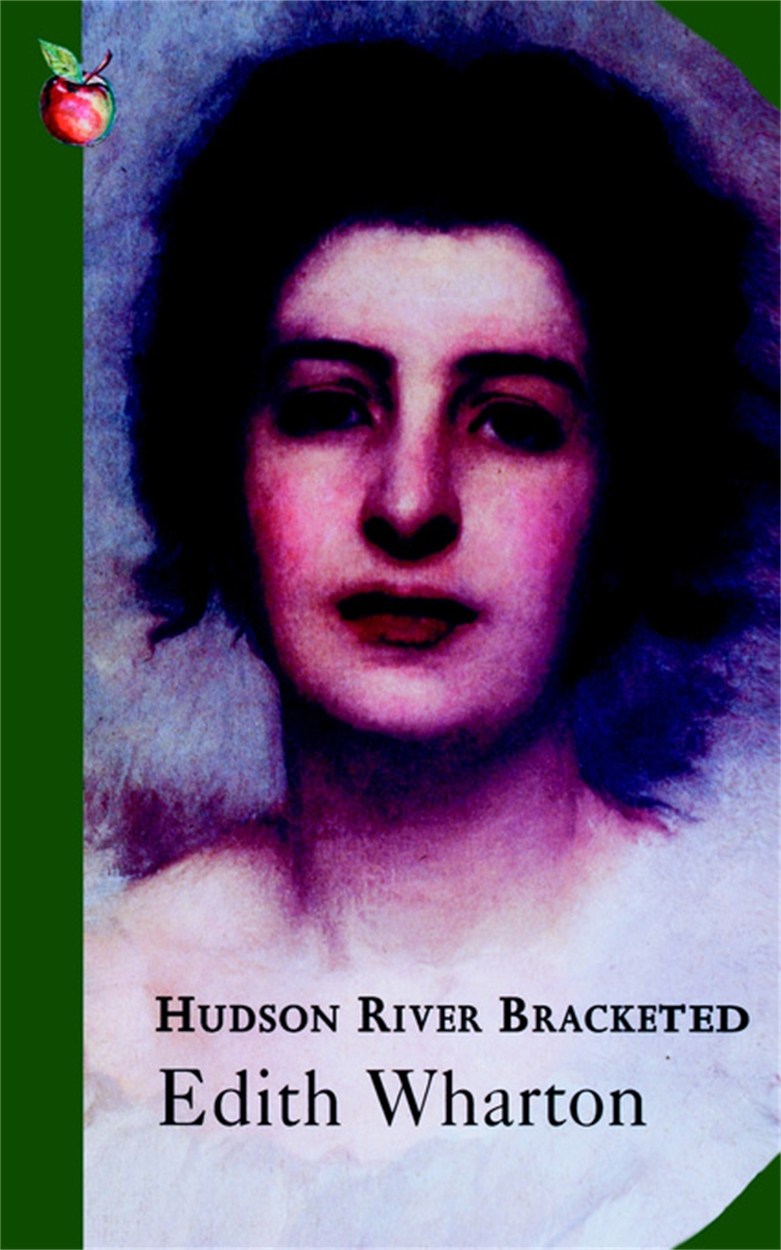
Hudson River Bracketed
Vance Weston, a young would-be writer from Euphoria, Illinois, travels to the Hudson Valley to convalesce and meets Halo Spear at the old Willows estate.
About
Spoiler notice: This overview discusses Vance’s marriage, Laura Lou’s illness and death, and Halo’s visit in the final chapter.
By nineteen, Vance Weston has graduated from the College of Euphoria, edited a magazine, written poems and essays, invented a religion and briefly been engaged. Edith Wharton introduces this impressive list with a comic awareness that experience and understanding are different things. His Illinois family has prospered through real estate, moving repeatedly towards the next opportunity and measuring progress through better houses and greater comfort. Vance has inherited the expectation that life should keep advancing, but not yet the means to distinguish artistic discovery from another variety of success. Published in 1929, Hudson River Bracketed follows his formation as a writer through encounters with older places, unfamiliar books and people whose emotional needs resist the transformations his imagination would like to make of them.
His visit to the Hudson Valley brings an early disturbance to the assumptions he carries from home. Convalescing near Paul’s Landing, he encounters a world whose age and apparent inactivity do not make it worthless. The Willows, with its inherited rooms and library, becomes particularly important. Halo Spear can move easily among the books and allusions that overwhelm him, yet her familiarity with the house allows a lightness he initially finds difficult to understand. When she explains its architectural style, the phrase supplying the novel’s title names something both local and culturally inherited. Vance discovers that a place can contain meanings accumulated over time rather than announce itself through novelty. Halo’s conversation offers a way into those meanings, and her attention to his writing makes recognition seem possible.
Laura Lou belongs to this setting too, but the connection he develops with her has another character. Their impulsive marriage gives him intimacy and responsibilities before he understands how to arrange either alongside work. Financial need is immediate, and the search for employment cannot be suspended while he waits for inspiration. Wharton follows the difference between imagining a new life and finding that familiar limitations have accompanied the change. Laura Lou’s affection is real, and so is the difficulty she experiences entering the circles that increasingly attract her husband. At gatherings where conversation depends on shared cultural references, her beauty and ordinary phrases fail to secure attention. Vance can recognize her discomfort partly because he remembers his own, yet recognition does not consistently tell him how to protect her from it.
New York provides possibilities through editorial work, literary acquaintances and the Tarrants. Halo has married Lewis Tarrant, whose professional and social world offers Vance access while also bringing judgments he cannot readily control. The office is not simply a neutral place to earn money: personal conflict can become humiliation, and literary judgments travel through networks of friendship and rivalry. Rauch and Frenside supply different forms of advice and criticism, exposing him to the distance between work that attracts attention and work that answers his own sense of life. Vance reads fashionable novels with excitement, but increasingly finds their verbal brilliance inadequate to the forces he wants to represent. He can imitate an admired technique; that does not mean the result feels like his own vision.
The library at the Willows offers a more productive relation between imagination and circumstance. In its quiet, Vance begins the novel he calls Instead, finding an equilibrium between his images and the subject taking shape through them. Books such as Faust provide language for his conviction that the deepest material of fiction lies beneath a clever surface. Yet the refuge has consequences outside its walls. To explain his absences to Laura Lou, he says he is needed at the office, turning the practical protection of his writing time into deception. Halo’s renewed companionship and reading of his manuscript make her increasingly important to both his work and his emotional life. Their understanding develops alongside existing marriages, so even an apparently ideal conversation carries claims that cannot be settled through literature alone.
Halo’s own position is shaped by obligations that Vance cannot always see. She married Lewis partly because of what his generosity had meant for her family, and the gratitude that helped bind her becomes difficult to separate from a life she finds unsatisfying. Meanwhile, Vance’s marriage reaches a crisis through Laura Lou’s tuberculosis. Her fear of being removed from him has helped her conceal the seriousness of her condition. At the bungalow, the doctor’s permission for her to remain becomes terrifying when Vance realizes that it reflects doubt about her recovery, rather than confidence that the surroundings are sufficient. Nursing, money, exhaustion and the search for help replace the grander language of ambition. Her attachment to him has to be met through immediate care, whether or not he can understand her as completely as he understands an imagined character.
After Laura Lou’s death, Vance stays alone at the bungalow and begins to feel his work returning. Halo arrives with news of an inheritance that includes the Willows and of the change in her marriage that seems to promise freedom. She hopes to renew the companionship through which she once helped him write, assuming that Laura Lou remains part of the life they must consider. Vance, absorbed in her presence, has not told her that his wife died only a week earlier. The revelation horrifies Halo and changes the meaning of everything she has just said. Her grief and his difficulty understanding it expose a separation within their closeness. As he walks her to her car, he wonders whether creating imaginary people leaves him isolated among real ones. Their story continues in The Gods Arrive, but this novel ends with that troubling question.
Book details
- Author
- Edith Wharton
- First published
- 1929
- Series
- No series listed
- Subgenre
- Literary fiction, Modern classics
- Primary genre
- Literary Fiction
- Tags
- No tags for this book.
Review
Editor profile
Baby Bat
Goodreads and social links will be added soon.
- Goodreads — link coming soon
- Social media — link coming soon