
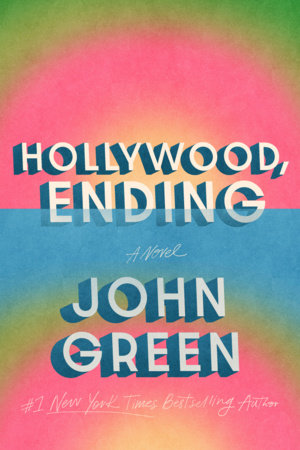
Hollywood, Ending
Young actors Kai Laramie and Juniper Castillo land roles in Andy Warhol Never Gets Old, a buzzy biopic that may make them stars and bring them closer.
About
Spoiler notice: Spoiler-light overview: describes the film production, central relationship and public/private themes; withholds later plot turns and the ending.
Hollywood, Ending places a developing love story inside the machinery of a movie that is itself about fame. Kai Laramie, twenty, and Juniper Castillo, twenty-two, are young actors cast in Andy Warhol Never Gets Old, a buzzy biopic that gives each the professional opening they have been waiting for. Their names are about to travel beyond the set, and the film’s growing profile brings a change that is both exhilarating and frightening. The premise begins with familiar promises of Hollywood: a role can make a career, public attention can turn into opportunity, and two people working closely together may discover an intimacy between them. Green makes those promises unstable from the outset. As the film becomes more visible, Kai and Juniper must contend with what visibility asks of them, while still working out what they want from one another and from their own lives.
The novel’s structure makes that tension part of its form. The story is told through Kai and Juniper’s two points of view, giving the reader access to two young people who share a production without necessarily sharing the same private experience of it. The book follows them from the first days on location through the movie’s premiere. That span connects the contained work of making a film with the public event into which the finished film can grow. The camera and the audience create different versions of a performer; the dual narration offers a way to keep both people present beyond those versions. Rather than treating a rising profile as a simple ladder toward success, the setup asks how a person holds onto a sense of self while strangers begin to form expectations around a public image.
Warhol’s life supplies a second frame for the story. Inside the novel, Kai and Juniper are making a biopic about an artist whose name is inseparable from modern celebrity culture. The movie’s subject and the actors’ own emerging fame therefore sit beside one another: a story about the beginning of celebrity culture is being made at a moment when the people making it are entering a media environment saturated with attention. The on-screen study of Warhol runs alongside the intimate struggles of two young people figuring out who they are together and alone. That arrangement gives the film-within-the-novel a clear thematic job. It brings questions about art, persona, and public fascination into the same space as a young relationship without collapsing one into the other.
The attention economy is not just background noise in this setup; it is one of the pressures shaping the characters’ choices. The story places difficult exchanges of attention and trauma on the social internet, where habits once associated with movie stars increasingly touch ordinary lives too. The publicity surrounding a successful movie can make private people into objects of discussion, but the novel’s stated concern reaches beyond celebrity as a special case. Its central contrast is between public and private life: what can be seen, circulated, and interpreted from outside, and what remains meaningful between people when they are not performing for an audience. The online world is thus part of the novel’s human setting, a place where recognition can arrive alongside loss of control, and where attention can be difficult to distinguish from understanding.
Love and trust provide the personal scale for these larger questions. Kai and Juniper stand on the verge of a breakthrough and perhaps falling in love; the possibility of finding someone to trust in an untrustworthy world carries its own uncertainty. That emphasis keeps the romance tied to uncertainty rather than treating fame as a reward that automatically solves a character’s problems. Kai and Juniper must discover one another while the world around their work is changing quickly; they are also figuring out who they are separately. The pairing of those tasks gives the book room to consider the difference between being liked as an image and being known by another person. Its central relationship sits within the visibility of the film business, yet the emotional stakes are intimacy, trust and the pursuit of love under a public gaze.
Hollywood, Ending is John Green’s first adult-fiction novel, and its subject lets him connect the entertainment industry to questions about identity that reach beyond actors. Love and loss unfold amid strange exchanges of attention and trauma online, sharpening the tension between public and private selves. The book asks how people remain legible to themselves when others are continually watching and interpreting them. The title also places a familiar promise of movie storytelling beside the experience of Hollywood itself, where a role, a romance, and a public narrative need not resolve life neatly. By moving from an on-location production toward a premiere, Green gives that question a clear frame: what happens to private identity when a story becomes an event for everyone else?
Book details
- Author
- John Green
- First published
- 2026
- Series
- No series listed
- Subgenre
- Literary fiction, Contemporary romance
- Primary genre
- Literary Fiction, Romance
- Tags
- No tags for this book.
Review
Editor profile
Baby Bat
Goodreads and social links will be added soon.
- Goodreads — link coming soon
- Social media — link coming soon