
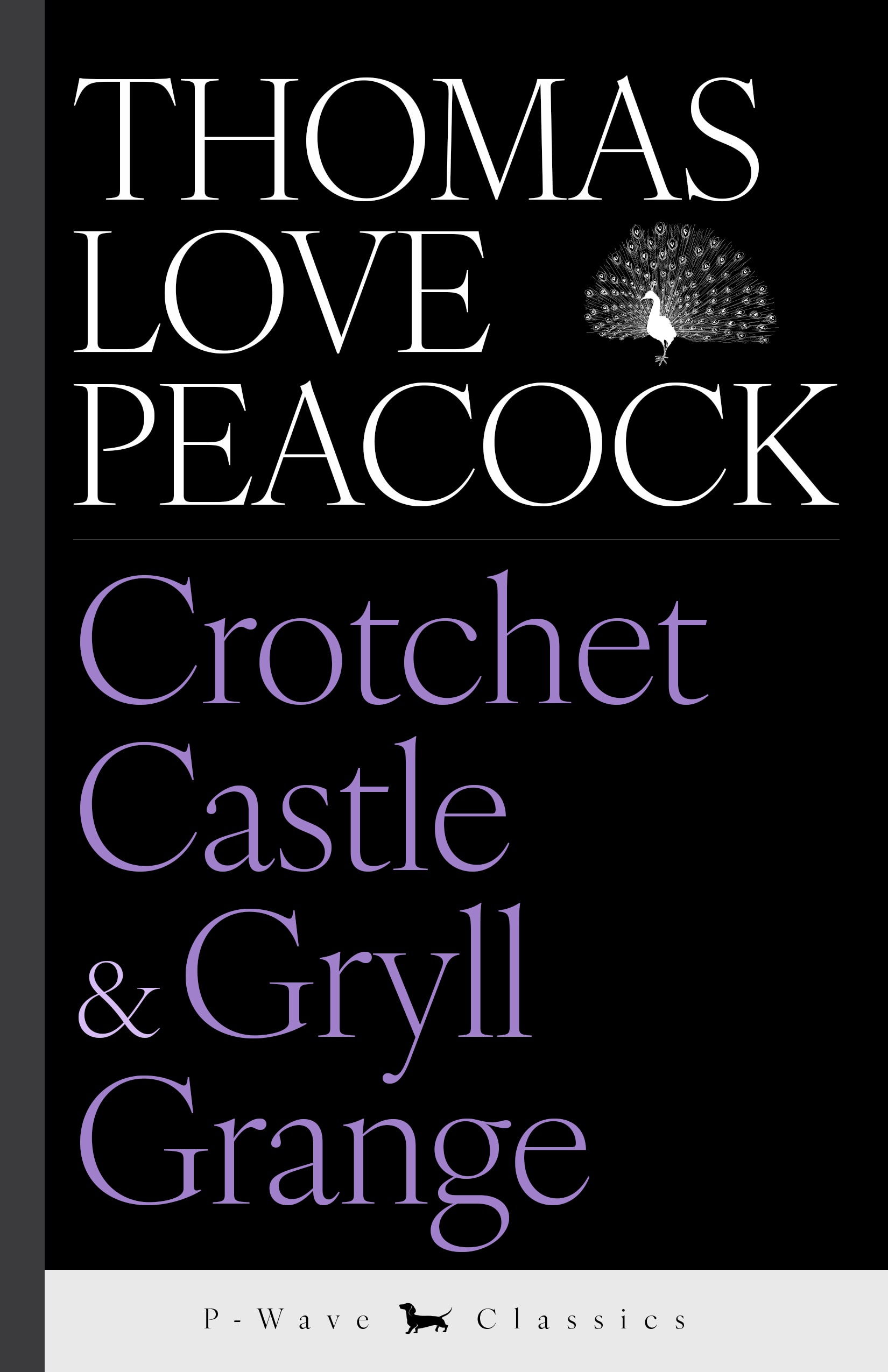
Gryll Grange
Near the New Forest, Squire Gryll hopes his niece Morgana will find a husband worthy of her choice.
About
Spoiler notice: Full-plot spoilers, including Falconer’s proposal, the seven sisters’ marriages and the concluding wedding gathering.
Gryll Grange begins over dinner, with the Reverend Doctor Opimian questioning the name of the soup. The discussion moves readily from vegetables to the misleading labels attached to politics and public life, until Morgana Gryll reminds the speakers that there is also fish to consider. Thomas Love Peacock’s novel, published in book form in 1861, makes that combination of conversation and hospitality central to its world. Squire Gregory Gryll lives in Hampshire near the New Forest, where his niece Morgana presides over a comfortable household. Their guests can argue about ancient wisdom, fashionable knowledge and the claims of progress without losing interest in music, food or courtship. The movement between those activities gives the book its social setting and much of its action.
Morgana is an orphan whom Gryll has brought up as his heiress. He expects her to marry and continue the family name, but she has not found a husband she wants to accept. Her uncle allows her the choice while retaining a right of approval, leaving the question open rather than imposing a particular match. Her refusals reflect standards that later become important to the conclusion: sociability, wealth or an acceptable appearance cannot by themselves produce companionship. The household gives her a place from which to judge the people who approach her, and her participation in its discussions shows her own interests. The problem for Gryll is how to secure the future of his family without reducing her decision to an arrangement she would merely endure.
Dr Opimian’s walks introduce a separate establishment in the forest. A tower known as the Duke’s Folly has been adapted into a home by Mr Falconer, who welcomes the doctor and shows him its dining room, bedroom and library. The library’s classical books establish a shared interest, turning curiosity about the building into friendship with its occupant. Falconer lives with seven sisters, daughters of two former servants of his parents, who have grown up within his circle and share the work of the household. His attachment to this ordered, secluded life becomes an obstacle when affection begins to draw him elsewhere. The tower offers a satisfying arrangement that he is reluctant to disturb, even as the possibility of marriage makes its permanence doubtful.
Falconer’s growing interest in Morgana repeatedly brings him to the Grange, but he returns to the tower without declaring himself. The hesitation affects people beyond the prospective couple. Harry Hedgerow loves Dorothy, one of the sisters, and wants a future with her. He brings six other young men to Opimian, each hoping to court one of her sisters. Their collective approach seeks a way through the household’s resistance to change rather than simply removing a single woman from it. The doctor becomes a connection between the secluded establishment and the possibilities outside it. Falconer’s difficulty in choosing a different life thus parallels the sisters’ own uncertain movement towards marriages that would rearrange the home he has treated as his enduring refuge.
The wider company contributes performances and further romantic possibilities. Lord Curryfin and Alice Niphet eventually form the second principal couple alongside Falconer and Morgana, while the Christmas entertainment includes an Aristophanic comedy. Its proposal grows out of the opening conversations: if celebrated people from the past could be summoned before a modern audience, what would they think of its achievements? The theatrical device lets the guests turn argument into an entertainment they can perform together. Classical references are consequently part of their social activity as well as their reading. The novel moves between such discussions and the much less abstract difficulty of telling another person what one wants. Falconer’s learned, carefully arranged existence does not automatically provide the courage required to make that disclosure.
As the final decisions approach, Falconer speaks to Dorothy and then to Harry. He acknowledges the likelihood of his own marriage and asks about her willingness to marry too. Harry makes clear that he wants Dorothy rather than a fortune, but Falconer insists on providing her with money of her own. Their exchange turns an apparent obstacle into a practical settlement, after which the arrangements for the other six sisters can also be completed. On the twenty-eighth morning of his probation, Falconer proposes to Morgana and she accepts. Her uncle welcomes the choice. Asked why she rejected earlier suitors, Morgana distinguishes gambling, speculation, concealed debt, dullness and other objections, making her eventual acceptance intelligible through the particular faults she would not agree to live with.
Morgana and Alice arrange for their weddings and those of the seven sisters to take place together. The conclusion brings nine brides and nine bridegrooms to Gryll Grange on a February morning, with friends and relatives joining the celebration. Harry’s happiness in marrying Dorothy receives particular attention, while the departure of the sisters marks the end of Falconer’s earlier household arrangement. Opimian’s speech gathers the separate matches into a shared wish for lasting companionship. He names health, beauty, honourably acquired means and friendship as blessings visible among the company, then offers his own happy marriage as the measure of what he hopes for them. His speech ends with a call for champagne corks to be discharged together, giving the wedding celebration an exuberant conclusion after the changes that have made these marriages possible.
Book details
- Author
- Thomas Love Peacock
- First published
- 1861
- Series
- P-Wave Classics
- Subgenre
- Literary fiction, Modern classics
- Primary genre
- Literary Fiction
- Tags
- No tags for this book.
- Reading order
- This is the only P-Wave Classics title on the shelf right now.
Review
Editor profile
Baby Bat
Goodreads and social links will be added soon.
- Goodreads — link coming soon
- Social media — link coming soon