
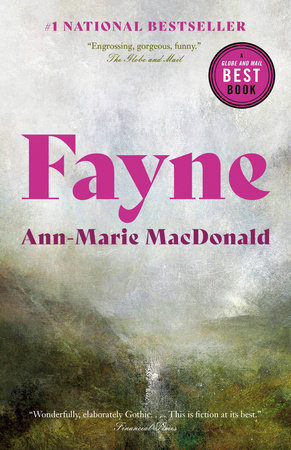
Fayne
In the late nineteenth century, Charlotte Bell grows up secluded at Fayne, her family’s estate on the England–Scotland border, because of a mysterious condition.
About
Spoiler notice: Covers the opening setup, Charlotte’s isolation, her tutor, a bog discovery, and the family’s account of her past; avoids naming identity revelations or later plot turns.
The novel begins at Fayne, the Bell family’s remote estate on the England–Scotland border in the late nineteenth century. Charlotte Bell has grown up largely apart from the wider world, under the care of her father, Lord Henry, because of a condition he has never explained to her in full. That isolation has not made her timid. She is observant, physically capable, hungry for knowledge, and happiest exploring the surrounding moor and bog. The old estate worker Byrn has taught her to read the land’s hazards and resources, giving her a practical education that sits beside her book learning. Charlotte’s curiosity is the force that moves the story: she wants to understand the natural world, the history of the place she calls home, and the rules that have shaped her life.
Fayne House offers a second kind of education. Its formal rooms, family portrait and inherited stories preserve an account of the Bells that Charlotte has never had reason to question. She has been told that her mother died giving birth to her and that her older brother Charles, the expected heir, died as a small child. The portrait of her mother holding Charles gives those losses a fixed, almost ceremonial presence in the house. Yet the portrait cannot tell Charlotte what her mother was like, and the family’s version of the past leaves gaps she does not yet know how to name. MacDonald uses the house as more than a Gothic backdrop: its customs and silences are part of the system that limits what Charlotte can learn about herself.
When Charlotte’s appetite for study outgrows the boundaries set for a young woman of her position, Lord Henry makes an unusual choice and hires a tutor to educate her with the seriousness he would have given a son. Their lessons widen her access to history, language and scientific thought, while their excursions into the bog connect book knowledge to the physical landscape. A discovery there unsettles the account Charlotte has been given of her family. Her father responds by arranging treatment for the condition that has shaped her seclusion, and the change alters the direction of the story. The novel’s early movement is therefore both an adventure of discovery and a study of who has the authority to define a person’s needs.
The bog gives Fayne a vivid meeting point between natural history and the uncanny. It is a working ecosystem with its own dangers, plants, paths and buried remains, not simply a mysterious patch of scenery. Charlotte’s close attention makes observation itself dramatic: a specimen, a change in the ground or a detail from the past can unsettle an accepted explanation. The book entertains scientific inquiry alongside older forms of belief and wonder. That balance contributes to its Gothic atmosphere, where a family estate can feel at once secure and oppressive, and where the natural world holds evidence that people may prefer to leave undisturbed. MacDonald allows curiosity and uncertainty to coexist instead of forcing every strange element into an easy category.
Charlotte’s voice and position also let the novel question the social order of its period. In a household built around inheritance, reputation and male authority, her intelligence is welcomed only within limits. The tutor’s appointment opens a door, but it does not erase the assumptions that made such an arrangement extraordinary. Charlotte must negotiate what she is permitted to learn and what kind of future other people imagine for her. As the story broadens beyond Fayne, questions of sex, gender, class and belonging become part of its emotional centre. The novel approaches identity through lived relationships and choices, rather than as an abstract debate, while maintaining the perspective of someone encountering many of these ideas for the first time.
The story broadens from Charlotte’s enclosed childhood toward a larger social world, but the family’s past travels with her. Each new opportunity to learn makes the limits of her earlier education more visible. She has been taught to observe the land closely, yet the people who guard the household’s history have decided which questions she may ask about her own life. This difference between knowledge gained through attention and knowledge controlled by authority gives the family mystery its emotional force. The tutor’s arrival changes the amount Charlotte can study; it does not automatically give her freedom to decide how that learning will be used. As she tests inherited explanations against new evidence, the estate begins to look less like a safe and complete world and more like one account among several.
MacDonald joins historical fiction to Gothic storytelling, with science, magic and wonder pressing against the certainties of a nineteenth-century household. The bog is a place Charlotte can explore with her senses, while the portrait and the stories attached to it ask her to trust other people’s versions of the past. Neither route gives her an easy answer. Love can protect a child and also become a reason to withhold knowledge; a father’s care can coexist with rules that Charlotte increasingly needs to question. Fayne follows her through that tension without revealing its central identity secrets at the outset. Its scale comes from the way a private family account touches education, inheritance, the natural world and the possibilities open to a young woman determined to understand herself.
Book details
- Author
- Ann-Marie MacDonald
- First published
- 2022
- Series
- No series listed
- Subgenre
- Family saga, Coming-of-age
- Primary genre
- Literary Fiction, Historical Fiction
- Tags
- No tags for this book.
Review
Editor profile
Baby Bat
Goodreads and social links will be added soon.
- Goodreads — link coming soon
- Social media — link coming soon