
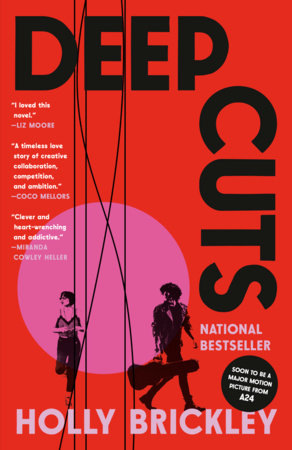
Deep Cuts
In Berkeley in 2000, Percy Marks meets Joe Morrow, a songwriter who asks for her feedback on his music.
About
Spoiler notice: Spoilers for the premise and early setup: Percy Marks and Joe Morrow meet in Berkeley in 2000 and begin a music-centered partnership. Their friendship, creative work, and Percy’s search for her own voice shape the story. Later developments and the ending are not summarized.
In fall 2000, Percy Marks is at a campus bar in Berkeley, listening to Hall and Oates and picking apart the song aloud. She knows that her habit of analyzing music can irritate people, but she cannot keep the observations to herself. Joe Morrow, a fellow student, is a songwriter, and instead of brushing Percy off he asks what she thinks of one of his songs. That small invitation changes the direction of their conversation: Percy’s opinions become useful to someone making music. She does not think of herself as a musician. What she has is an unusually close way of listening, a readiness to stay with a song’s choices and feelings after other people have moved on. Joe’s question gives that skill a place inside the creative process.
The exchange grows into a partnership that stretches across years. Joe brings songs to Percy; she responds to them with the attention and candor that first caught his interest. Their work gives them a shared language and a reason to keep returning to one another, even as their bond raises the question of whether friendship can become something more intimate. Joe is reluctant to welcome that change early in the story, so closeness and distance exist side by side. Collaboration offers Percy a meaningful role in music, but it also leaves her working on someone else’s songs. As Joe’s songwriter identity takes shape, Percy has to consider whether being the person who understands his work is enough, or whether she wants to make a creative voice of her own.
Percy’s way of judging music rests on how deeply a song reaches and how long its feeling stays with her. That measure is personal and emotional, not a tally of technical skill or popularity. Her classmates do not always share her standards, and her mother’s belief that Percy did not inherit a ‘music gene’ gives Percy another reason to doubt that her response counts as talent. Yet Percy can hear what a song is doing and explain why it matters to her. The distance between conventional musicianship and her less easily named ability becomes a question she must work through. Listening is not a passive position in her relationship with Joe: she contributes judgments that affect the songs, even while she is still deciding whether she deserves to think of herself as an artist.
Percy’s closest relationships include Joe and Zoe, forming a friendship triangle in which each person’s connection to the others matters. Percy turns to Zoe for direction, while both Zoe and Raj challenge Percy to consider whether she is avoiding something through her choices. The story leaves that motive for Percy to confront rather than reducing it to a simple answer. Her reliance on trusted friends gives her ways to test what she thinks and wants, but it also makes it possible to wait for other people to decide what she should do. The tension around her creative life is therefore linked to ordinary acts of dependence, advice, and loyalty. Finding a voice involves not only recognizing what she hears in music, but also choosing how directly to speak for herself among the people whose opinions carry weight.
The novel follows Percy and Joe from Berkeley to New York and San Francisco between 2000 and 2008. Brooklyn bars and San Francisco dance floors mark a world in which music is heard socially as well as made collaboratively. These places give the partnership room to change: the people who once met in a campus bar move through different scenes and stages of adulthood, while the songs remain a shared point of reference. The early-2000s setting places their story in the indie-sleaze era, but its central concerns are not limited to a musical moment. Percy and Joe must work out what they owe one another as friends and collaborators, and whether years of shared creative history bring them closer or make new choices more difficult. Their surroundings shift as those questions continue.
The novel also examines whose creative work receives recognition. Joe does not initially give Percy her due as an artist, and judgments about music made by men and women shape how her contribution is seen. Percy’s insecurity about belonging in creative work is connected to that imbalance: it is harder to trust her own judgment when others have placed her in the role of listener and adviser. Her path toward a voice of her own runs through both personal doubt and relationships that can either make space for her or keep her in a familiar position. Deep Cuts keeps music at the center of this development, treating songs as collaborations and as measures of what people hear in one another. Percy’s close attention is the beginning of her contribution; deciding what to do with it becomes the longer challenge.
Book details
- Author
- Holly Brickley
- First published
- 2025
- Series
- No series listed
- Subgenre
- Literary fiction
- Primary genre
- Literary Fiction
- Tags
- No tags for this book.
Review
Editor profile
Baby Bat
Goodreads and social links will be added soon.
- Goodreads — link coming soon
- Social media — link coming soon