
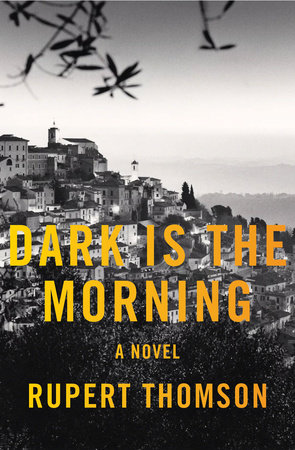
Dark Is the Morning
In a mountain village in Abruzzo, Gino reconnects with Franca, the childhood friend who once said she would marry him.
About
Spoiler notice: Spoilers cover the childhood promise, Gino and Franca’s reunion, their marriage and child, and the growth of Gino’s jealousy. The ending and final consequences are not disclosed.
Dark Is the Morning begins with a promise made in childhood and follows the difficult distance between that promise and adult happiness. Franca, a nine-year-old schoolgirl in a mountain village in Abruzzo, tells Gino that she will marry him one day. Years later, after their lives have taken separate paths, Gino returns to the region and reconnects with her. Their attraction quickly becomes a relationship, and the two appear to have found the secure future that once seemed only a child’s prediction. Yet Gino carries a troubled view of himself into this new life. The novel’s tension grows from the gap between the contentment he wants and his increasing inability to trust it, even as Franca offers him love and a place to belong.
The setting is a village in Italy’s Abruzzo region in the early 2000s, where the landscape and local traditions give the story a fable-like cast. The community is familiar with magic and superstition, and the couple’s lives unfold among hills, vineyards, country roads and a remote home. These details establish a place that feels both tangible and touched by old stories. The village also has a close social world: people remember one another, notice changes, and help shape the meaning of events. Gino and Franca’s relationship is therefore never entirely private. Their choices and troubles take place against a community that observes, responds and gathers around what it cannot easily explain. The rural setting lends the romance beauty while also giving its growing unease room to deepen.
Gino comes back to Abruzzo in his early twenties after a period of drifting and disappointment. He has not found a direction that satisfies him, and he measures himself against his accomplished father, whose approval has always been difficult for him to win. At his father’s prompting, he looks up Franca, the childhood friend who once said they would marry. The connection between them is immediate, and they build a life together. Franca’s confidence and warmth contrast with Gino’s restless self-doubt, though the novel does not reduce their relationship to simple opposites. Gino can experience tenderness and good fortune, but he struggles to believe that either will last. As their domestic future takes shape, the old promise seems fulfilled while the insecurity beneath it remains unresolved.
Franca has a past that Gino cannot leave alone. She tells him about a former affair with a married man, a story that at first seems like one part of the life she lived before their reunion. Gino’s curiosity about it gradually changes into fixation. He begins to imagine what the relationship meant and whether it could still matter, returning in his thoughts to a man who is not part of the couple’s present home. The novel follows how questions can become assumptions when someone is already distrustful of happiness. Franca’s account does not settle Gino’s fears; instead, his need for certainty makes the past feel active and threatening. His attention narrows around what he cannot know, and suspicion starts to crowd out the tenderness that brought them together.
The couple marry and Franca becomes pregnant, milestones that seem to confirm the life Gino has wanted. Their son, Elio, is strikingly beautiful, and the attention he receives from strangers adds another unusual element to the family’s rural life. People come to see the child, treating his appearance as something remarkable. Gino, however, cannot share their uncomplicated wonder. He sees little of himself in his son and begins to question his place in the family. The baby’s beauty becomes a focus for anxieties already present in Gino: comparison, inadequacy and the fear that happiness belongs to someone else. What might have brought a family closer instead intensifies the distance between the life Gino has and the story he tells himself about it.
As Gino’s jealousy strengthens, Franca’s former lover becomes the centre of his suspicions. The man is married and connected to the village, which makes the possibility of encountering him feel close even when Gino has no new proof to support his fears. Gino’s attention turns outward toward this rival and inward toward every doubt he has about being a husband and father. His growing obsession places pressure on Franca and changes the atmosphere of their home. The story shifts from a romance shaped by a childhood promise toward a psychological account of distrust and control. Tenderness remains part of the relationship, but it now exists beside paranoia. The novel traces this change closely, showing how insecurity can distort what a person sees in the people closest to him.
Dark Is the Morning brings beauty and danger into the same ordinary life. Its central concern is not simply whether Gino and Franca were destined to meet, but what they do once the promise has become real and the future no longer feels assured. The village’s superstitions and the attention surrounding Elio lend the story an uncanny edge, while Gino’s private fears supply its steady psychological pressure. Franca’s strength and Gino’s fragility shape the couple’s uneven balance, and the surrounding community gives their choices a wider human context. Moving between the tenderness of new love and the corrosive effects of jealousy, Rupert Thomson’s novel examines the desire to possess certainty in a life that cannot provide it. The consequences grow from ordinary doubts allowed to harden into conviction.
Book details
- Author
- Rupert Thomson
- First published
- 2026
- Series
- No series listed
- Subgenre
- Psychological thriller, Family novel, Literary fiction
- Primary genre
- Literary Fiction, Mystery & Thriller
- Tags
- No tags for this book.
Review
Editor profile
Baby Bat
Goodreads and social links will be added soon.
- Goodreads — link coming soon
- Social media — link coming soon